Very Small Bedroom Ideas – 18 Ways to Make Every Inch Feel Intentional
Small bedrooms have a reputation problem. At some point, we decided that a tiny bedroom is something to apologize for, hide, or simply tolerate until we can afford something bigger. However, if you spend time looking at beautifully designed small spaces, you’ll notice a pattern: when done well, constraint encourages intention. That intention makes the difference between a bedroom that feels like a retreat and one that feels like a storage unit you also sleep in.
The difference is rarely about size. It’s about the choices you make.
Most don’t even need a big budget. All it takes is knowing what truly works in a small room and letting go of habits that make the space feel smaller than it should, like centered beds, matching bedroom sets, or the belief that white is always the solution.
Whether you’re renting and can only make reversible changes or you own your home and are finally ready to give that small bedroom the design attention it deserves, you’ll find valuable ideas here.
Very Small Bedroom Ideas
1. Choose a Bed with Built-In Storage
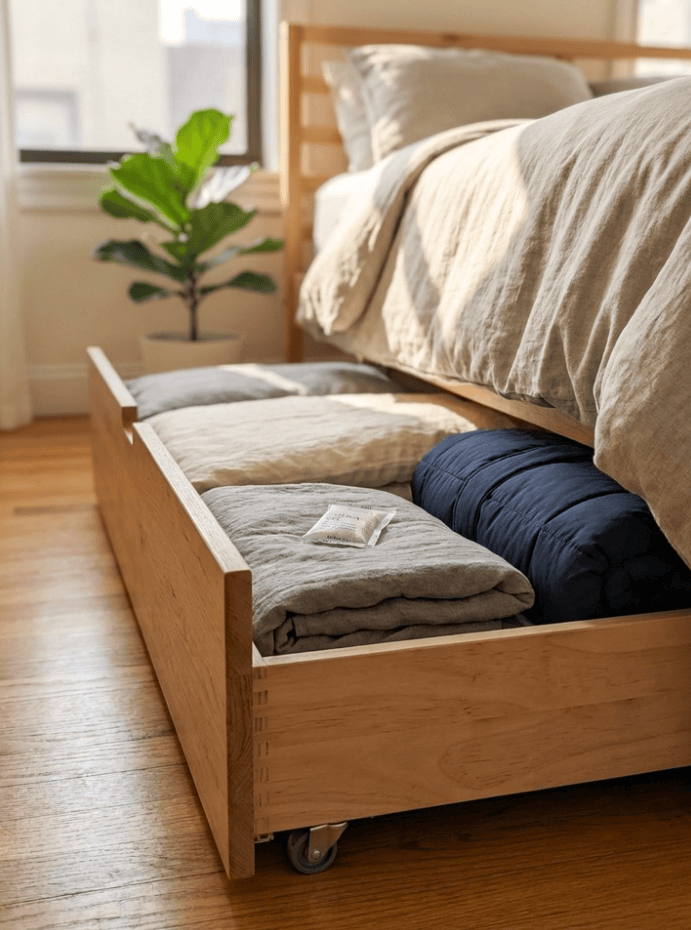
The bed is the largest piece of furniture in your room, and it offers the biggest storage opportunity. A bed frame with built-in storage, such as ottoman lift-up bases or frames with deep side drawers, can hold a lot of items, including spare bedding, out-of-season clothes, and things you need to keep but don’t want to see.
Try: The MADE Capsule Ottoman Bed in dusty pink or silver grey, or the John Lewis Elise Ottoman for a cleaner, more minimal look.
2. Float Everything You Possibly Can
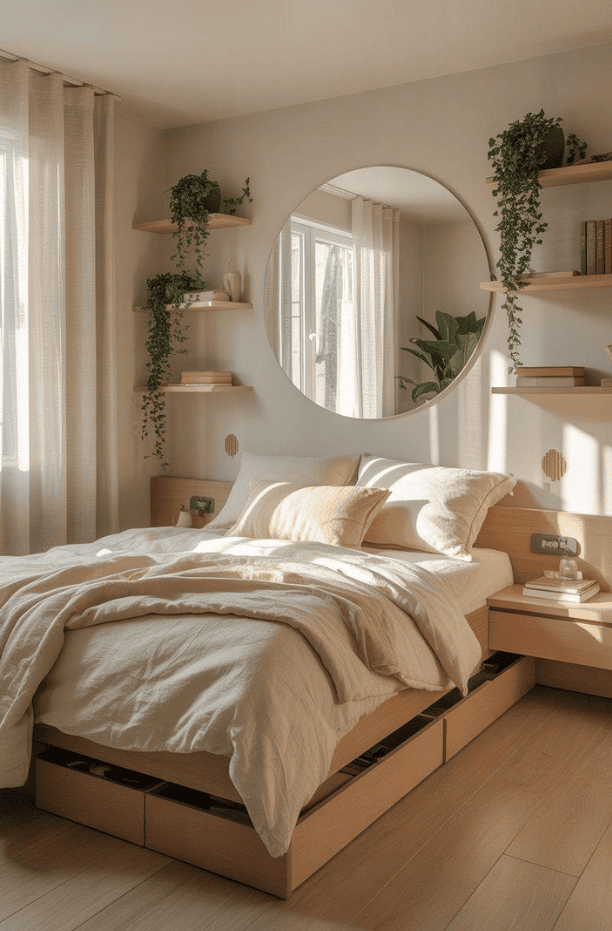
A floating shelf or a small wall unit at bed height can replace a bedside table. It holds your lamp, book, and glass of water while keeping the floor below clear. A clear floor creates the feeling of more space. It’s a smart trick, and it works every time.
A floating desk along one wall can turn a small bedroom into a workspace without taking up much space. Choose wall-mounted sconces instead of floor lamps.
Use open shelving instead of a bookcase. Every leg you remove from the floor is a small win, and those wins add up faster than you might think.
Try the IKEA LACK wall shelf (£15, very useful) or the String Pocket shelf system for something more stylish and adjustable.
3. Rethink the wardrobe
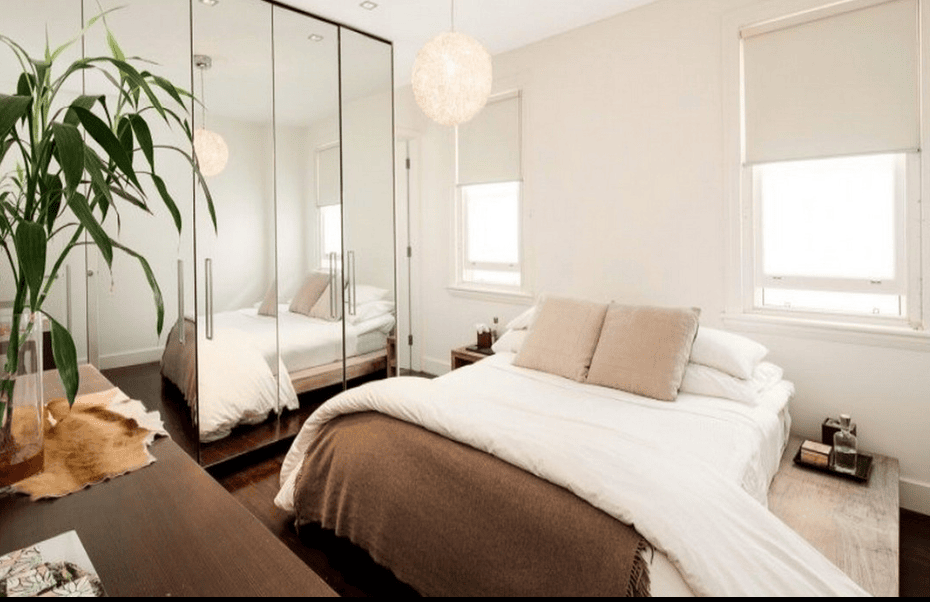
A freestanding wardrobe in a small bedroom creates a wall within a wall. The visual break of a box sticking out from the plaster makes the room feel choppy, cramped, and smaller than it is.
A fitted wardrobe, on the other hand, built flush to the wall from floor to ceiling, removes that break completely. The room appears as one smooth space instead of a group of competing objects. If a full installation isn’t in the budget, the IKEA PAX system is the closest thing to a cheat code in small bedroom design.
This gives you a fitted wardrobe at a much lower cost. The key detail is to take it all the way to the ceiling. That last gap between the wardrobe top and the cornice is where the room loses its sense of height. Fill it, even with a simple panel, and the whole wall changes.
4. Give the bed some legs
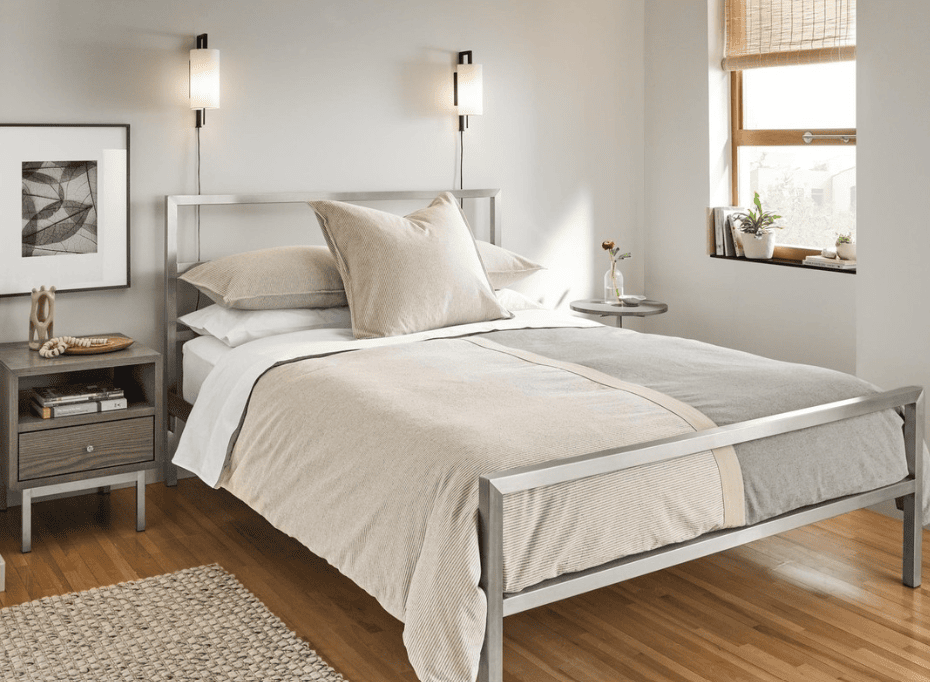
This is one of the smallest changes on this list, yet it offers a huge visual improvement. A bed on legs, even low ones, just four inches off the ground, allows light to flow beneath it and makes the floor appear continuous. A divan base, on the other hand, sits flat on the floor, dividing the room into “above the bed” and “below the bed.” This setup makes everything feel more separate, which is not ideal for a small space.
The focus should not be on the style of the legs, but rather on the gap they create. That gap does more for the space than it may seem.
Try the Swoon Alderney Bed Frame or the West Elm Mid-Century Bed, both of which have slender legs and come in sizes from small double upwards.
5. Stop centering the bed
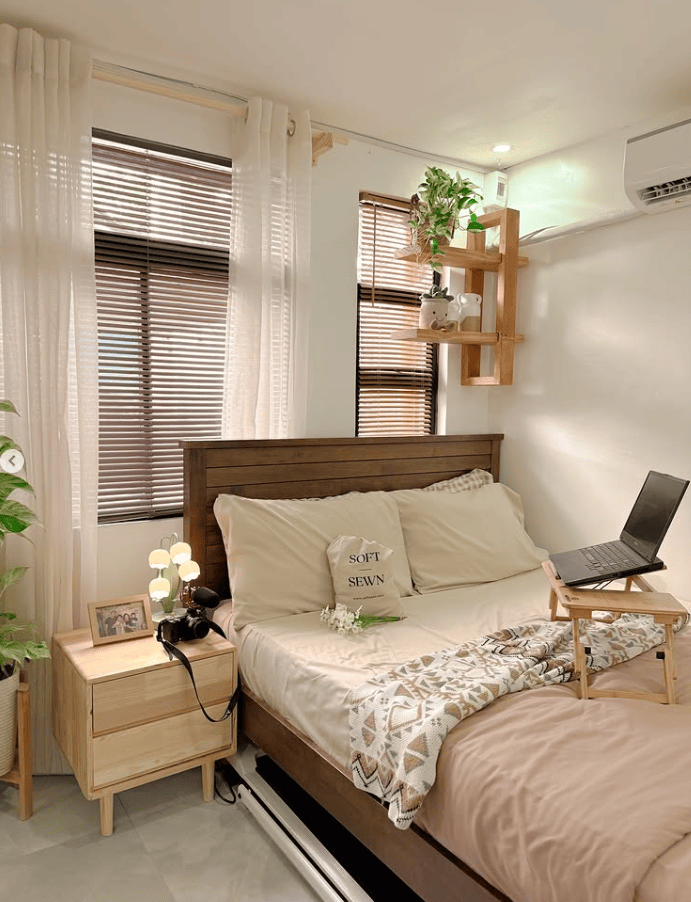
In a very small bedroom, centering the bed on the main wall means giving up usable floor space on both sides to keep a corridor that isn’t needed.
Push the bed into a corner or against the longest wall, and you’ll gain a significant amount of floor space. That’s where the chair can go. Or the desk. Or nothing, because sometimes an empty floor is the goal.
The trade-off is real: you lose easy access to one side of the bed, which matters if two people are sharing it. But if it’s a single sleeper in a child’s room or a guest room that doesn’t get daily use, this one layout change can alter the feel of the space more than almost anything else on this list.
6. Paint the Ceiling the Same Color as the Walls
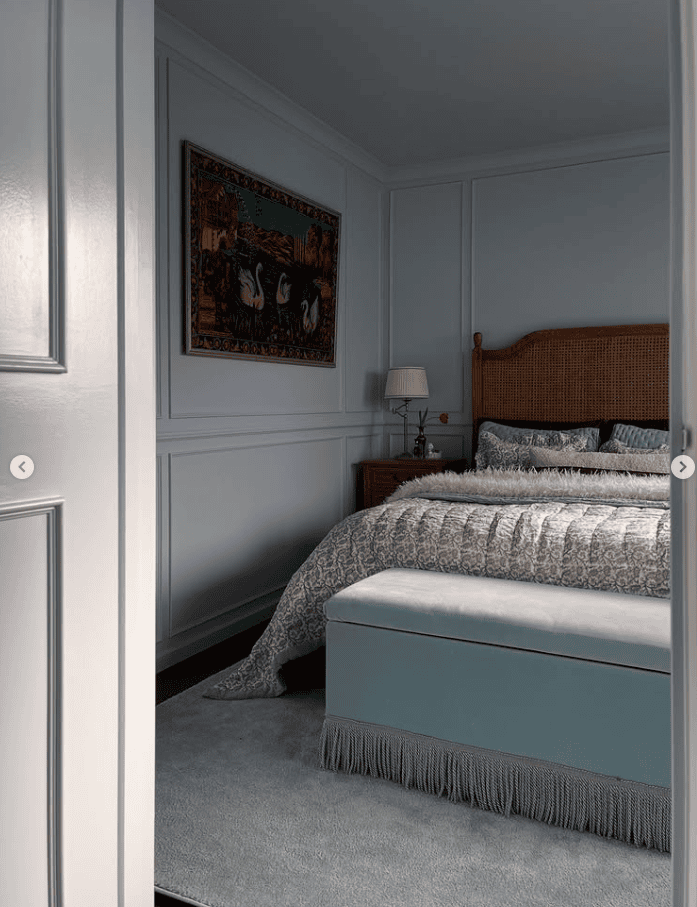
A white ceiling in a small room acts like a lid. It draws a hard line above your head. It constantly reminds you of how much vertical space you don’t have. If you paint the ceiling the same color as the walls, or even one shade deeper, that line disappears. The room stops feeling like a box and becomes enveloping, intentional, and surprisingly calming.
This hack works with almost any color, but it works best with mid-tones and deeper shades. A warm beige covering all four walls and the ceiling feels like a cocoon in the best possible way.
A soft sage does the same. Even a muted terracotta, applied confidently, creates a room that feels designed rather than just defaulted to.
Try Farrow & Ball Elephant’s Breath No. 229 for a warm, sophisticated greige that looks different in various lights. Or use Little Greene Slaked Lime Mid for something softer and more subtly earthy. Both work beautifully wall-to-ceiling.
7. Don’t Automatically Reach for White
White is the usual choice for small rooms, and while it’s not entirely wrong, it’s also not the best choice. Yes, white reflects light and makes a room feel open. But it also highlights every flaw, every scuff mark, and every awkward angle.
In a small bedroom, those flaws stand out more than in any other room.
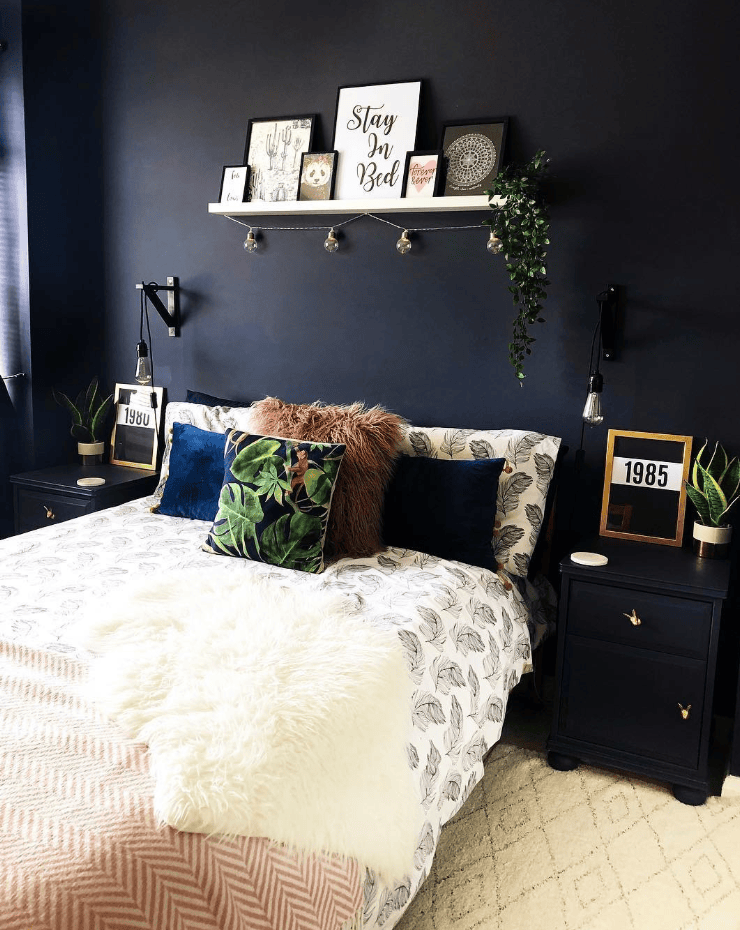
A thoughtfully chosen dark color does something counterintuitive yet effective: it embraces the area’s coziness. It creates a snug environment, a retreat where you actually want to spend time.
The key is to keep everything else in the room light: soft bedding, natural wood, and minimal decorations. The dark walls provide depth while everything else stays subtle.
This approach is definitely bolder, and I know it’s not for everyone. But if you’ve lived with magnolia for three years and can’t figure out why the room still feels off, this could be the solution.
8. Go Monochromatic and Watch the Room Expand
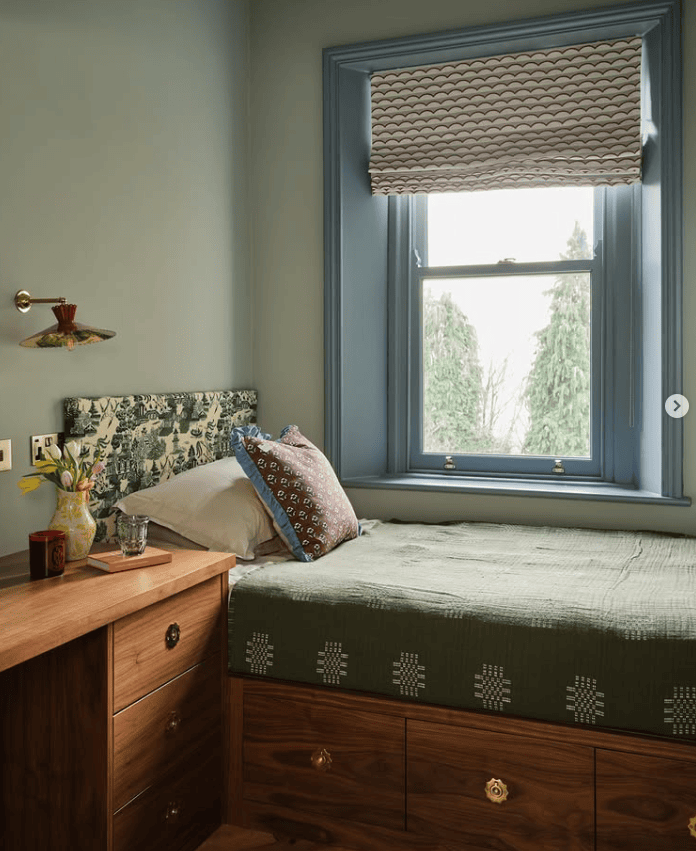
A monochromatic scheme, which layers different tones, textures, and finishes within the same color family, is one of the most overlooked strategies in small bedroom design.
The reason it works is simple: visual fragmentation makes rooms feel smaller. Every time the eye encounters a different color, it registers a boundary. A monochromatic room removes those boundaries.
Everything flows together, making the space feel larger, quieter, and more intentional than it actually is. This doesn’t mean the room has to be flat or boring. In fact, it’s the opposite. A tonal scheme encourages you to experiment with texture in a way that a busy, multi-colored room never requires.
Consider linen bedding in soft oat, a boucle throw in warm cream, a jute rug, and a rattan pendant light. All belong to the same color family yet feel distinct to the touch. The result is a room that appears rich and layered without being chaotic.
9. Maximize Natural Light, Then Fake the Rest
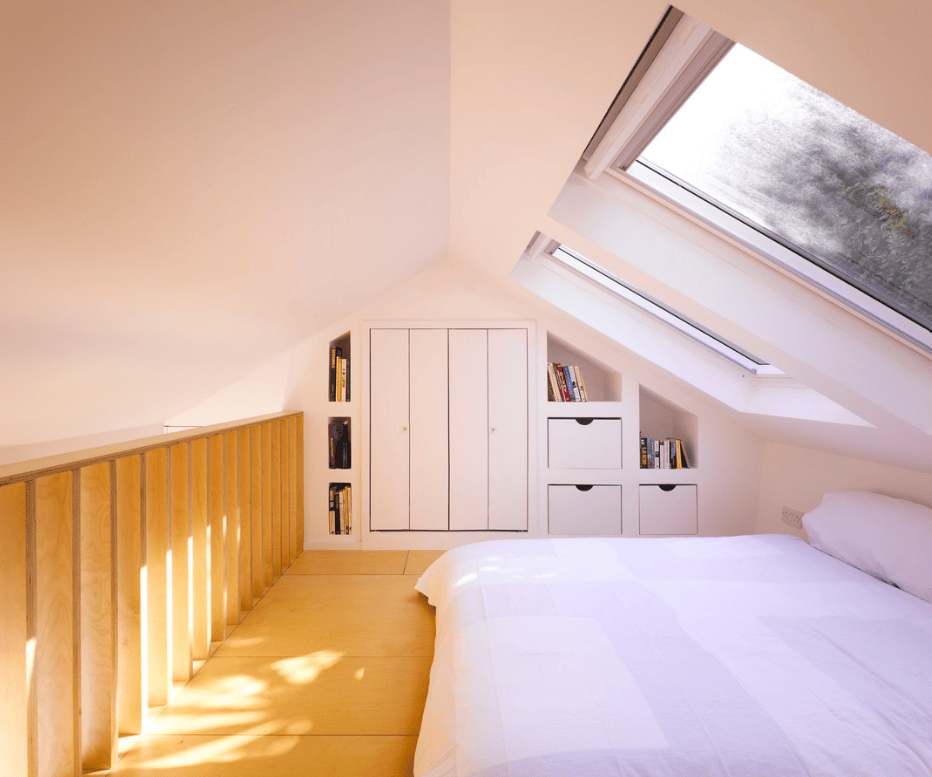
Natural light is the small bedroom’s most valuable asset, but many people unknowingly block it.
Hang your curtain pole as high as possible. Ideally, it should be within a few inches of the ceiling, regardless of where the window actually sits. Use floor-length curtains even on a small window; the vertical drop makes the ceiling appear taller.
Choose fabric that lets light through when the curtains are open, such as unlined linen, cotton voile, or a simple eyelet panel in a light neutral.
Keep the window recess completely clear, with no blind hardware across the glass and no curtain fabric blocking the light.
For rooms that don’t get much natural light, like a north-facing box room or a basement flat, layered artificial lighting is essential.
A single overhead bulb is the worst choice for a small bedroom. It flattens the space and makes everything feel institutional. Instead, use a warm bedside lamp on each side, an LED strip behind the headboard for a soft glow, and a dimmer switch if possible. Stick with warm white bulbs; 2700K is the ideal temperature.
You want the room to feel like candlelight in the evening, not a dentist’s waiting room.
10. Use a Large Mirror and Place It with Intention
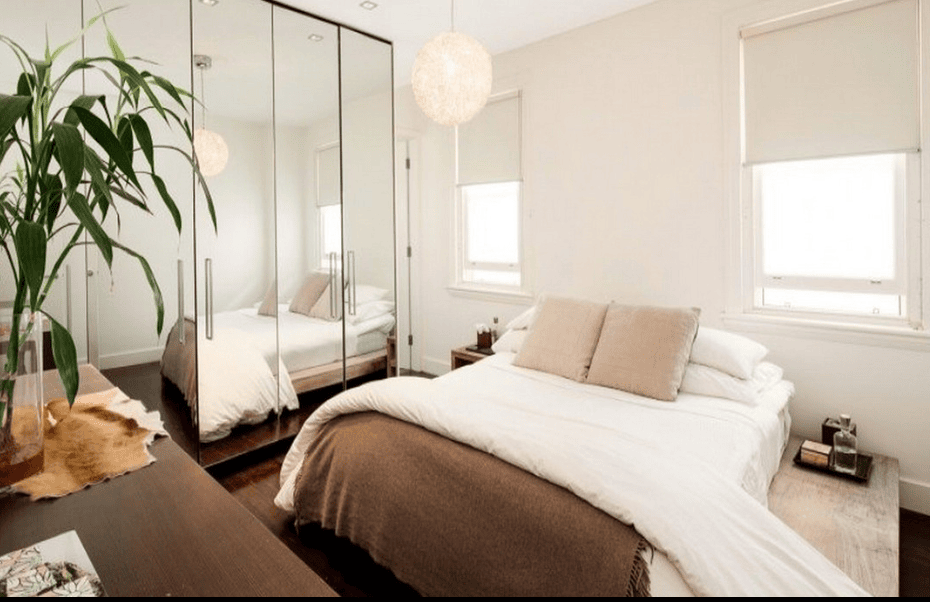
A mirror in a small bedroom is not just for decoration; it serves a structural purpose. A large mirror, whether leaning, wall-mounted, or built into a wardrobe door, can make the room feel larger. When done right, it becomes hard to tell where the room actually ends.
Placement matters a lot. A mirror that reflects a cluttered wall only shows you more clutter, which is worse than having no mirror at all. If possible, position it to reflect a window; this way, you add a second light source to the room. Placing it along a narrow wall visually expands the space without altering any bricks.
Avoid putting it directly opposite the bed, as this can feel unsettling and rarely reflects anything inspiring. Instead, angle it slightly or hang it on a nearby wall for a more useful and elegant effect.
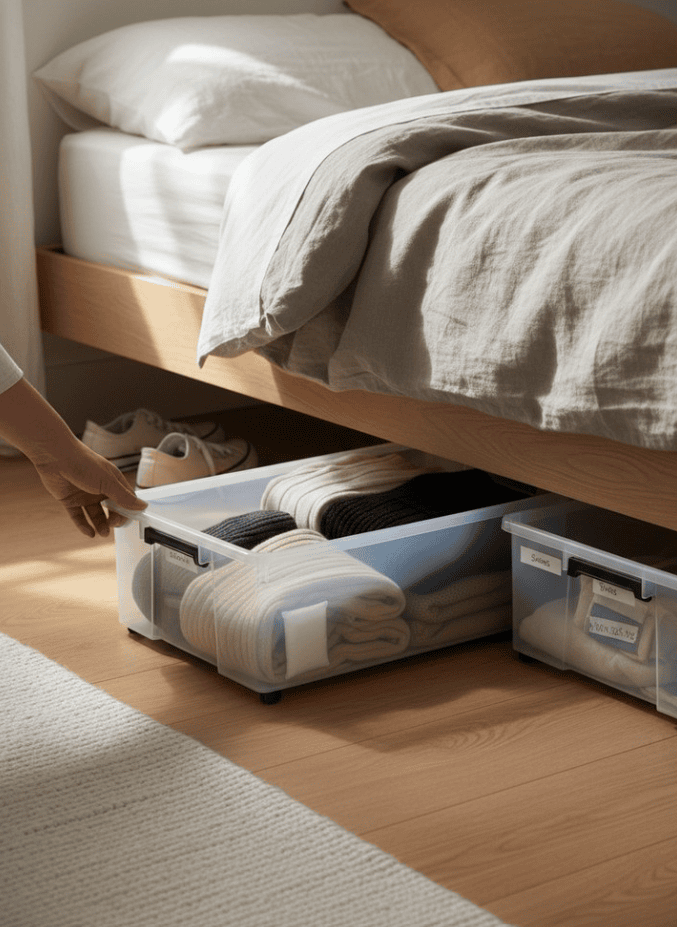
11. Treat the Space Under Your Bed Like a Room of Its Own
Under-bed storage is so obvious that it hardly feels worth mentioning. Yet, many people either use it incorrectly or don’t use it at all. That’s not just a storage solution; it’s a real opportunity.
The key is to be organized about it, rather than just stuffing things under there and hoping for the best. Flat, lidded storage boxes, the kind that slide in and out easily, work much better than random bags and boxes of different heights that get stuck and forgotten.
Vacuum storage bags are truly game-changers for bulky items like spare duvets, winter coats, or extra pillows. They shrink down to almost nothing and fit easily under even a low-profile bed frame. If your bed is close to the floor and space is tight, bed risers are inexpensive and can instantly create several more inches of usable height.
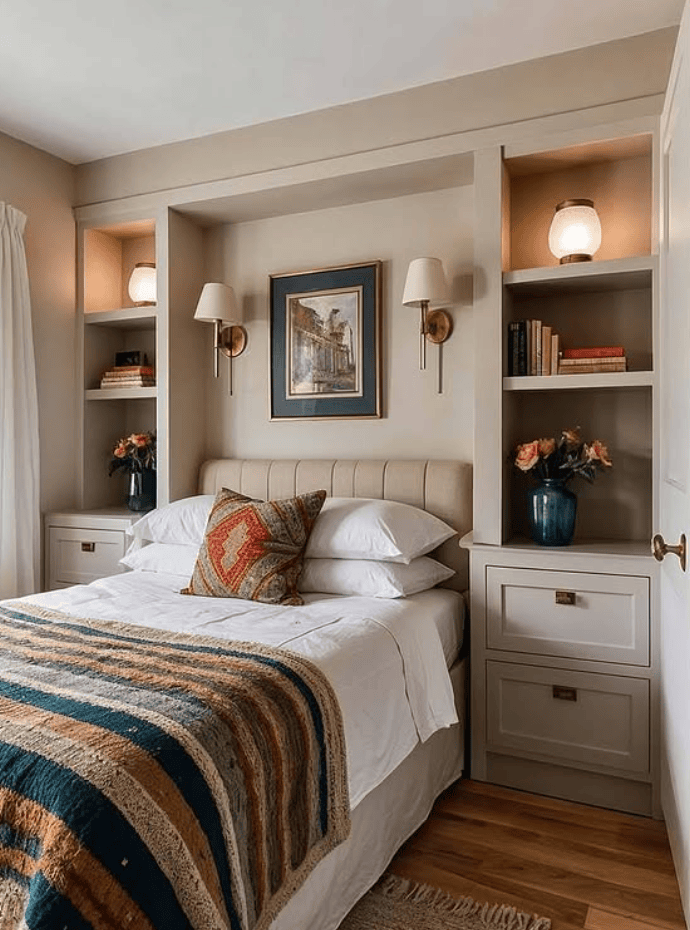
12. Go Vertical with Shelving All the Way Up
Most people put shelves at eye level and think that’s enough. In a small bedroom, that’s a big missed opportunity.
Shelving that goes from floor to ceiling, all the way up, not stopping at head height out of habit, does two things. It greatly increases your storage space without taking up more floor area. It also draws the eye upward, making the ceiling seem higher.
The styling is more important here than in a larger room because the shelves are closer and harder to overlook. Place books on one, objects on the next, books again, then a plant, and so on. Leave some space.
A shelf that is 70% full looks carefully arranged. A shelf that is completely full looks overcrowded. In a small bedroom, a careful arrangement is essential.
If you’re renting and can’t install shelves, consider the IKEA BILLY bookcase. By adding the GNEDBY unit to make it ceiling height, you can achieve a similar visual effect. This works even better if you cover the gap between the top of the unit and the ceiling with a simple MDF strip.
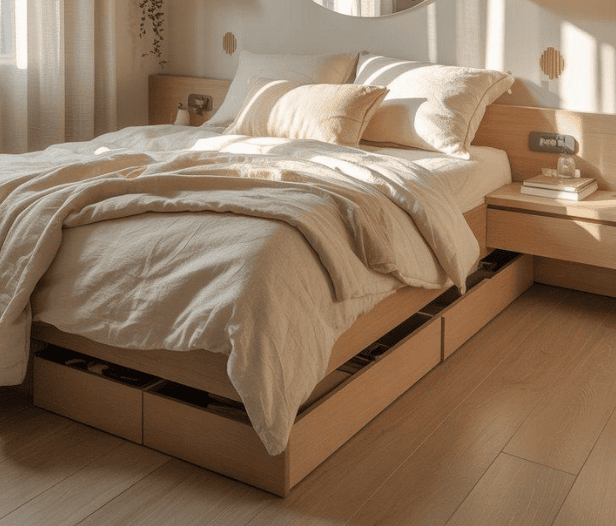
13. Rethink the Bedside Table Entirely
The traditional bedside table is a small chest with a drawer and four legs that sits on the floor. In a very small bedroom, this setup is surprisingly inefficient.
It takes up valuable floor area, often lacks sufficient storage, and is usually either too big or too small for the space next to the bed. There’s a better solution.
A wall-mounted bedside unit, like a floating shelf with a small drawer or a deep shelf with a lip, can serve the same purpose while keeping the floor clear underneath. If you want to simplify even further, a basic floating shelf at bed height can hold a lamp, a book, and a glass of water. Honestly, that’s all you really need within reach when you’re lying down. The floor remains clear, and the room feels more open.
This change seems almost too simple until you try it and realize you wouldn’t want to go back. For those who really need the storage a drawer offers, a slim wall-mounted unit with a single drawer strikes the right balance: enough function with a minimal footprint.
14. Use the Back of the Door Every Single Time
The back of the bedroom door is often the most unused space in a small room. This area has a lot of storage potential, hiding in plain sight.
An over-door organizer can hold shoes, accessories, a hairdryer, chargers, and books, anything that currently takes up space on surfaces and makes the room feel cluttered.
A few over-door hooks can hold tomorrow’s outfit, a dressing gown, or a towel.
A slim mirror hung on the back of the door serves two purposes: it opens up wall space elsewhere and gives you a full-length view without cluttering the room. The key is to keep it intentional.
An over-door organizer filled with a mix of random items just shifts the clutter from one place to another. Be selective about what you put there, using the same care you would anywhere else in a small room.
Ten well-organized items count as storage. Forty cramped items create a different problem, even if there’s a door in front of it.
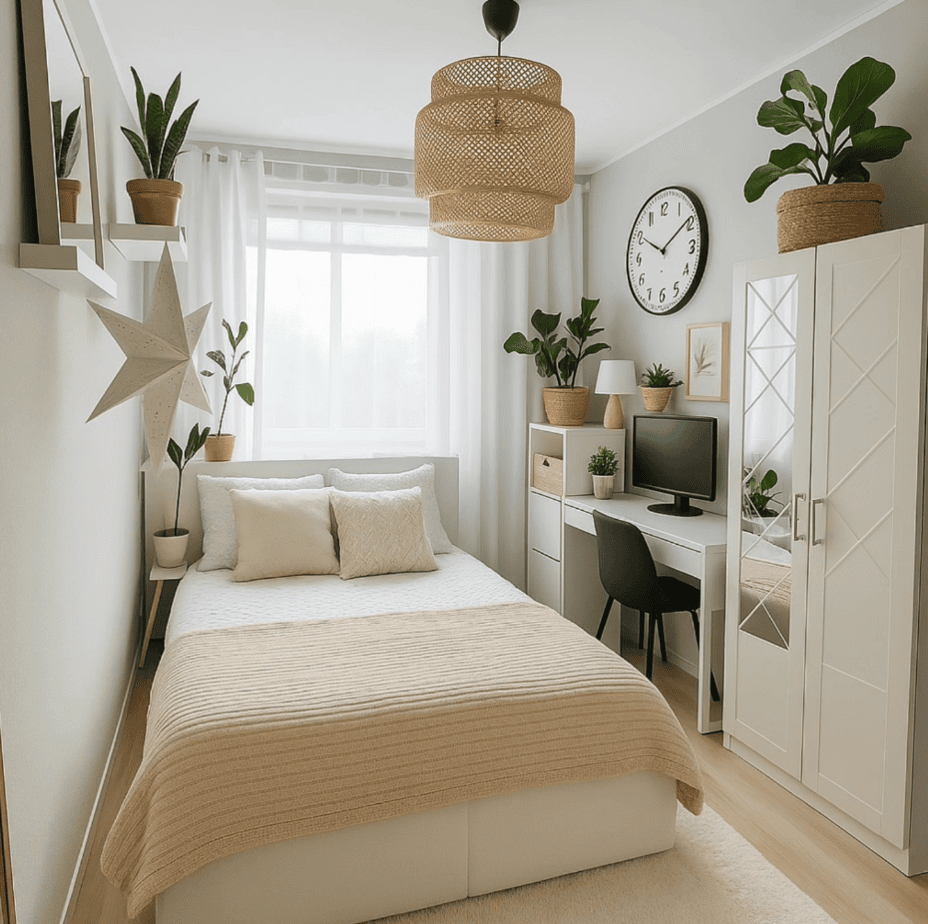
15. Hang Your Curtains From the Ceiling, Not the Window
Hang the pole as close to the ceiling as possible, and everything changes. The eye follows the fabric from the cornice to the floor in one smooth vertical line. This line tricks the brain into perceiving the ceiling as higher, the window as larger, and the room as more carefully designed than it was just a moment ago.
Use floor-length curtains no matter the window size; a small window with floor-length curtains appears intentional, while curtains that stop at the sill look like an afterthought.
Fabric choice is also important. In a small bedroom, heavy interlined drapes can feel suffocating. Unlined linen, cotton voile, or a lightweight textured weave allows light to filter in during the day and hangs beautifully at night.
Choose a color similar to the wall; curtains that blend with the wall rather than contrast with it make the room feel longer rather than interrupt it.
16. Keep the Floor as Clear as Humanly Possible
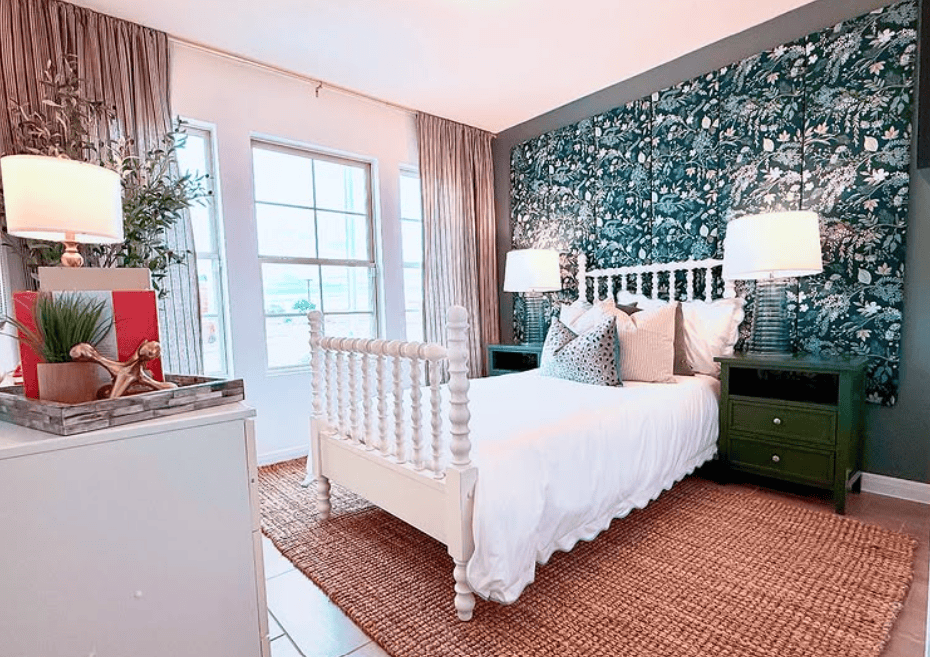
The goal in a small bedroom is to have a continuous, uninterrupted floor as far as you can see. This isn’t just about minimalism; an unbroken floor creates a strong visual impression of spaciousness.
Swap the floor lamp for a wall-mounted sconce. Move the chair out entirely. If it’s only holding clothes, it’s an obstacle, not a useful piece of furniture.
Avoid using a small bedside rug unless the room is genuinely big enough for it without dominating the remaining floor space.
If you love a rug, go for a larger size rather than a smaller one. A small rug looks out of place in the middle of the room and actually makes the floor feel more fragmented. A larger rug that fits under the bed’s bottom two legs anchors the space and looks like a thoughtful design choice rather than an accessory that got misplaced.
17. Add Texture Instead of Things
When a small bedroom feels flat, cold, or lacking in personality, the answer, almost always, is texture rather than stuff.
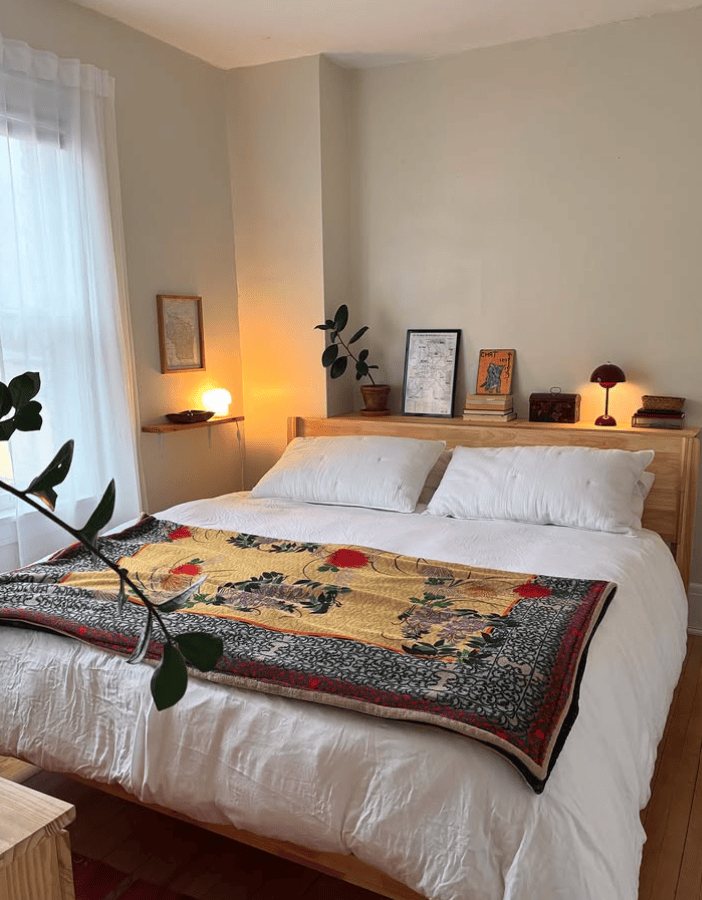
Texture adds depth, warmth, and visual interest without creating the visual noise that makes a small room feel smaller. A boucle cushion, a linen duvet cover with a subtle stripe, a woven rattan pendant light, a chunky-knit throw draped over the foot of the bed, and a jute or sisal rug underfoot all contribute without shouting. They quietly work together to create a room that feels rich, layered, and genuinely designed, rather than simply filled.
The practical test is this: if you can feel the difference between two objects by running your hand over them, they can coexist in a small room.
If they look different but feel the same, like smooth ceramic next to smooth glass next to a glossy print, the room can appear cluttered even when it technically isn’t. Vary the tactile quality of what you bring in, and keep the color palette simple enough to let those textures shine.
18. Light for the Evening, Not Just the Day
In a small bedroom, just having functional lighting is a missed opportunity. The way a room feels at 9 PM, when you’re winding down, is just as important as how it works at 7 AM when you’re getting ready. In fact, it might matter more.
The bedroom is where you relax, and lighting is the quickest way to change a room’s mood from “bright storage space” to something that feels restful.
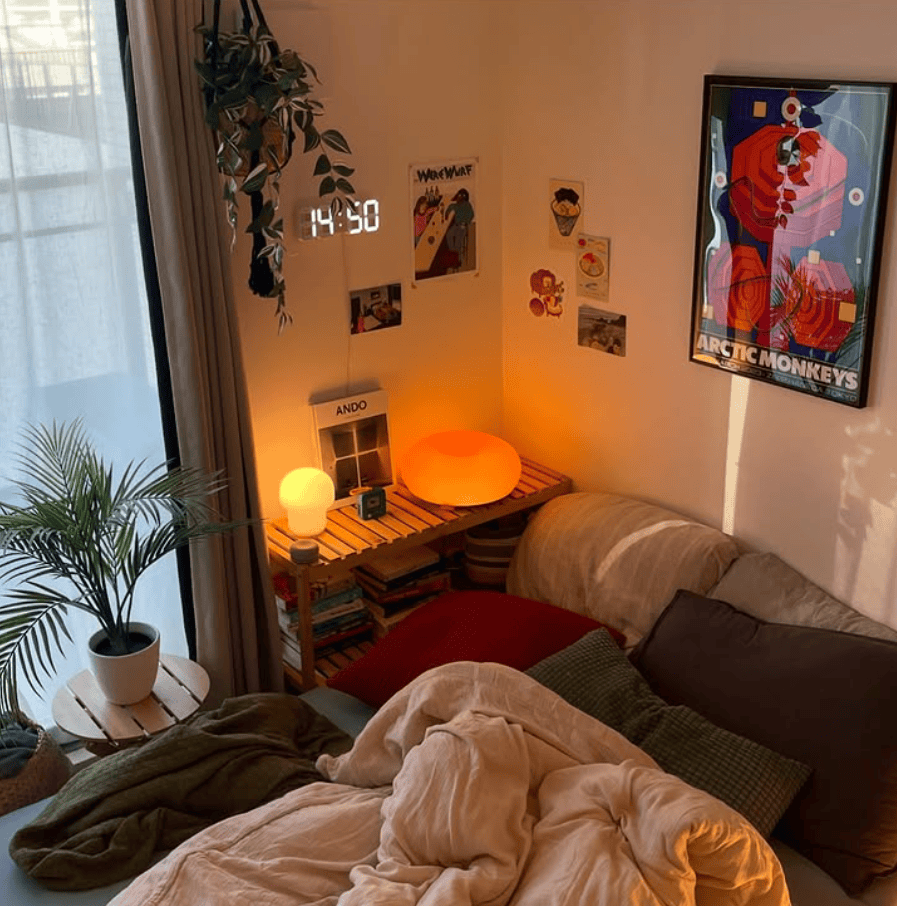
The formula is simple: layer your light sources, keep them warm, and make them dimmable whenever you can. A central overhead light works for getting dressed; pair it with a dimmer so it can be lowered to almost nothing in the evening.
Add a warm bedside lamp on each side of the bed, placed to let the light pool at reading level rather than glare up. If you have a floating shelf or alcove, use a strip of warm LED behind it to create a soft ambient glow.
Color temperature matters: use warm white only, 2700K or below. Cool white light in a bedroom feels like an office. It can make people look tired, make colors appear dull, and undermine the calm a small bedroom should have. It’s a small detail that makes a huge impact, and it costs nothing more than picking the right bulb.
19. Commit to a Thoughtful, Simple Accessory Edit
A small bedroom can definitely have personality. You can hang art on the walls, place a plant in the corner, and display a few meaningful objects.
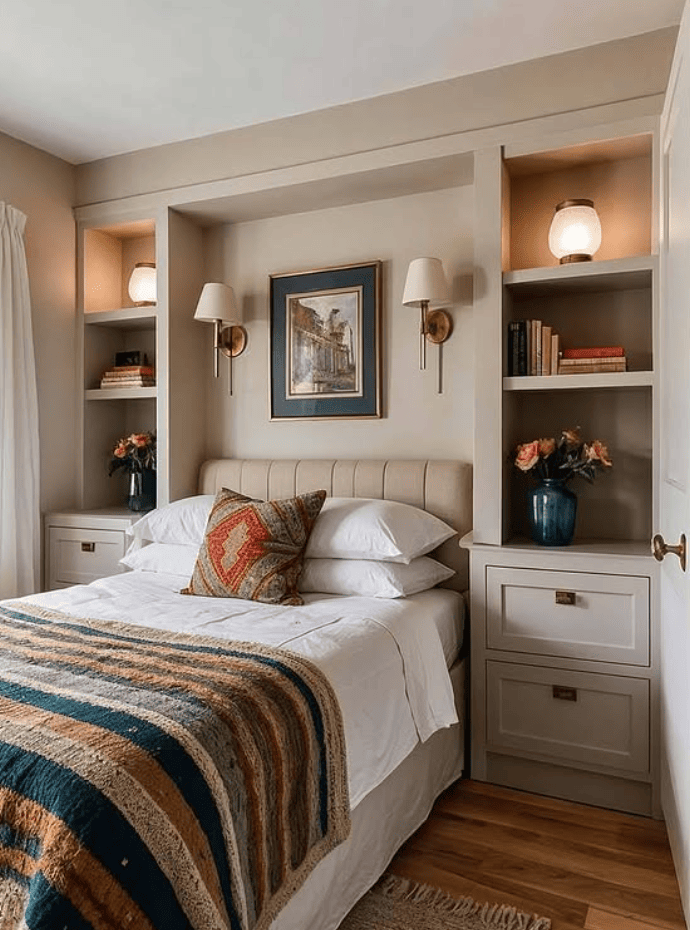
Choose one artwork that is large enough to make an impact and hang it properly at eye level, using a frame that matches the room’s colors. A single large print does much more for a small bedroom than a gallery wall of smaller frames. The latter often creates visual clutter that a small space can’t handle.
Select one plant that is big enough to be seen as a purposeful addition instead of an afterthought. Consider a fiddle leaf fig in the corner, a trailing pothos on a high shelf, or a single stem in a lovely vase next to the bed. Then, stop. Avoid adding more.
The editing process isn’t just a one-time task. Small bedrooms need light and ongoing upkeep. This means regularly noticing when something no longer fits in and removing it. Doing less with purpose wins every time.