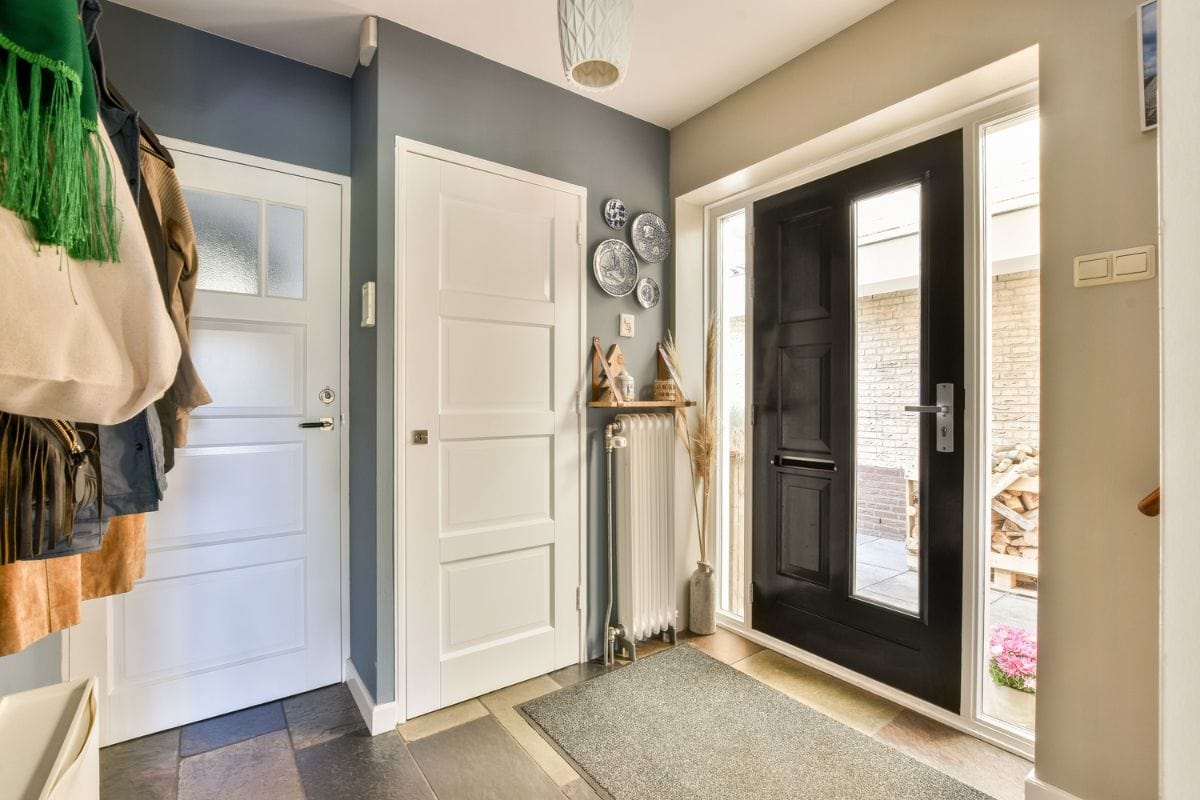
12 Small Dining Room Ideas That Make Tight Spaces Feel Intentional
If you’ve ever stood in your dining room with a tape measure and a sinking feeling, you know the issue. Most dining furniture is made for spaces you don’t have. The table looks too big as soon as you pull out the chairs. “Cozy” starts to feel cramped.
A small dining room isn’t just a mini version of a bigger one; it’s a different design challenge with its own benefits. Limited space forces you to make clear choices. You can’t hide behind a lot of throw pillows and a huge sectional, so every decision, the table shape, chair style, and how light hits the wall must truly earn its spot.
That limitation, if handled well, is what makes small dining rooms feel stylish instead of cluttered.
Let’s dive in.
12 Small Dining Room Ideas
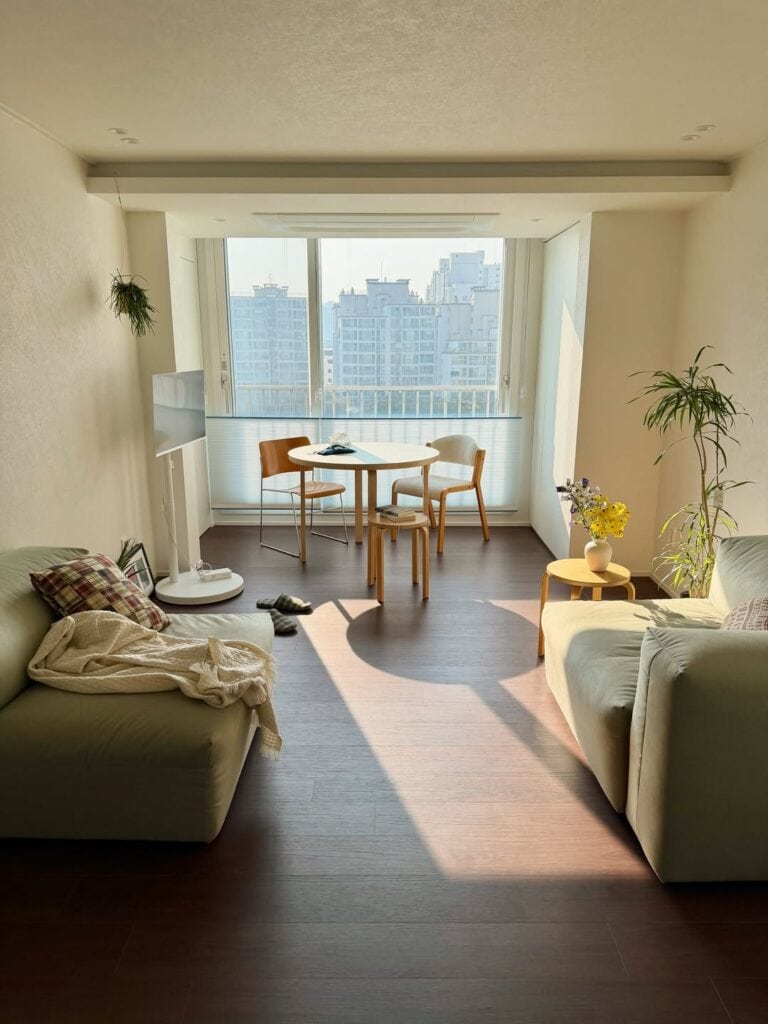
Float a Round Table in Front of the Window Instead of Against a Wall
This dining nook is in a living and dining area, but it doesn’t compete with the sofas for space. A small round table with two chairs sits forward in the light. A low stool serves as extra seating.
The round shape is essential here; a square or rectangular table of the same width would visually block the path between the two sofas. A circle has no corners to catch your eye or your hip as you walk by.
Placing the table right at the window means it becomes part of the view instead of competing with it.
Takeaway: If your dining table is in a walkway or shared living space, replace sharp corners with a round or oval top. This change instantly makes the area feel smaller, even with the same square footage.
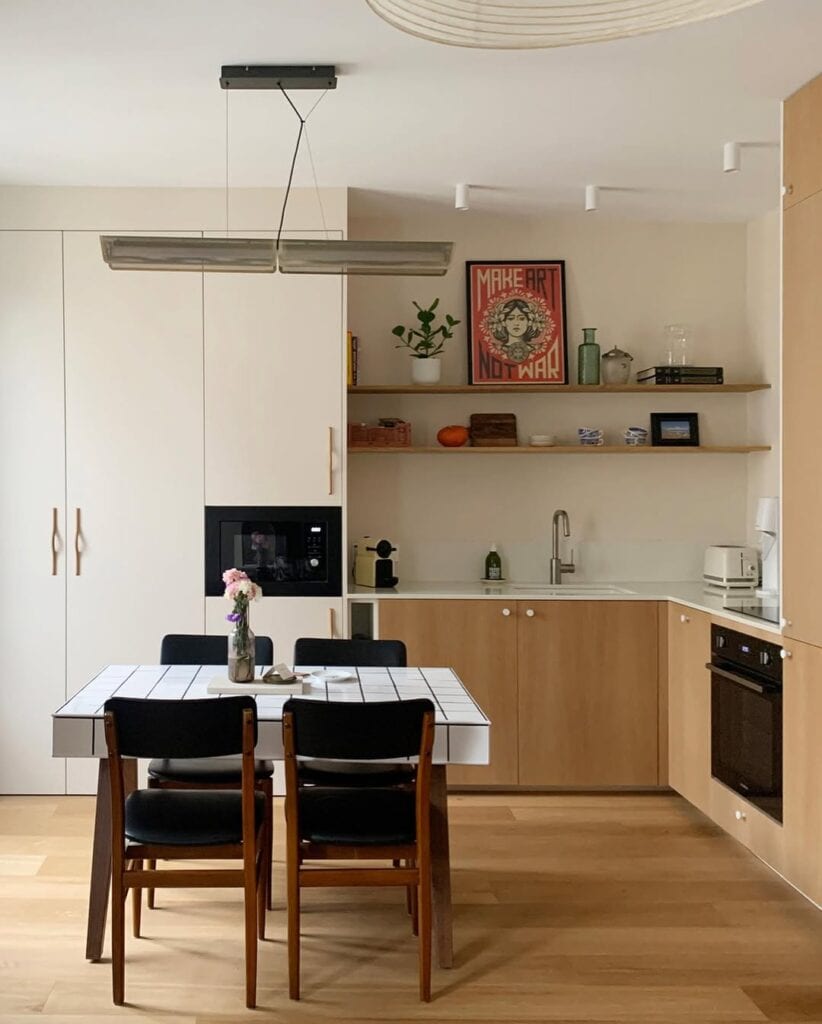
Let the Dining Table Double as the Kitchen Island
There’s no separate dining room here. The small table acts as an extension of the kitchen counter. This works because the table’s tile-pattern top matches the cabinetry’s clean lines.
It creates a continuous design instead of two separate spaces. Using mismatched, slimmer dining chairs, rather than bulky upholstered ones, also keeps the visual weight low. This way, the space feels open.
Takeaway: If your dining area is right next to your kitchen, choose a table finish that matches your counters or cabinets. This tricks the eye into seeing one larger area instead of two cramped ones.
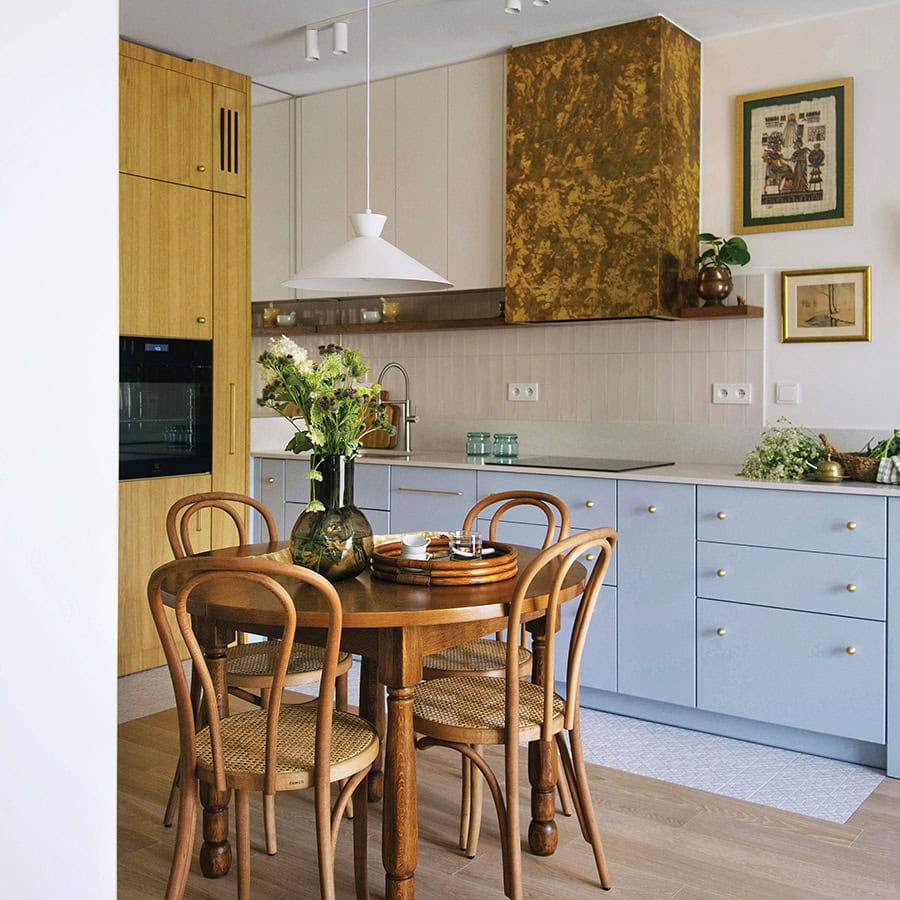
Scale the Table to the Room, Not to a “Standard” Size
This round wooden table seats four comfortably, but it is smaller in diameter than a typical dining table, and that’s intentional.
A tight pedestal base, instead of four splayed legs, allows chairs to tuck in close without legs getting in the way. This design helps make a small footprint usable.
The warm wood tones and curved bentwood chairs also soften the look of the surrounding cabinetry, preventing the corner from feeling cramped.
Takeaway: Before buying a table, measure for a 36-42″ diameter (or width) round table if your space is under 100 sq ft. Pedestal bases typically provide more legroom than four-leg designs.
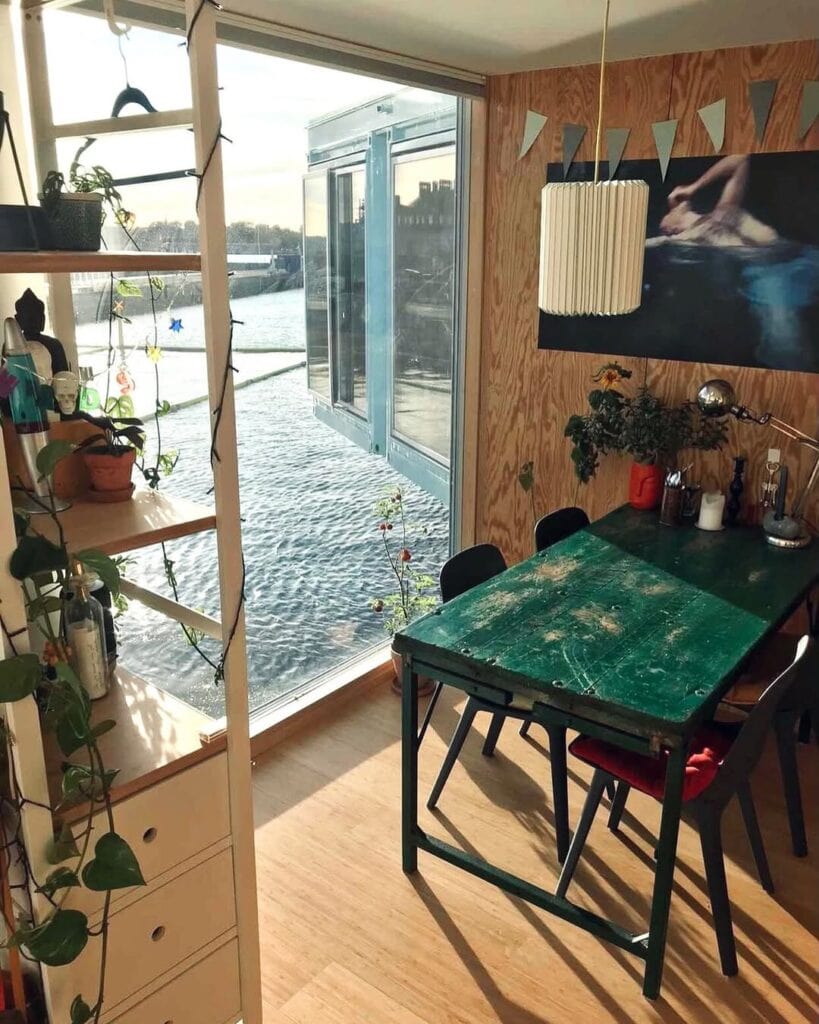
Use Bench-Style Seating to Save Floor Space on One Side
Located in a window corner, this table combines a hard bench with storage on one side and standard chairs on the other.
The bench removes the need for chairs to be pulled out and pushed in on that side. This is important in a small space. Chairs need room to slide back, but benches do not.
The slightly mismatched and worn furniture shows that “small and characterful” is better than “small and sterile.”
Takeaway: If one side of your dining table sits against a wall or window, replace chairs with a fixed bench on that side. This change gives you 12-18 inches of clearance you didn’t realize you were losing.
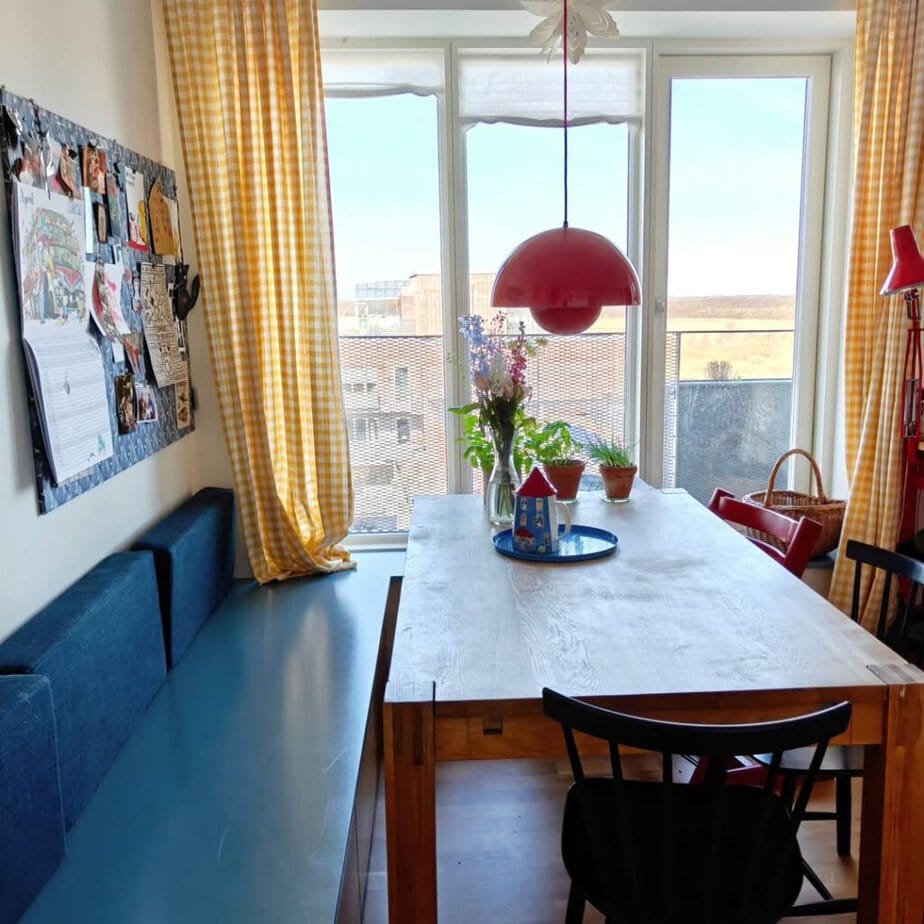
Anchor the Space with One Bold Pendant Light, Not Furniture
This dining nook is genuinely small. It features a single bench, a table, and two mismatched chairs. However, it doesn’t feel like an afterthought because of the oversized red pendant light hung directly over the table.
Since the room lacks size for visual impact, the lighting fixture carries that role. It draws the eye up and creates a clear focal point in the corner. The gingham curtains and cork board on the wall add personality without using floor space.
Takeaway: When space is limited, invest your design budget in one statement pendant instead of multiple accessories. This creates a focal point that makes the whole nook feel intentional, not cramped.
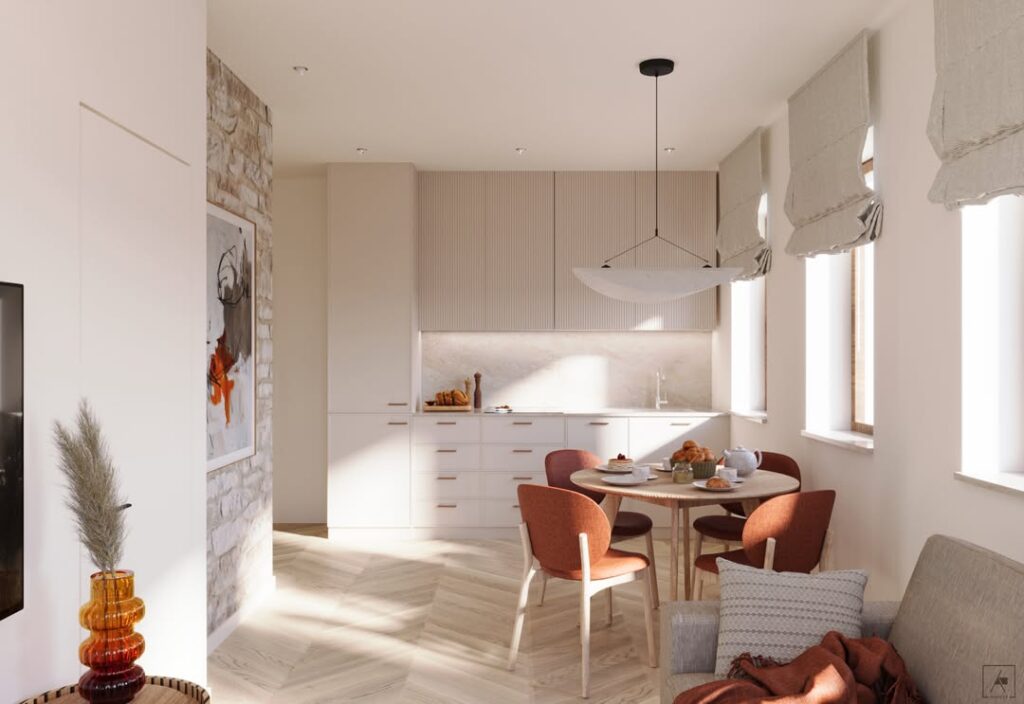
Use a Single Warm Color to Pull a Tight Galley Layout Together
This dining table sits at the end of a narrow kitchen run, but the terracotta-upholstered chairs visually connect it to the rest of the open living space rather than making it feel isolated.
Repeating one accent color, like burnt orange or rust, across the dining chairs, throw pillows, and a blanket creates a visual link. This approach makes a small, segmented floor plan feel like one unified room instead of separate areas. Light wood flooring and pale cabinetry keep the background soft so that the color stands out.
Takeaway: Choose one accent color and use it in at least three places throughout your open-plan space, such as on chairs, pillows, or a vase. This method visually ties separate areas together without adding more furniture.
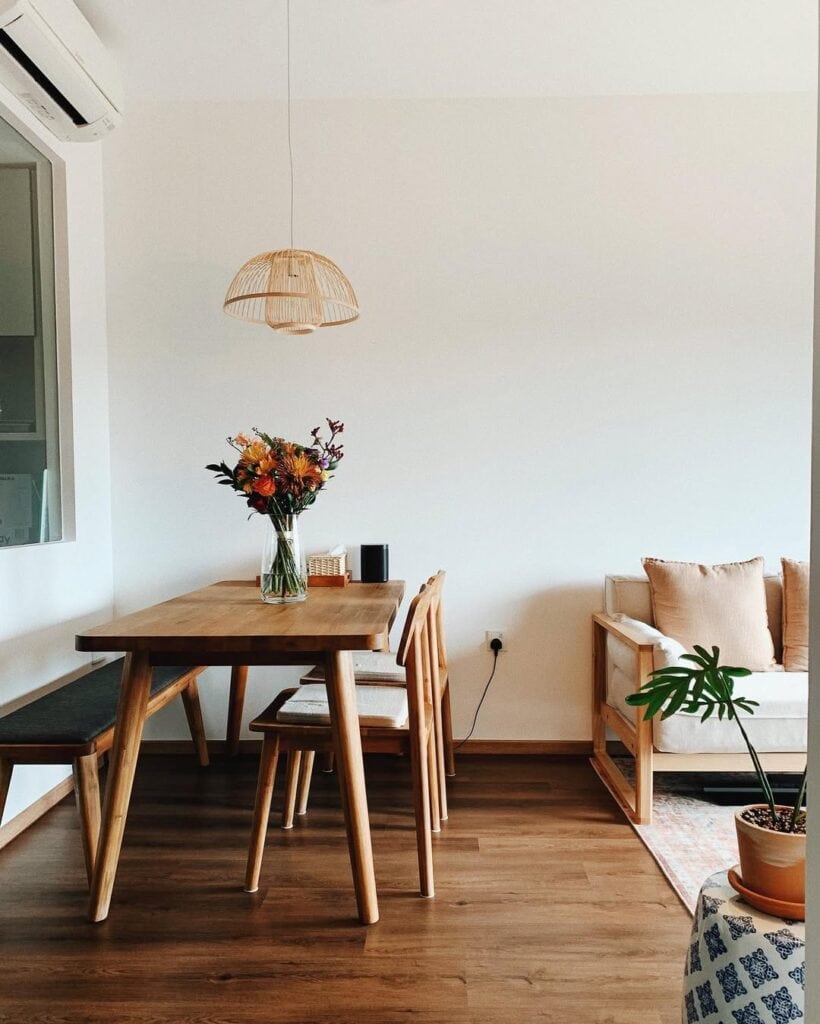
Let a Bench Replace a Chair on the Tight Side
This narrow dining area uses a slim bench on one side of the table instead of a chair. This small change matters because a bench can sit flat against a wall, while a chair needs space behind it to pull out.
The simple color scheme, just wood tones, white walls, and a few green accents, helps keep the room from feeling cluttered, especially since there is almost no other decoration.
The rattan pendant adds texture and warmth without taking up any floor space.
Takeaway: If your table is against a wall with little clearance, use a bench instead of chairs on that side. It completely removes the need for extra space to pull out chairs.
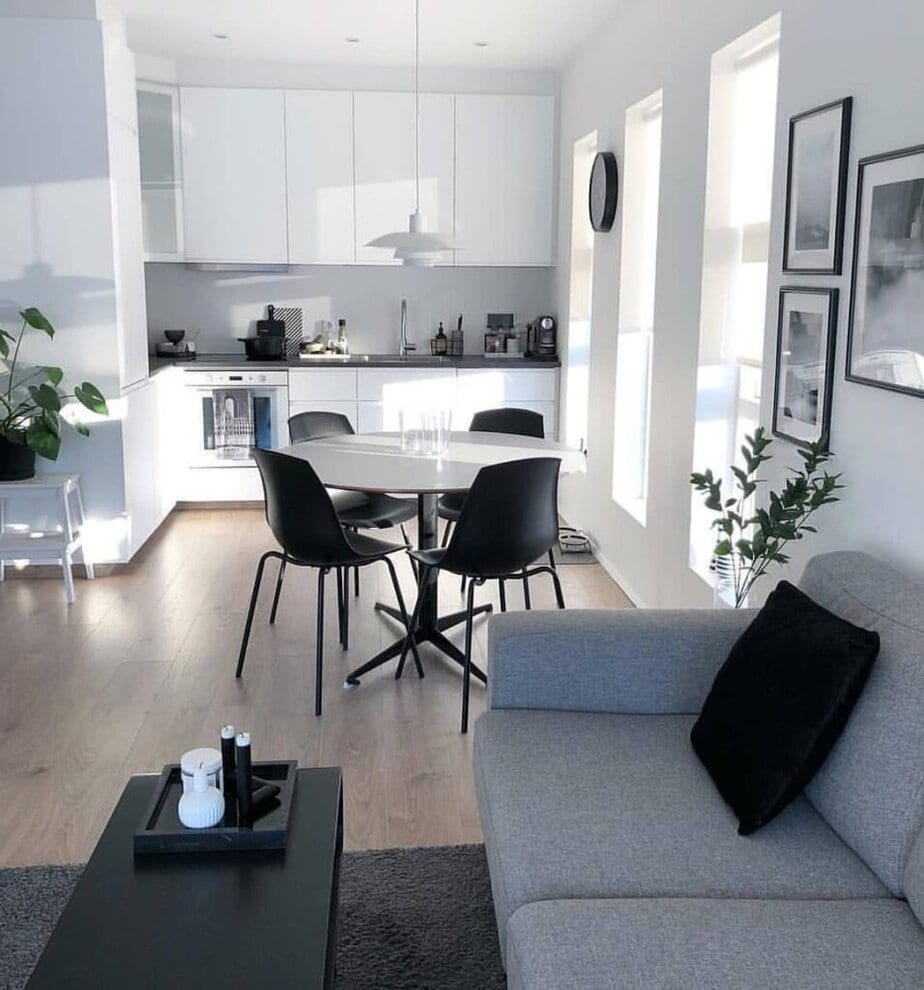
. Use a Pedestal Table to Make a Round Footprint Feel Open
This white round table rests on a single central pedestal leg instead of four legs sticking out. This detail plays a big role in this small living-dining space.
A four-legged table of the same size would take up more floor space because chairs and feet have to work around the legs. A pedestal base frees up that area completely, making the room feel more open, even though the table itself isn’t smaller.
Matching black chairs with the black coffee table and accents creates a unified look across the room.
Takeaway: When shopping for a small-space dining table, choose a pedestal or single-leg base over a four-leg design. This is the most important factor in how “open” the floor feels under the table.
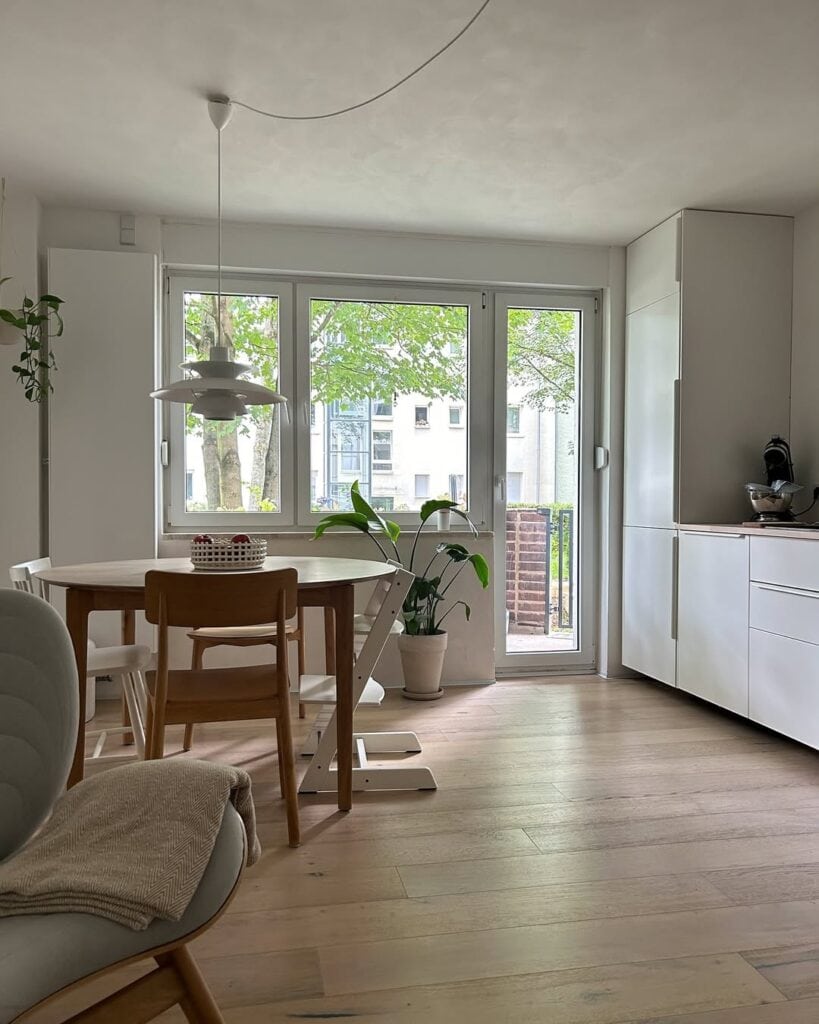
Push the Table Against the Window Wall to Reclaim Walking Room
Here, the round table is placed right against the window, with one chair almost touching the glass. This layout works because the table is small enough not to block the door to the balcony.
This is a typical compromise: instead of centering the table in the room, which would limit walking space, it stays along the edge to keep the main floor open for movement. The included high chair shows that this strategy works for families, not just solo diners.
Takeaway: If your dining area also serves as a walkway, push the table to the wall nearest the window instead of centering it. This keeps your main path clear, even in a tight space.
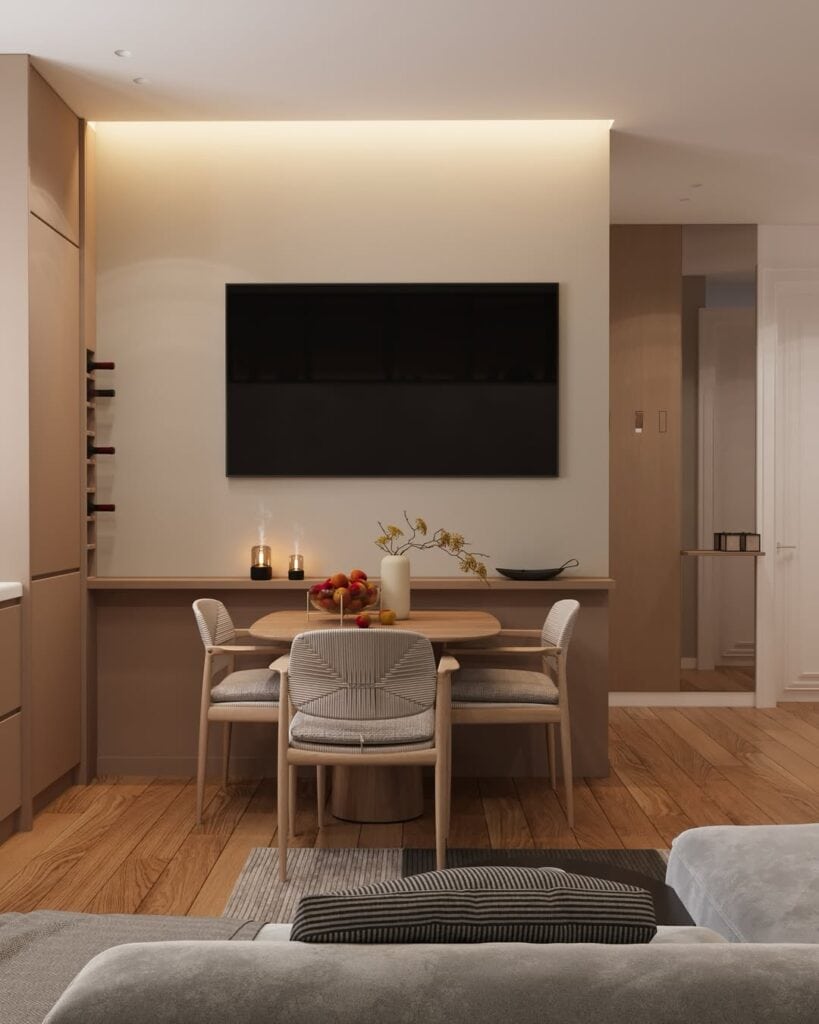
Build a Banquette-Style Nook Into a Media Wall
Instead of keeping the small dining table separate, this design places it directly under the TV console. It uses the same materials and finish as the cabinetry above.
Since the table and wall unit share these elements, the dining area feels like a part of the architecture, not just an extra piece of furniture taking up space.
Rounded table edges and woven chair backs soften what could seem like a very hard-edged wall.
Takeaway: If you’re renovating, think about fitting your dining table into existing millwork or a media wall. Matching materials will make the table seem built-in instead of cluttering the space.
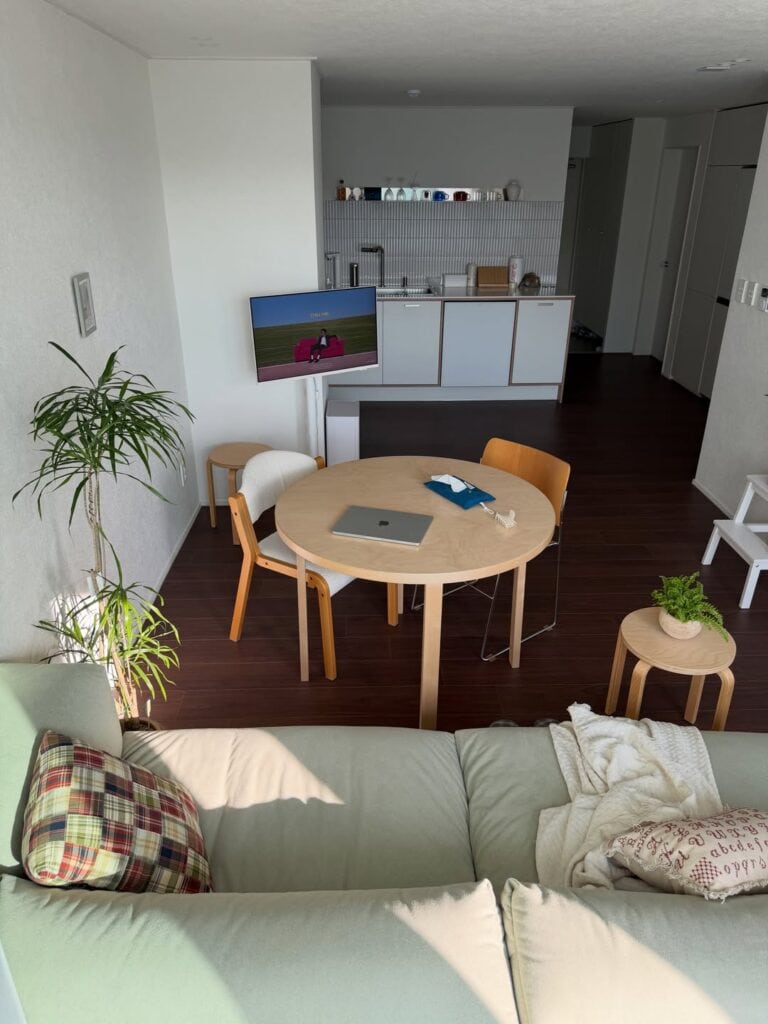
Mix Chair Styles Instead of Buying a Matching Set
This small compact dining corner features two different chairs, one upholstered boucle-style and one simple bentwood, around a small round table. It works well because the table’s light wood tone connects them.
In small spaces, a perfectly matched dining set can make the area feel formal and bulky. Mismatched chairs appear more collected over time and relaxed, which fits a casual, multi-purpose room.
The round tabletop is just slightly larger than needed; it accommodates a laptop and two place settings, without taking up too much space.
Takeaway: Don’t feel stuck with a matching chair set. Pairing two different chair styles around a small table often looks more intentional than a uniform set, and gives you more options to buy pieces separately.
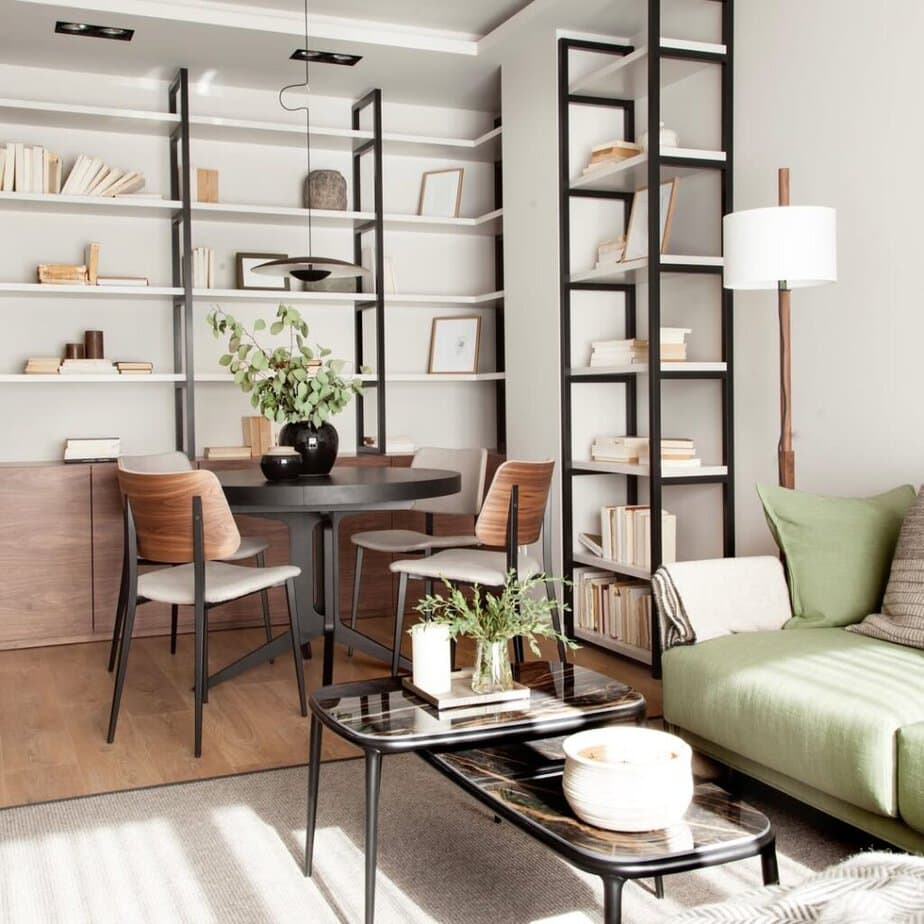
Use a Floor-to-Ceiling Shelving Unit as a Room Divider Behind the Table
This small dining nook gets its sense of enclosure from a tall, open-frame bookshelf placed directly behind the table. It visually separates the dining area from the living room without needing a wall.
Since the shelving is open, light and sightlines still flow through, keeping the space feeling open rather than divided.
A round table with a black pedestal base matches the dark metal tone of the shelving frame, bringing the “room within a room” together as one cohesive vignette.
Takeaway: If you want to define a small dining area in an open space, an open-frame shelving unit offers separation without blocking light like a solid wall or panel would.