15 Small Full Bathroom Ideas That Make Every Square Foot Work Harder
A “full bathroom” means the room must fit a toilet, a sink, and a tub or shower. That’s essential. However, when the space is small, every inch must serve a purpose. Most small-bathroom advice, often aimed at half-bathrooms or powder rooms, doesn’t really apply here.
If you’re looking at a small, awkward, or outdated full bathroom and wondering if it can feel spacious and intentional, the answer is yes. You don’t need a bigger room. You need to make smarter choices: the right tile direction, a layout that respects space, fixtures that fit rather than crowd the area, and lighting that compensates for the lack of natural light.
In this list, you’ll find real examples of small full bathrooms that work. These are not staged showroom photos; they are layouts and finishes you can actually analyze and imitate. Each one explains why the technique is effective, so you’ll leave with a method, not just an idea board.
What is considered a “full bathroom”? A full bathroom has all four essential elements: a toilet, a sink, and a bathtub or shower. Some codes require a tub to be counted as “full,” while others accept just a shower. This is important because a small full bath has the toughest job in the house. It has to fit the most fixtures into the least space. That’s why the ideas in this post focus mostly on layout, not just decor.
Now, let’s get started.
15 Small Full Bathroom Ideas To Copy
Herringbone Floors and a Continuous Wall-Hung Vanity
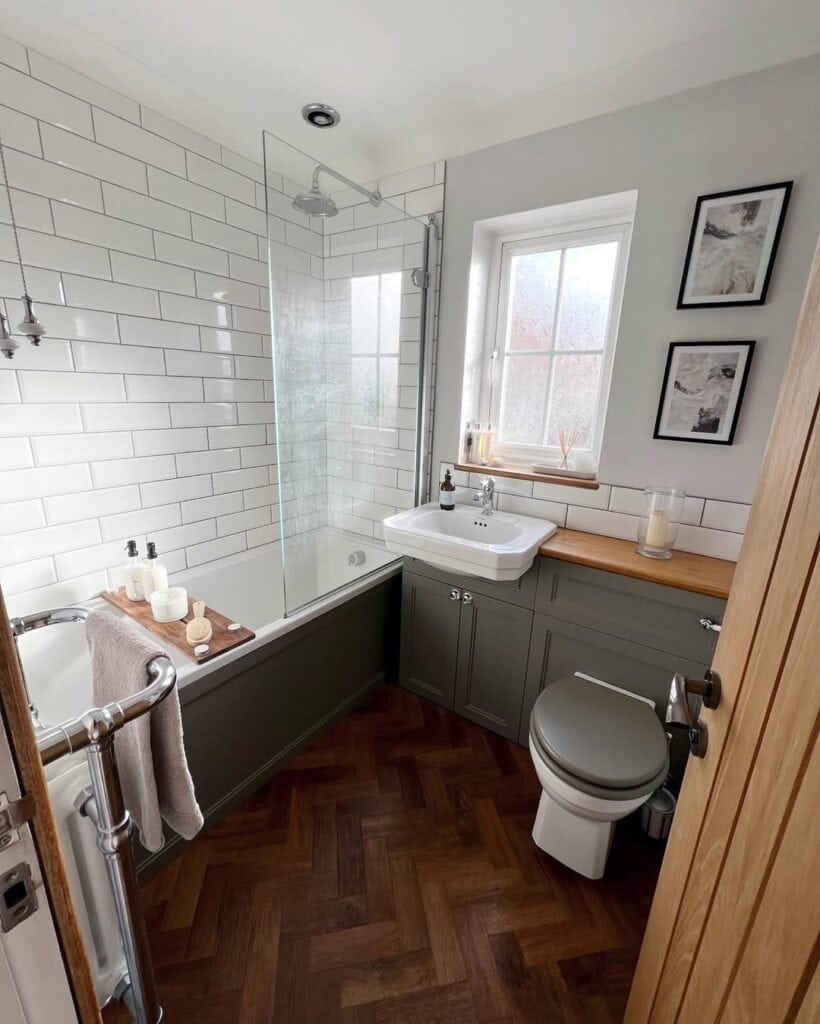
This bathroom shows that a small full bath can feel layered and thoughtful, not just practical. The main feature is the herringbone wood-look floor tile. It adds movement and visual interest in a space where wall area is mostly taken up by fixtures. This tile is one of the few surfaces that gives a small bathroom a “designed” feel without taking up floor space.
The cabinetry is also important. The vanity, open shelf, and toilet surround are built as a single continuous unit at the same height. This makes it look like a single intentional piece of furniture rather than three separate fixtures competing for attention.
Takeaway: In a small bathroom, combine your storage into one continuous run at a consistent height. This tricks the eye into seeing a single piece of furniture rather than a cluttered row of fixtures.
Designer Tip: A wall-hung sink, instead of a full pedestal or vanity cabinet, opens up visible floor space underneath. This is more significant in square footage than it seems. Your eye perceives exposed floor as “more room,” even when the actual size hasn’t changed.
Pattern as the Focal Point, Not the Whole Room
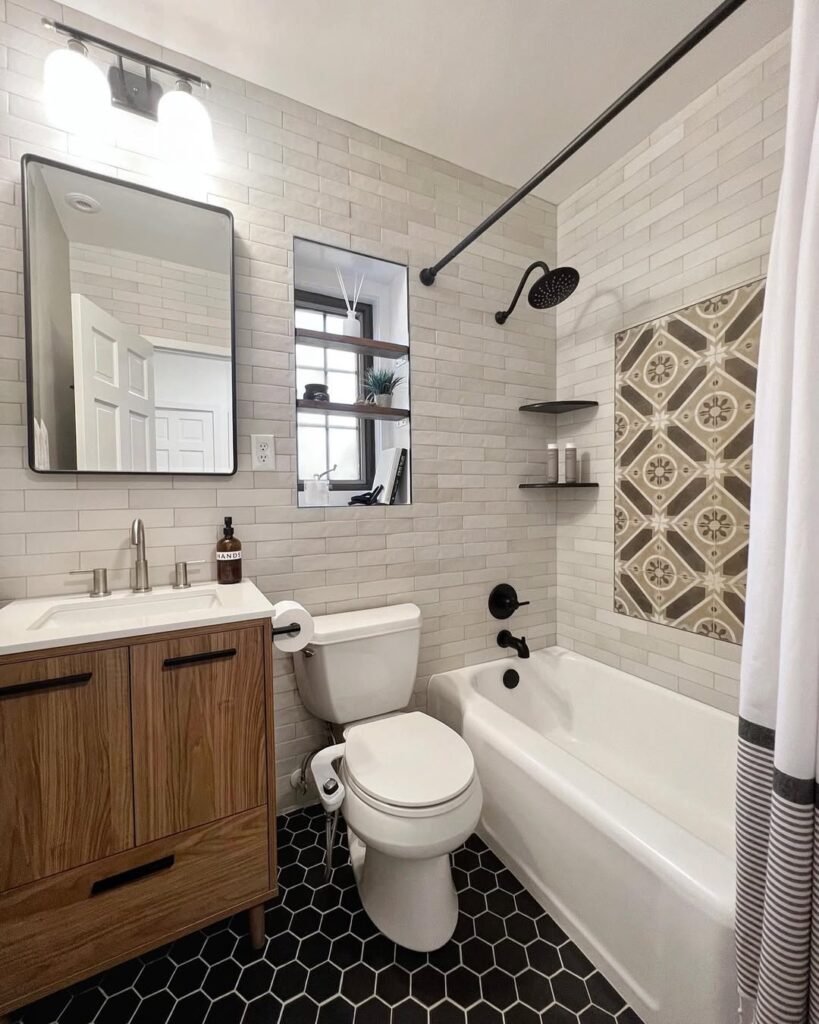
Here, the technique emphasizes restraint with one exception: a single accent tile panel breaks up an otherwise quiet palette of light subway tile and black hexagon flooring. The patterned tile is limited to the back wall of the tub surround. This approach makes it feel like art rather than overwhelming the space.
A small full bathroom can handle one bold moment, but too many can be too much. The black hardware and matte black showerhead connect the pattern to the rest of the room, preventing it from feeling like an unrelated accent.
Takeaway: If you want a pattern in a small bathroom, limit it to one wall or one area and use its accent color (in this case, black) in the fixtures to avoid it feeling like an afterthought.
Why This Works: Keeping the pattern to a single plane allows the other materials—wood vanity, white subway tile, black fixtures—to remain simple. Having both pattern and material variety compete for attention would make the room seem busy rather than curated.

Open Shelving That Functions Like Wall Art
This small bathroom features a slatted wood shelf mounted above the toilet. It serves two purposes: storage and decoration. The slats add texture without taking up much space. The open structure doesn’t appear as a solid block on the wall. The styling, which includes framed prints, a trailing plant, and small objects, gives the room a personal touch that built-in storage alone can’t provide. Placing it above the toilet utilizes a typically wasted vertical space in small bathrooms.
Takeaway: The wall above your toilet is valuable in a small bathroom. A slim, open shelf there adds both storage and personality while keeping the walkway clear.
Best For: Renters or anyone looking for flexibility. Open shelving like this is simple to install, remove, and restyle compared to built-in niches or recessed cabinets.
Vertical Tile to Stretch the Walls Upward
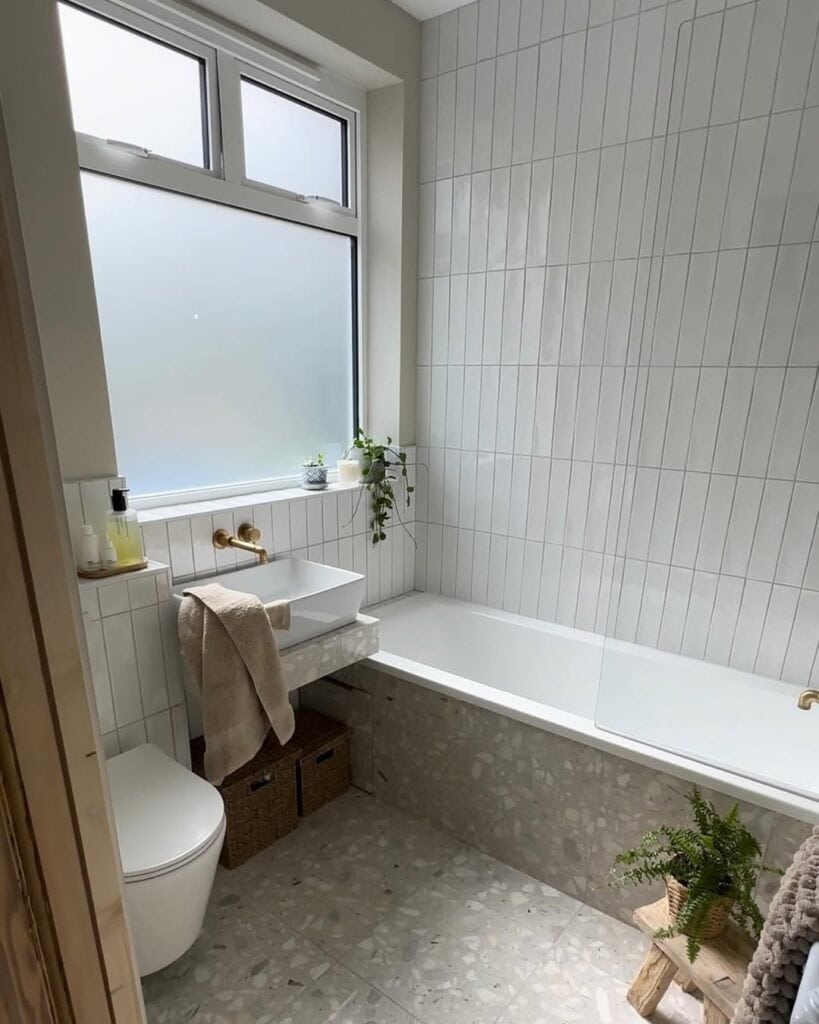
The tile here is arranged in a vertical, stacked layout instead of the usual horizontal brick pattern, and that simple choice makes a big difference. Vertical lines draw the eye upward, making the ceiling seem higher and the room taller than it really is.
This is a well-known trick for addressing a small space when you can’t widen the room. Using a floating, wall-mounted sink instead of a vanity with legs or a pedestal supports this effect by keeping the area beneath it visually open.
Takeaway: If your small bathroom feels short or boxy, ask your tiler to install subway tile vertically instead of horizontally. It’s the same tile and the same price, but it changes the perception of scale.
Common Mistake to Avoid: Don’t mix vertical tile on one wall with horizontal on another in a small area; it creates visual conflict. Choose one layout and use it consistently to ensure the height illusion works.

A Saturated Color Pop Confined to One Plane
This small bathroom takes a different approach from the usual advice for small bathrooms that favors neutral colors. It features a richly textured green tile that covers one full wall and a built-in niche, while the tub surround and other walls remain white.
Since the green is limited to just one wall, it serves as a striking focal point without making the space feel small. The white walls and ceiling help keep the room open, while the green wall adds character and depth.
The recessed niche in that same wall is a smart design choice, providing built-in storage rather than an added shelf that would take up space.
Takeaway: One bold accent wall, paired with white on every other surface, lets you introduce strong color without making your small bathroom feel cramped.
Budget-Friendly Alternative: If you can’t retile an entire wall, consider adding a single recessed shelf or a row of ceramic tile in a bold color, placed only inside the shower or tub surround. This approach delivers a similar pop-of-color effect at a lower material cost.
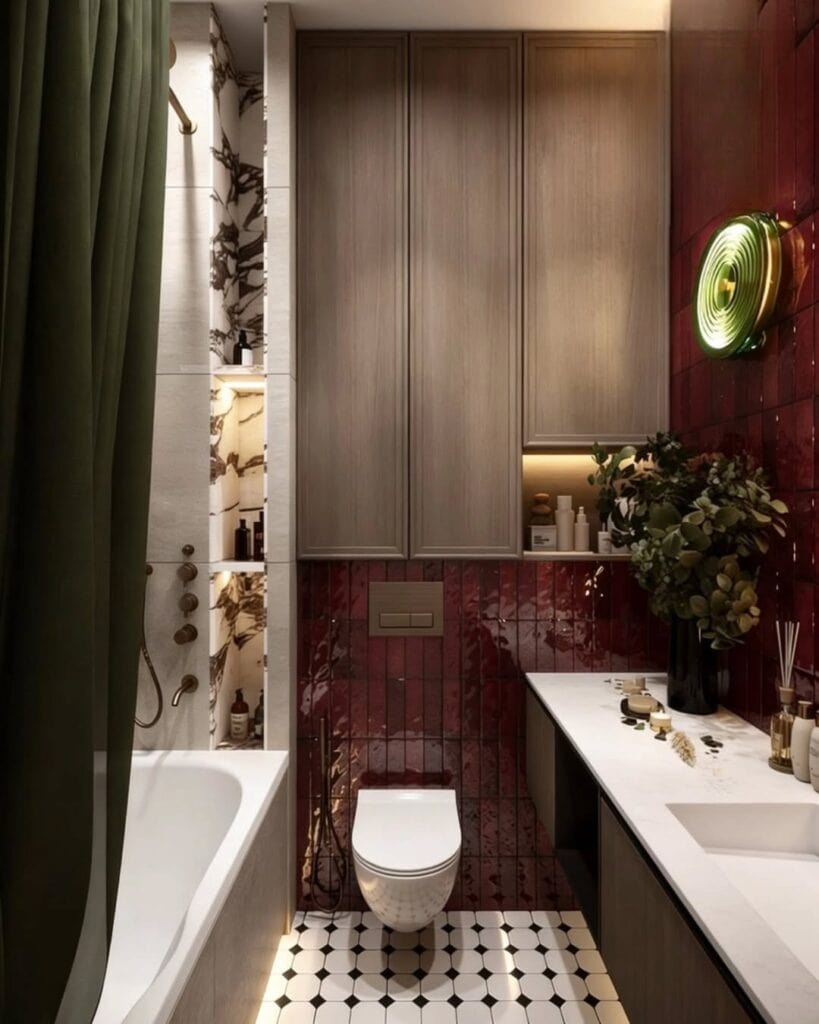
Ceiling-Height Cabinetry With a Lit Niche
This bathroom shows that a small full bath can definitely have a rich, deep color scheme. The key is to balance the dark wall color with smart storage solutions.
The floor-to-ceiling cabinets above the toilet provide ample storage within a single unit. This setup eliminates the need for freestanding shelving that could clutter the space. The lit stone niche next to the tub serves two purposes: it holds daily toiletries, and the warm light makes it a design element, which is important in a room with little natural light.
Takeaway: If you choose a dark or rich wall color in a small bathroom, install storage that reaches the ceiling. This design feels intentional and uncluttered, since there’s no unused wall space that would make the room seem busy.
Designer Tip: Adding a built-in lit niche is a worthwhile investment during renovation. It replaces the need for a shower caddy or shelf, and the light makes a deep, dark room feel warm instead of cave-like.
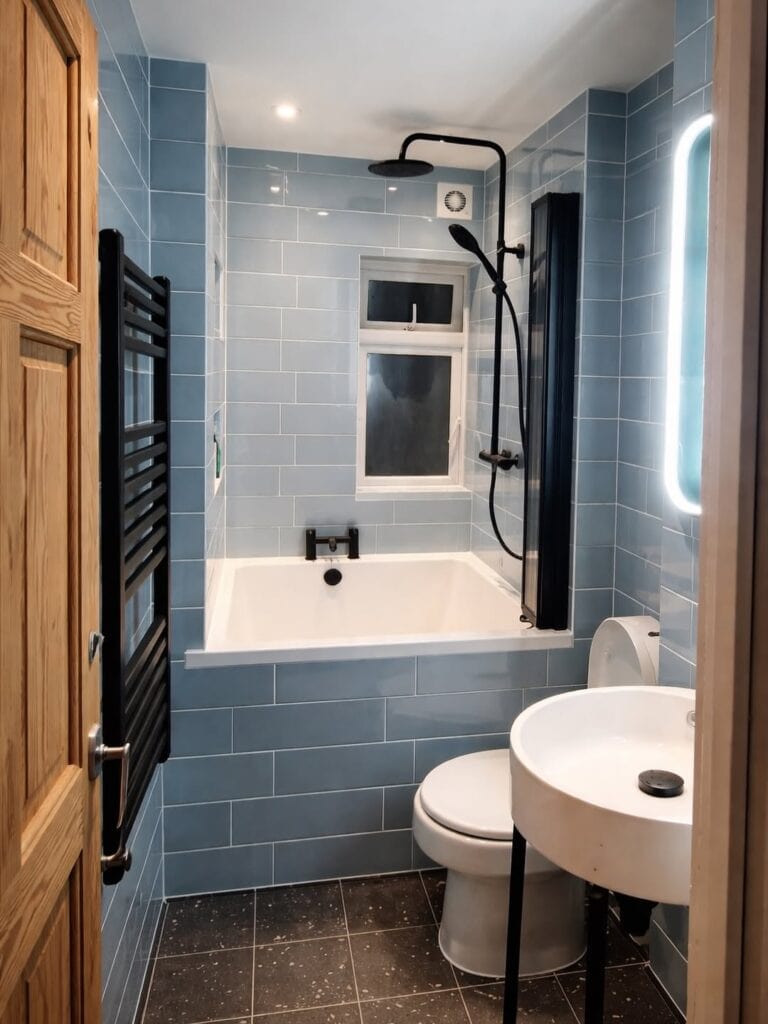
A Round Pedestal Sink That Visually Floats
The standout feature in this small bath is the sculptural, round-basin sink set on slender black legs rather than a boxy vanity. In a narrow galley-style bathroom like this one, a bulky vanity would crowd the walkway.
The open-legged design lets you see the floor below, which helps the already tight space feel less like a corridor. The matte black hardware throughout, including the shower fixtures, taps, and sink legs, brings the room together despite having three different fixture types.
Takeaway: In a narrow bathroom, a pedestal or leggy sink design will almost always create a more open feel than a closed vanity. Use “see-through” furniture in tight spaces.
Common Mistake to Avoid: Don’t choose a sculptural sink and then fill the space with clutter. Its main purpose is to keep the floor open, so opt for wall-mounted storage rather than placing baskets or bins on the floor.
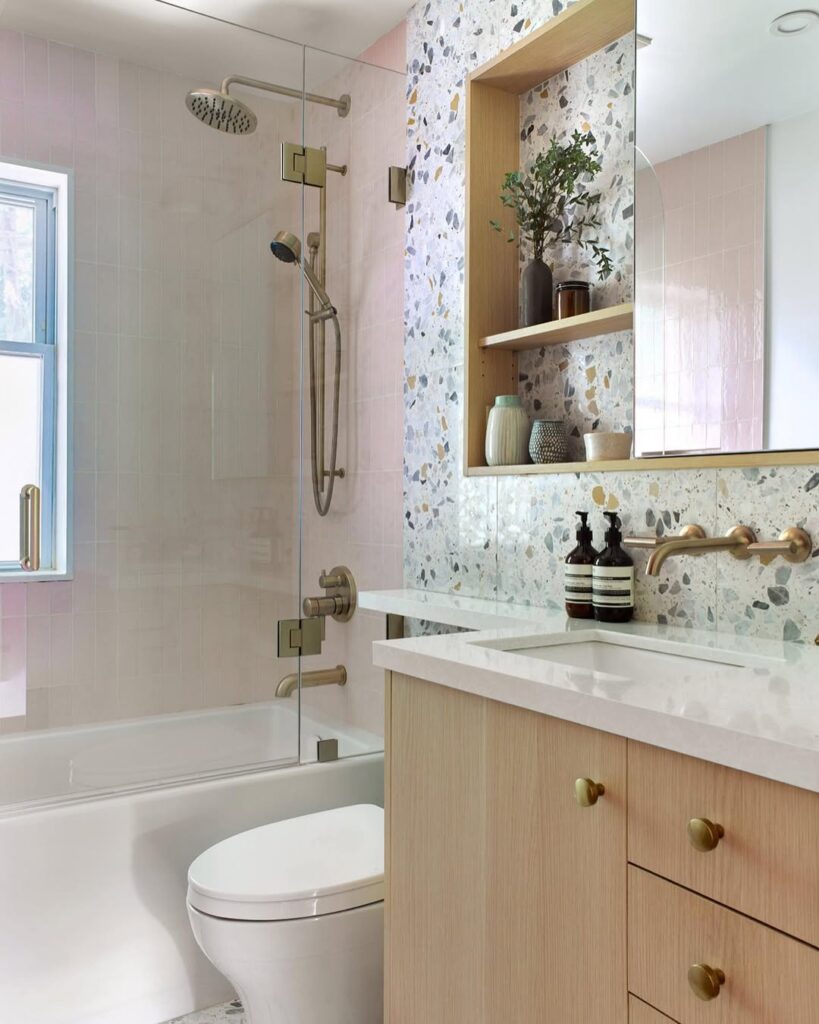
A Built-In Niche as the Tile’s Showcase Moment
This small bathroom transforms a recessed shower niche into the standout feature by lining it with the same striking terrazzo tile as the feature wall and framing it in warm wood. Instead of viewing the niche as just storage space, it is placed at eye level next to the vanity mirror, creating a styled vignette resembling a piece of art holding a plant and a few ceramics.
The result is a small bathroom that doesn’t attempt to hide its size; it’s confidently designed within the same area.
Takeaway: If you are already tiling a feature wall, extend the same tile into your storage niche. This approach turns a practical need into a unified design statement rather than an afterthought.
Styling Suggestion: Decorate a niche shelf like a small vignette. Include one plant and one or two objects, along with some empty space. Overfilling it can ruin the “art moment” effect and make it appear as overflow storage.
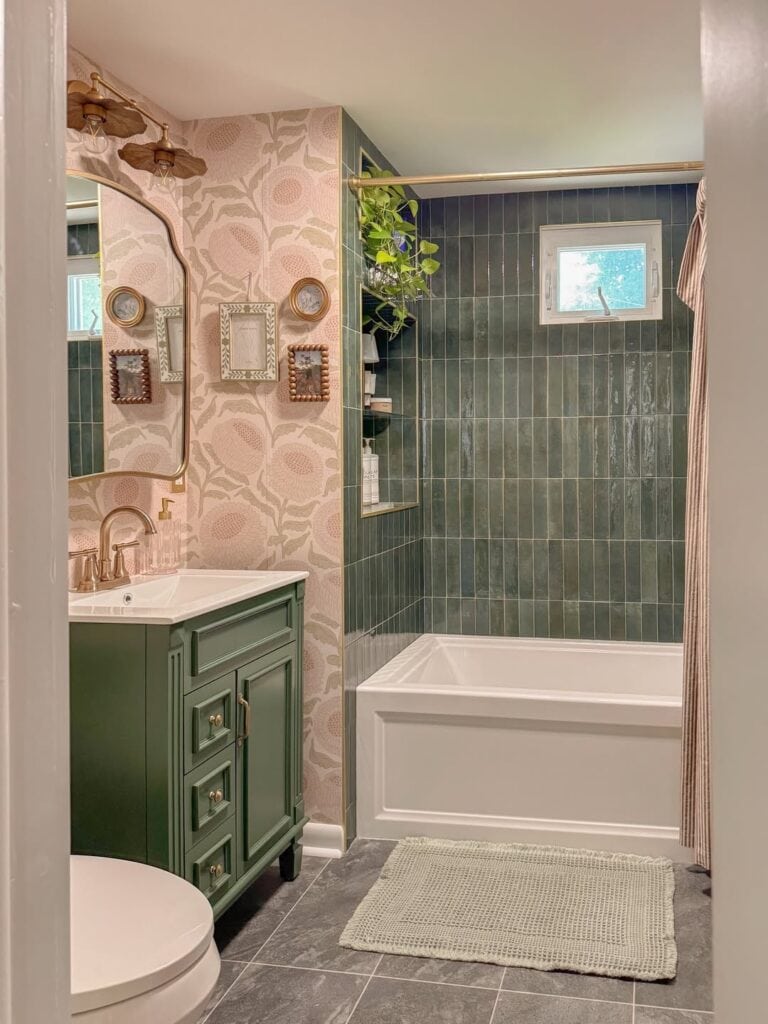
Pattern-Drenched Walls With a Single Color Anchor
This is a great example of how busy a small bathroom can be when everything is tied together by a repeated color. The floral wallpaper, tiled tub surround, and painted vanity all work well because green and soft pink appear on each surface. The colors in the wallpaper mirror the green tile and cabinetry, creating a cohesive look.
This method is more effective than the typical “one neutral, one accent” strategy. Using patterns together can succeed in a small space if the colors are controlled.
Takeaway: If you want to combine wallpaper and tile in a small bathroom, select patterns that share a color palette. This common color prevents “a lot going on” from turning into “too much.”
Best For: Decorators who want their small bathroom to feel like a jewel box instead of a neutral space. This approach favors bold choices over hesitance.
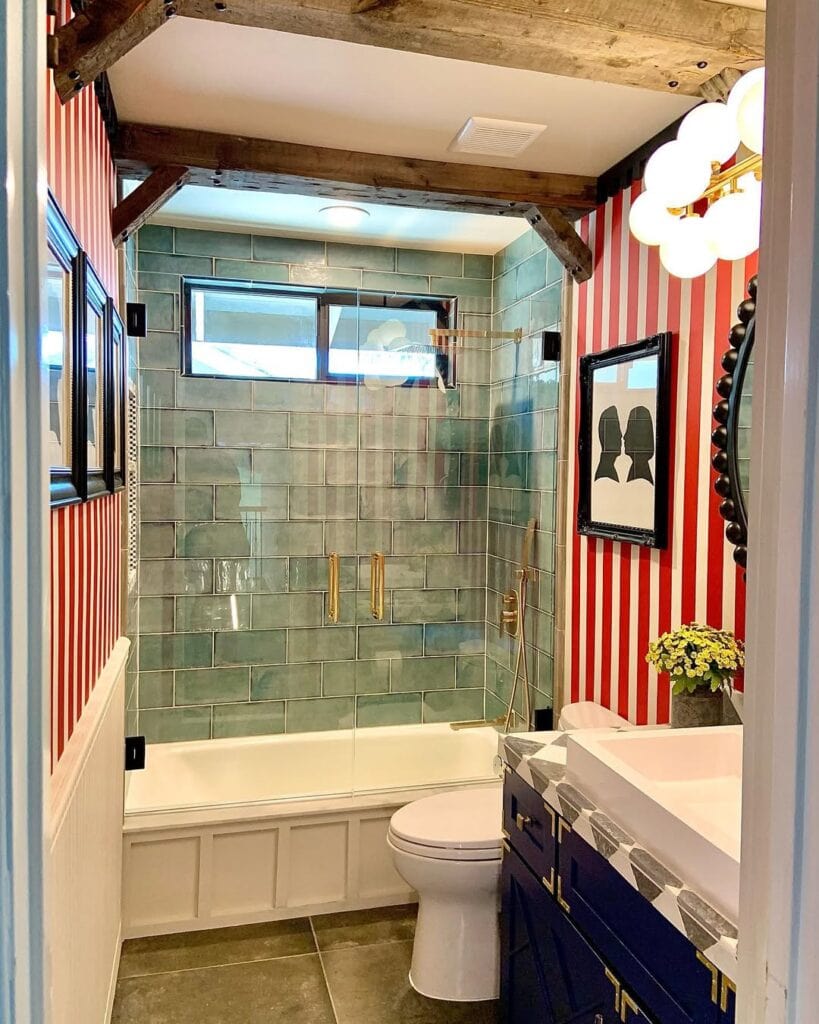
Exposed Beams and Stripes for Cottage Character
This small bathroom embraces its unique architectural features instead of hiding them. The reclaimed wood beam framing the tub alcove remains visible, adding real character that a flat ceiling would not provide. The bold red-and-white striped wallpaper enhances the cottage feel. The vertical stripes help create a height-stretching effect similar to vertical tile but in a more playful, maximalist style. A sea-glass green tile surrounds the tub, and a navy vanity completes a bright color scheme that doesn’t seem like an attempt to make a small room vanish.
Takeaway: If your small bathroom has a unique feature, like a beam, an angled ceiling, or an alcove, don’t conceal it. Highlight it, illuminate it, and let it define the room’s character instead of being a limitation.
Pro Tip: Vertical stripes, whether in wallpaper or paint, offer the same height-boosting effect as vertical tile, but at a much lower cost. This is a great option if full tiling isn’t feasible.

A Crittall-Style Screen as the Statement Piece
This small bathroom takes a standard glass shower screen and turns it into a focal point with a black-framed, grid-paneled design instead of plain glass. It features the same industrial “Crittall window” look often used for room dividers or actual windows. Set against deep emerald zellige-style tile, the black grid lines give structure to what is usually the most overlooked part of a tub-shower combo. Pairing the screen’s black frame with brass fixtures and a checkerboard floor creates a boutique-hotel feel, even in a small space.
Takeaway: Don’t treat your shower screen as an afterthought. A framed or paned design can serve as an architectural piece in the room, not just a water barrier.
Designer Tip: Dark grout and a dark-framed screen don’t visually recede as much as you might think. What makes this room feel spacious is the glossy, light-reflecting tile finish working with the dark tones, not despite them.
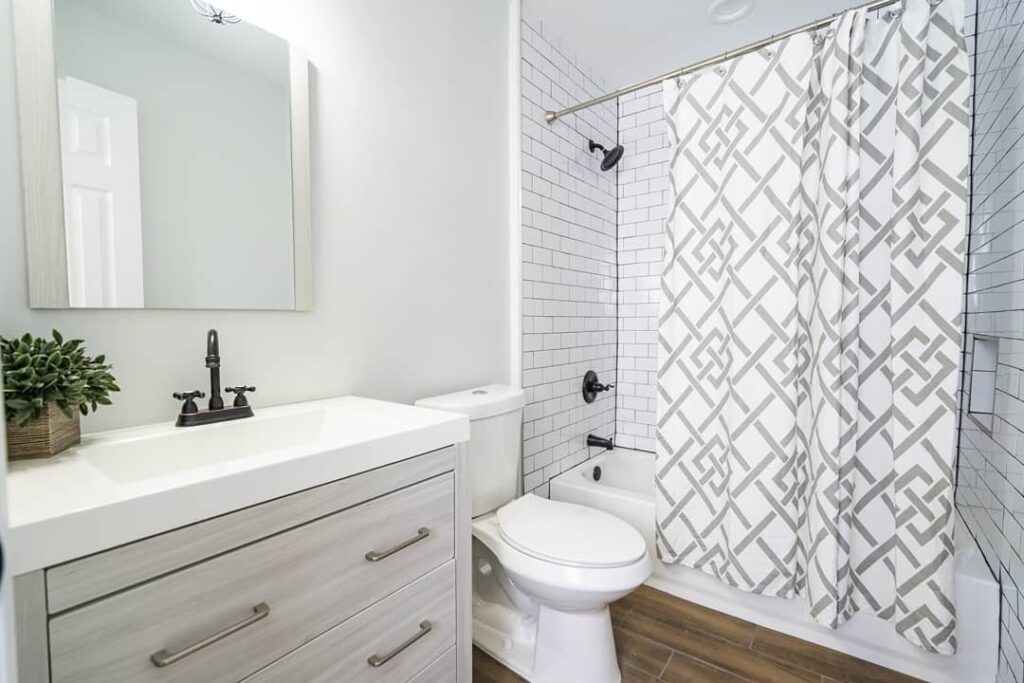
Letting a Patterned Curtain Do the Decorating
This is the most budget-friendly technique on the list. A bold geometric shower curtain serves as the room’s main design element, while everything else remains neutral, like subway tile, white fixtures, and a simple vanity.
Since a curtain is inexpensive and easy to replace, it adds personality to the room without requiring tile work, renovation, or commitment. This approach is great for rentals or anyone looking to update a builder-grade bathroom on a tight budget.
Takeaway: If retiling isn’t an option, a patterned shower curtain is the most impactful and cost-effective way to add personality to a plain small bathroom. Plus, you can change it again next year.
Budget-Friendly Alternative: Skip the matching bath mat and towel set. Let the curtain be the only pattern in the room, keeping all other textiles solid. This way, the curtain feels like a thoughtful choice rather than competing for attention.
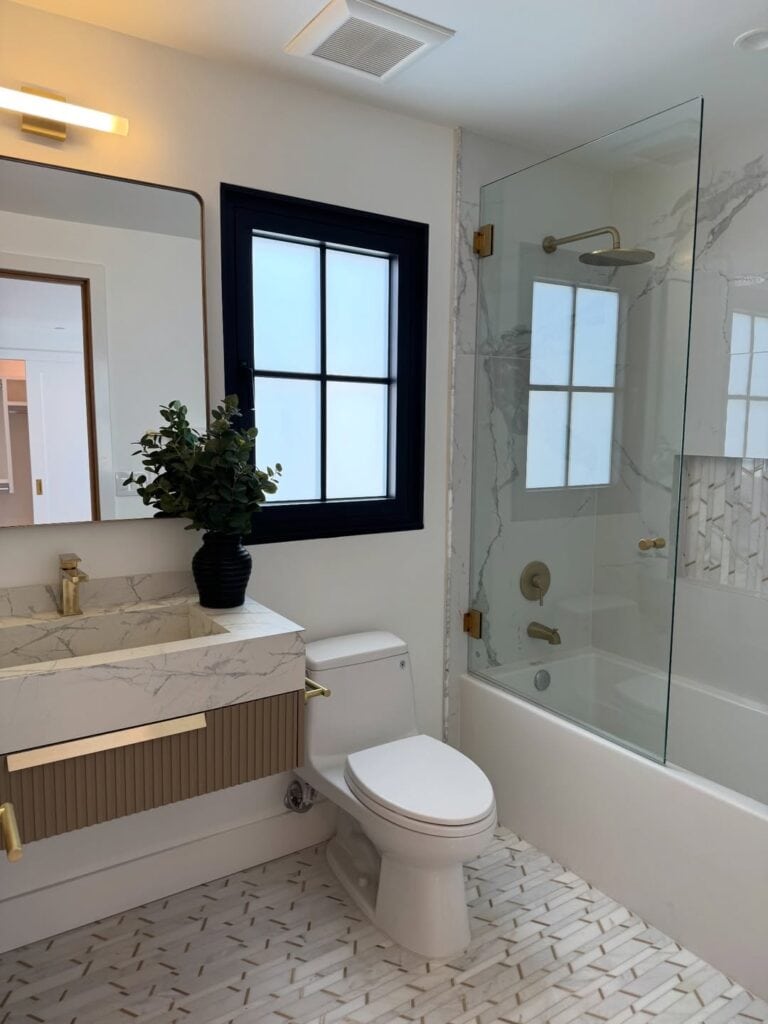
A Sculptural Vanity Paired With Quiet Marble
Here, the marble-look porcelain tile and countertop create a calm and consistent look across the walls, floor, and shower surround. This design gives the room a larger feeling. Against that subtle backdrop, a fluted wood vanity front and a black ribbed vase add texture, preventing the room from feeling sterile.
The black-framed window is a small but intentional detail. It mirrors the black hardware throughout and prevents the all-white, all-marble scheme from feeling cold.
Takeaway: When your tile and countertop have a “quiet, expensive” marble look, add warmth with a single textured material, such as fluted wood, ribbed ceramic, or woven baskets. This texture stops an all-marble room from feeling like a showroom.
Best For: Anyone renovating with resale in mind. A neutral, marble-look base with interchangeable warm accents ages well and isn’t tied to any single trend.
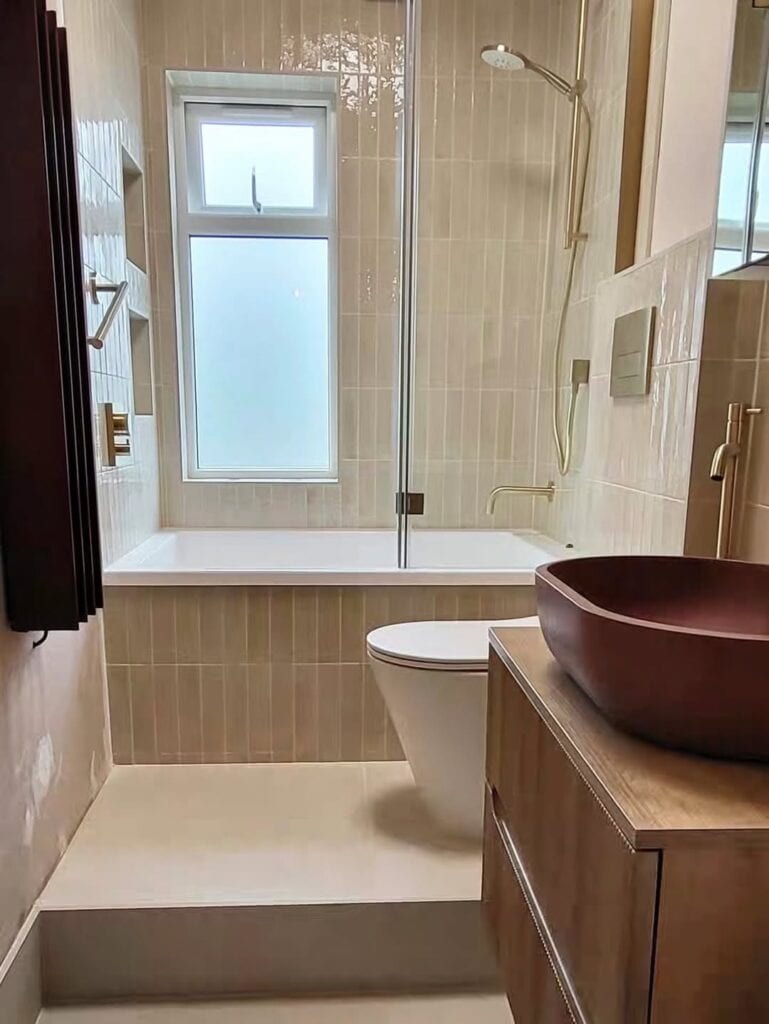
A Sculptural Vessel Sink as the Room’s Signature Object
This small bathroom features warm, vertical tile and brass fixtures, creating a calm backdrop for one standout item: an oversized, organically shaped wood-toned vessel sink.
Since the rest of the bathroom, including the tile, toilet, and flooring, maintains a tight, warm neutral palette, the sink can be sculptural and unique without clashing. This illustrates the idea of selecting one “splurge” item and allowing everything else to support it quietly.
Takeaway: Choose one fixture to be the signature piece in your small bathroom. Typically, this will be the sink, as it is the most visible. Keep the tile, paint, and fittings around it intentionally simple so that the statement piece truly catches attention.
Why This Works: A room can only handle one bold element before it starts to compete with itself. In this case, the vertical tile and brass hardware play supporting roles rather than taking center stage.
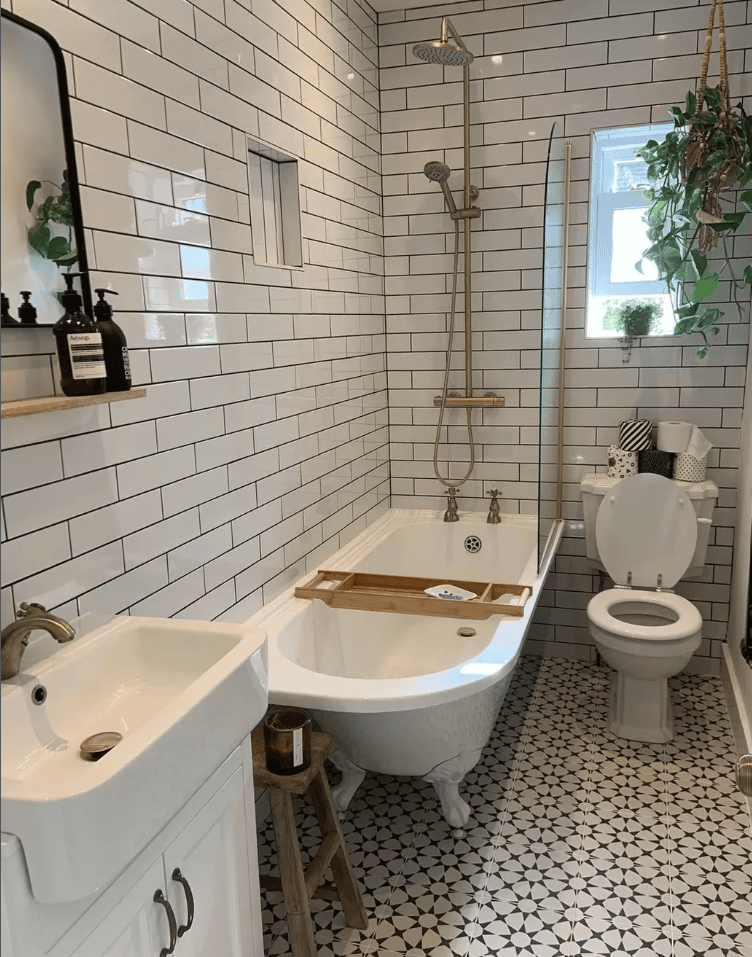
A Slipper Tub That Borrows Visual Length
The claw-foot slipper tub is positioned with its raised end against the back wall. This arrangement extends the sightline and makes the narrow space feel more like a thoughtful design choice rather than a cramped area.
Classic white subway tile with dark grout gives the walls a striking look without clashing with the tub’s curved shape. A recessed niche cut into the tile wall provides storage without taking up any extra space. A trailing plant by the window and a bath caddy across the tub complete the design, creating a look that feels considered rather than crowded.
Takeaway: A freestanding or slipper tub with visible legs allows you to see the floor beneath and around it. In a small bathroom, this visible flooring makes the room feel more open than the tub’s size would suggest.
Common Mistake to Avoid: Don’t push a freestanding tub flush into a corner to save space. Losing the visible gap around it removes the airy effect that makes this style work well in small rooms.
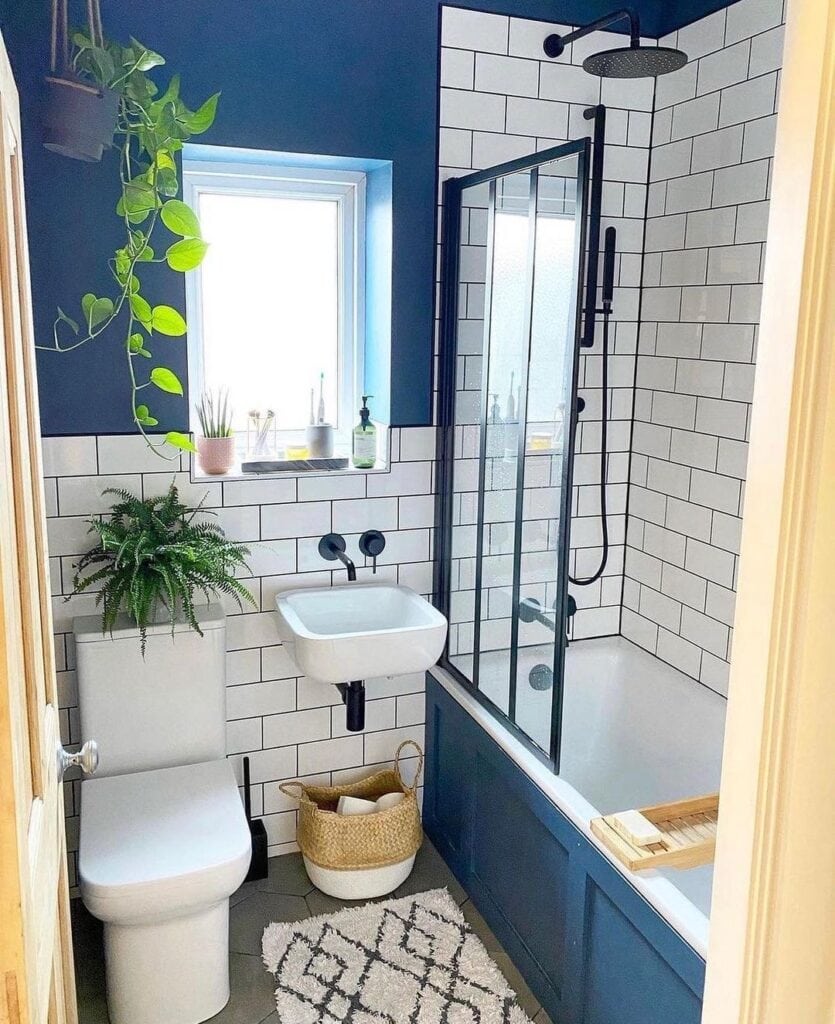
A Bold Navy Half-Wall Behind White Tile
This small bathroom demonstrates how to use a strong color without overwhelming a small space. Navy paint covers the upper walls and ceiling, while white subway tile covers the lower half and the entire shower/tub surround.
This horizontal division keeps the most light-reflecting surfaces, tile and sanitaryware, at or below eye level. Meanwhile, the color remains high, adding drama without making the room feel cramped. Trailing plants hung near the window bring a touch of softness to the hard tile and dark color, preventing the room from feeling too stark.
Takeaway: If you want a dark accent color in a small bathroom, place it above a tiled half-wall instead of going floor-to-ceiling. The tile keeps the lower half bright and anchored while the color works its magic up top.
Designer Tip: Match your hardware finish, in this case matte black, to the boldest color in the room rather than the tile. This connects the fixtures to the “statement” element instead of the neutral one.

Reviving Period Character With a Roll-Top Tub
This small bathroom fully embraces traditional English style. It features a cast-iron roll-top tub on clawed feet, cross-handle taps, and patterned encaustic-style floor tiles that evoke a sense of heritage. The sage-green upper wall pairs with white subway-tile wainscoting below.
This classic layout, with roughly two-thirds tile and one-third paint, has been used in bathrooms for over a century. It keeps the room grounded while allowing for color overhead.
A small wooden stool serves as a side table. This clever and low-cost choice is a nice alternative to built-in shelving, which a period bathroom may not be able to support structurally.
Takeaway: If your small bathroom lacks space, a simple stool can hold a plant, a candle, or towels just as well. It’s also easy to move out of the way when needed.
Best For: Period or character homes where you want the bathroom to feel original to the house rather than a modern addition.

A Warm, Unexpected Wall Color Instead of White
Most small-bathroom advice suggests using white or other light neutral colors for the walls. However, this room shows that a warm peach tone can make a small space feel inviting instead of confined. Because the color is warm, it doesn’t make the room feel smaller like navy or charcoal might.
Floating corner shelves keep storage light and away from the wall color. A frameless glass screen, rather than a curtain or a framed screen, helps the shower area feel like part of the larger room rather than a separate, closed-off space.
Takeaway: Don’t stick to white walls just because you think a small bathroom needs to be light. A warm, mid-tone color can make the space feel cozy rather than cramped, especially when combined with brass fixtures and plenty of natural light.
Why This Works: Warm colors are less overwhelming than dark, cool tones. Therefore, shades like peach, terracotta, or warm clay can be bolder than you might think without making the room seem smaller.

LED Strip Lighting for a Boutique-Hotel Glow
This small bathroom uses hidden LED strip lights, placed behind the mirror and along an open shelf, to create a warm glow that overhead lighting can’t provide. This lighting makes the room feel more like a spa or boutique hotel, rather than just a functional space. It also offers useful light at vanity height, which is often missing in small bathrooms that have only a single ceiling fixture.
Black-framed glass elements, such as the shower screen and mirror trim, connect with matte black fixtures, giving the warm wall tile a modern touch.
Takeaway: A strip of warm LED lighting behind your mirror or under a shelf provides an ambient glow that makes a small bathroom feel like a retreat. This upgrade is simple and doesn’t require a full renovation.
Pro Tip: Use a warm white LED color temperature, around 2700K to 3000K, instead of cool white for this effect. Cool light can clash with warm tile tones, creating a clinical look instead of a cozy atmosphere.