Small Pantry? No Problem. Here are 15 Ideas to Organize It Like a Pro
Small pantry. Big frustration. We get it.
You’ve got cans rolling to the back of shelves you can barely reach, snacks buried behind breakfast cereal, and a spice collection that’s basically a game of hide and seek every time you cook. And don’t even get started on the stuff that falls out every time you open the door.
Here’s the good news: your small pantry isn’t the problem. The system, or lack of one, is.
With the right ideas, even the tiniest pantry can function better than a sprawling walk-in. We’re talking pull-out shelves, door organizers, smart decanting systems, vertical storage, and aesthetic touches that make the whole space feel intentional instead of chaotic.
In this guide, you’ll find 35 of the best small pantry ideas that work for every layout — closet pantries, cabinet pantries, reach-ins, and everything in between. Whether you’ve got $10 or $1,000 to spend, there’s something here for you.
No fluff. Just ideas that actually work.
15 Small Pantry Ideas
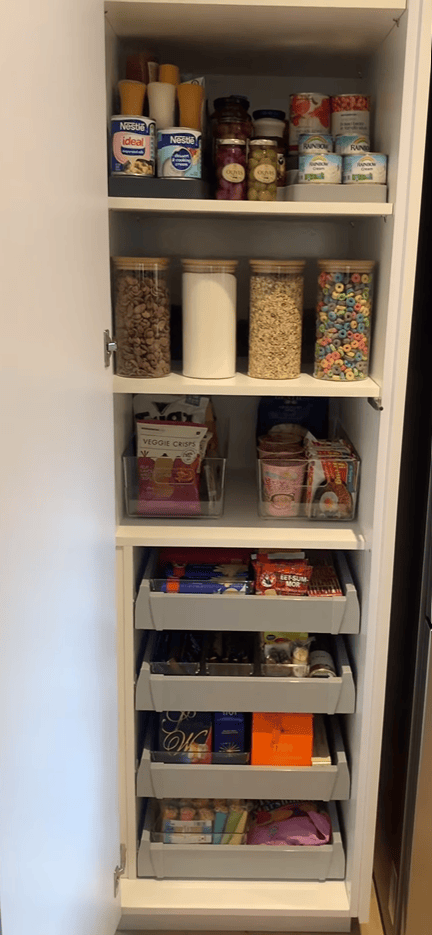
1. Think Vertically, Not Just Horizontally
Most people look at their pantry and see shelf space. But the real untapped goldmine in a small pantry is everything above eye level and below the bottom shelf.
If your shelves don’t reach the ceiling, you’re wasting valuable storage. Stackable bins, extra shelf risers, or a simple add-on shelf kit can double your usable space without altering any walls.
The same applies to the floor. The floor of your pantry is perfect for pull-out drawers, large bins, or a small rolling cart that slides in and out easily.
Quick win: Stand in front of your pantry right now and look up. If there’s more than 12 inches of empty space above your top shelf, that’s your first project.
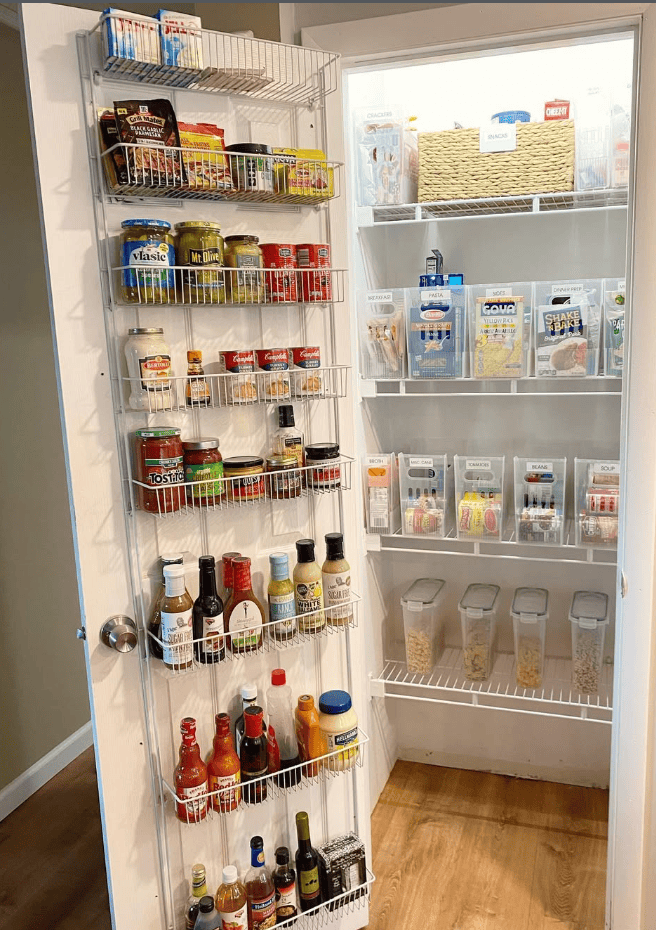
2. Rule #2: Every Inch Is Real Estate. Yes, Even the Door
The back of your pantry door is one of the most wasted surfaces in the kitchen. A good over-the-door organizer can give you the equivalent of an extra shelf for spices, foil and wrap boxes, small snacks, or cleaning supplies.
The same idea works for the side walls of a walk-in or closet pantry. Narrow-mounted racks, magnetic strips, and pegboards can all turn empty wall space into useful storage.
Rule of thumb: If it’s a flat surface inside your pantry, ask yourself if something could fit there.
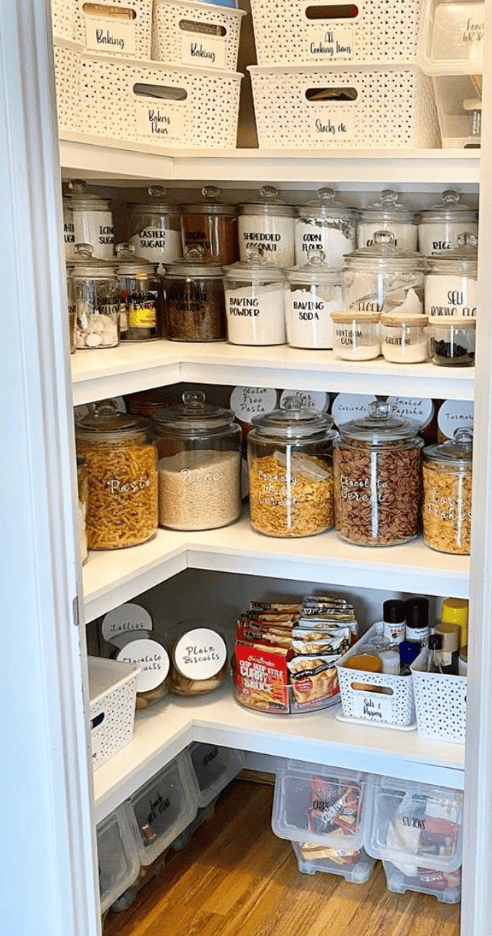
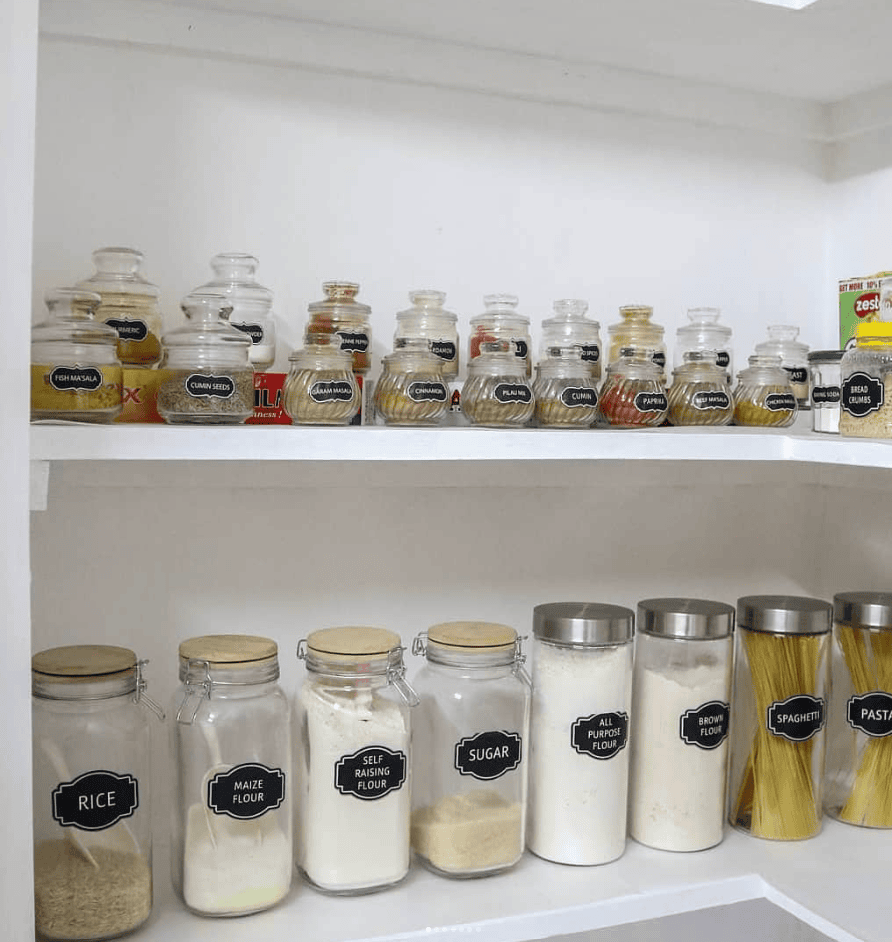
3. Rule #3: Decant and Label Everything You Can
This rule changes a pantry from just functional to truly beautiful, and it’s more practical than it seems.
Decanting means moving food from its original bulky, mismatched packaging into uniform containers. For example, transfer cereal from the box into a clear canister, pasta from the bag into a labeled jar, or snacks from various pouches into one labeled bin.
Here’s why this method is great for small pantries:
- Uniform containers stack well, saving a lot of vertical space.
- Clear containers let you see what you have, so you won’t buy duplicates of items already hidden in the back.
- Labels help you avoid the “what’s in here?” guessing game that causes pantry confusion.
You don’t have to decant everything at once or spend a lot on matching containers. Start with the items you use most and continue from there.
Best items to decant first: flour, sugar, pasta, rice, cereal, coffee, oats, and snack items.
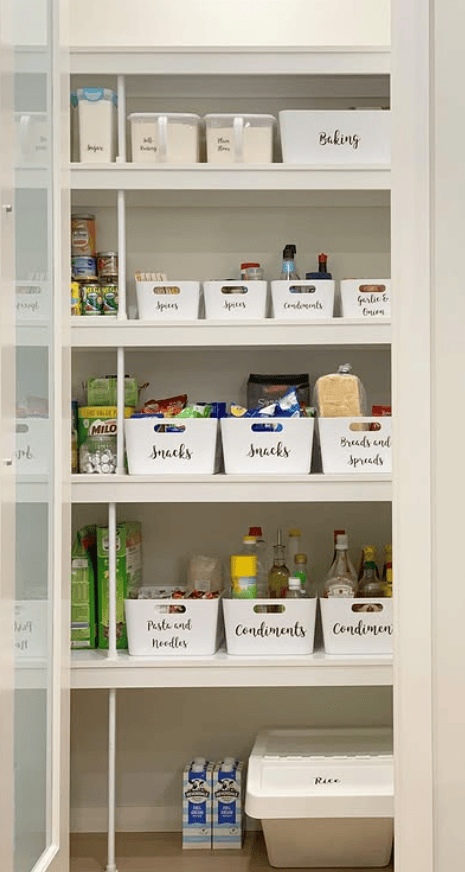
4. Rule #4: Group by Category Create Zones
A messy pantry is often a problem of organization, not storage. Without a clear system for where items belong, everything ends up scattered, and you can’t find what you need.
The fix is to make specific zones based on how you cook and eat. Some effective zones include:
- Breakfast zone: cereals, oats, pancake mix, coffee, tea – Baking zone: flours, sugars, baking powder, vanilla, chocolate chips
- Snack zone: ideally placed at a lower level for kids to reach easily
- Canned goods zone: sorted by type (soups, beans, tomatoes)
- Grains & pasta zone: all stored together with clear labels
- Sauces & condiments zone: bottles and jars organized on a turntable.
Once you set up your zones, everyone in the household will know where things belong, which helps ensure items get returned properly.
Pro tip: Place your most-used zones at eye level. Use hard-to-reach top shelves for items you don’t use often, like backup supplies, specialty ingredients, or seasonal goods.
5. Rule #5: Edit Ruthlessly Before You Organize
Here’s a common mistake: people try to organize things they shouldn’t keep.
Before you set up any new system, pull everything out and be honest about what should stay. Check expiration dates, toss duplicates, move items that don’t belong in the pantry, and donate non-perishables you know your family will never eat. You’ll be surprised by how much space a good declutter creates, often enough that you need fewer storage products than you thought.
The three-pile method:
- Keep – used regularly, not expired, and belongs in the pantry
- Toss – expired, stale, or damaged
- Relocate – belongs somewhere else in the kitchen or home
Only after you’ve edited should you measure, plan, and shop for organizers.
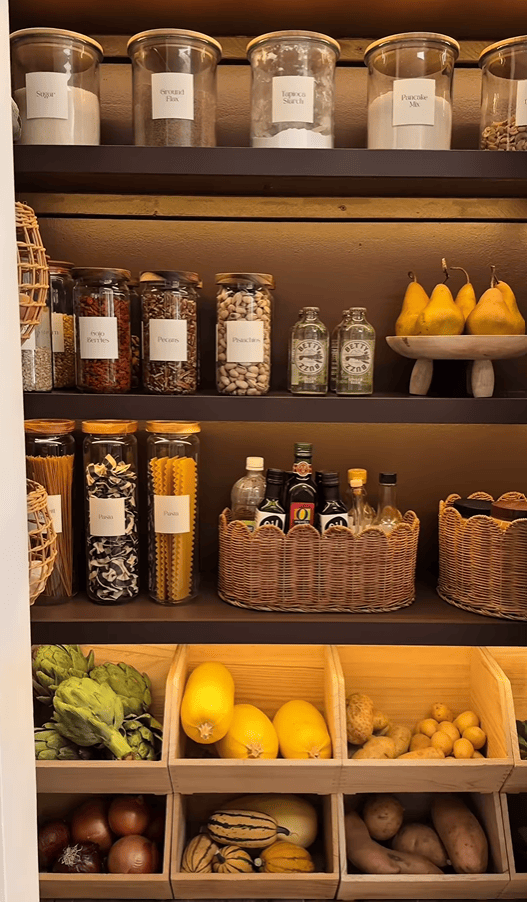
6. Rule #6: Shop Your Groceries Like a Stock Room; First In, First Out (FIFO)
This principle comes from professional kitchens and grocery stores and can really improve how you manage your small pantry.
FIFO means that when you bring home new groceries, you put them behind the items you already have. This way, you use the older items first. It sounds simple, and it is, but many people don’t do it automatically.
This way, you don’t end up with three half-used bags of rice, expired canned tomatoes at the front, and fresh duplicates pushed to the back, where you forget about them. That leads to wasted money and wasted space.
Here’s how to make FIFO easy:
- Use pull-out can organizers that let you take from the front and refill from the back.
- Group similar items together to make restocking in the right order easy.
- Take a quick 2-minute “rotate and restock” every time you get home from grocery shopping.
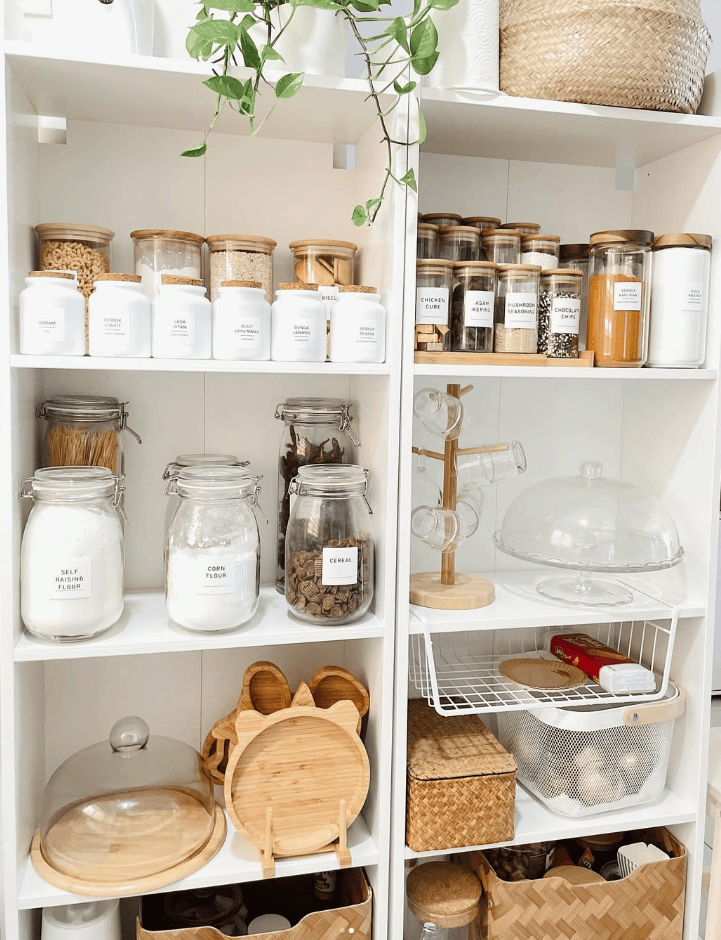
7. Rule #7: Design for the Way You Actually Live
This rule connects all the others, and it’s often overlooked.
The most beautifully organized pantry will fall apart in two weeks if it doesn’t fit your actual life. A system for someone who meal preps will look very different from one designed for a family of five with young kids. A household that bakes often needs different areas than one that mostly orders takeout.
Before you start organizing, ask yourself:
- Who uses this pantry, and how often?
- What items do we reach for every day?
- What are the biggest challenges we face right now?
- How much time am I really willing to spend on upkeep?
Your answers should guide every choice you make, from shelf heights to container types to the details of your labeling system.
The best pantry system is the one your household will actually maintain, not just the one that looks good on Instagram.
8. Shelving ideas
Shelving is the foundation of any pantry. Getting it right makes everything else easier. The first question to ask is whether your current shelves truly work for you.
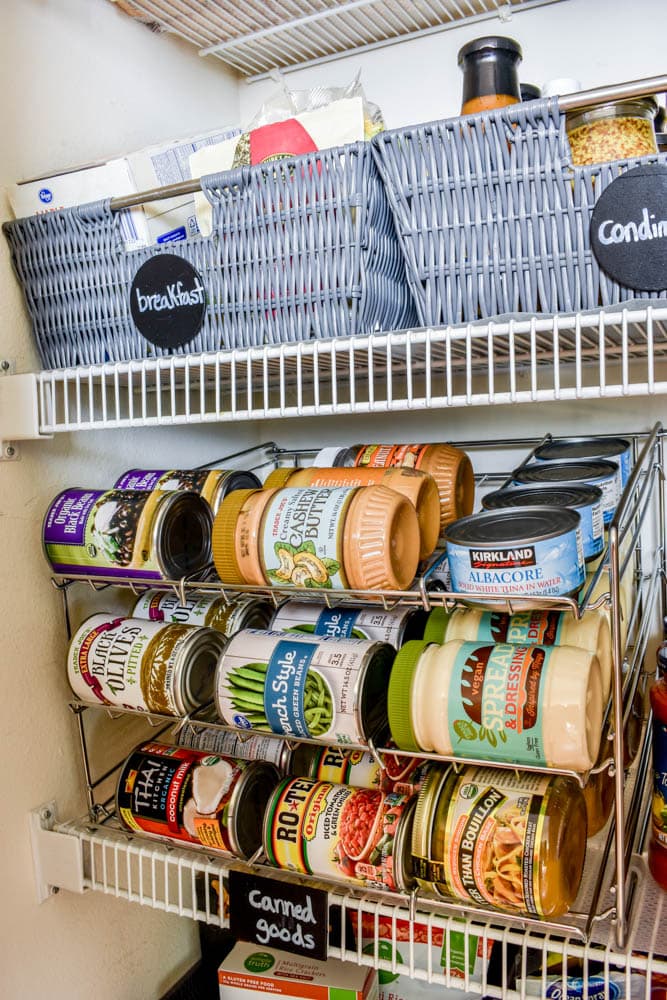
Fixed shelves installed at random heights waste a lot of space. Switching to an adjustable system, like ClosetMaid or Rubbermaid Configurations, lets you customize each shelf height based on what you’re storing. After that, aim to ensure no shelf is overworked.
Pull-out drawer inserts change deep shelves by bringing everything to the front, so nothing gets lost in the back. This feature is especially helpful on lower shelves, where crouching and reaching can be frustrating.
Tiered shelf risers create a second row on a single shelf, making them ideal for spices, canned goods, and small jars, where items often hide behind one another. For awkward gaps, empty walls next to the pantry opening, or areas that standard shelving can’t reach, a floating shelf can provide an unexpectedly useful extra storage space.
The main principle remains the same: every shelf should fit what it holds, be easily accessible from the front, and work at full capacity from top to bottom.
9. Corner & Awkward Space Ideas
Every small pantry has at least one spot that seems impossible to use well.
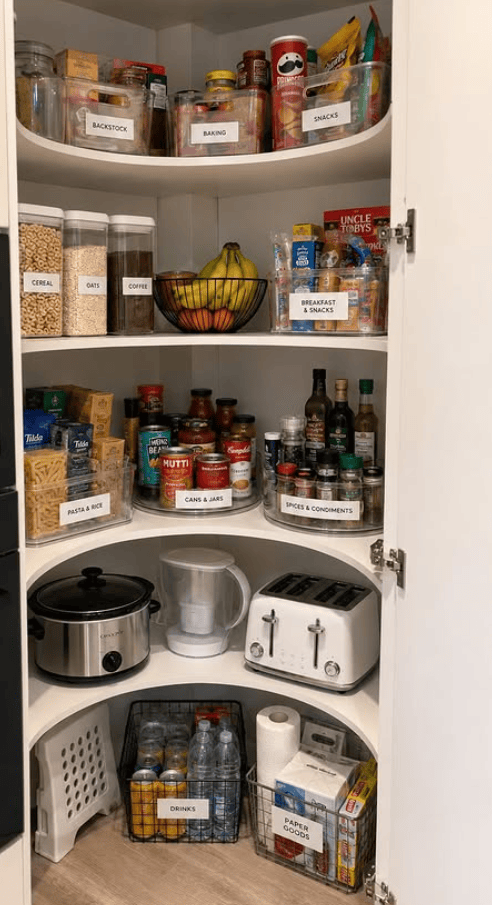
Tackling those awkward spaces often leads to the biggest storage gains. The deep corner of a shelf, where items disappear into the abyss, is best addressed with a rotating corner carousel. This device is like a double-decker Lazy Susan designed for corner depths, making every inch reachable with a simple spin.
If you have six to eight inches of space beside your pantry, between the pantry and a wall, or at the end of a cabinet run, consider a narrow pull-out tower unit. These slim rolling units slide out to reveal multiple tiers of shelving for spices, canned goods, oils, or water bottles. When not in use, they slide back flush.
The IKEA RÅSKOG cart is a great budget option. For pantries with sloped ceilings, angled walls, or unusual shapes, diagonal or custom-cut shelving that follows the wall shape can capture storage space that standard rectangular shelves can’t. This makes for a weekend DIY project that offers a lot of usable space in return.
The key rule for awkward spaces is not to accept them as dead zones, but to see each one as a puzzle with a solution waiting to be discovered.
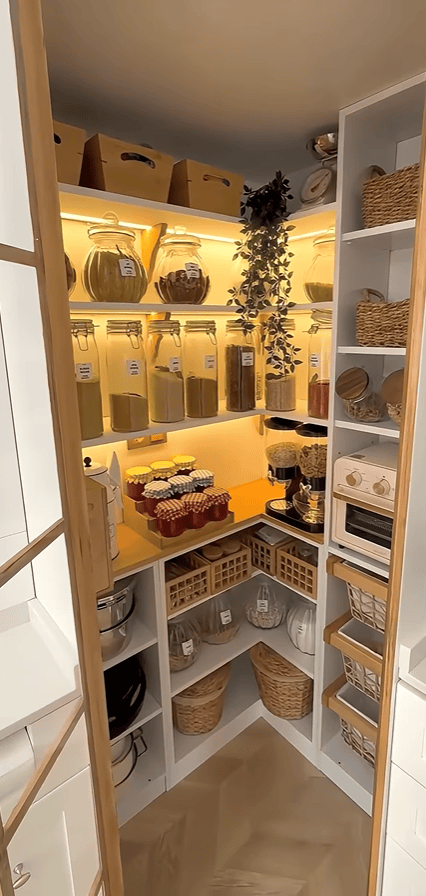
10. Lighting Ideas
Lighting is the most overlooked small pantry upgrade on this list, yet it is one of the most impactful.
A dark pantry always seems disorganized, even when it is perfectly sorted. When you can’t clearly see what is on a shelf, you are more likely to miss items, buy duplicates, let things expire, and quietly give up on your organizational system.
For pantries without electrical lighting, which includes most closet and cabinet pantries, battery-powered LED strip lights or puck lights are excellent choices. You can use adhesive-backed strips under each shelf to light up the shelf below. Motion-sensor puck lights turn on automatically when you open the door, which is very helpful when your hands are full of groceries. Govee LED Strip Lights and Brilliant Evolution Wireless LED Puck Light are both popular options that look more expensive than they are.
Good lighting not only serves a practical function but also changes the entire atmosphere of a small pantry. Bright, even light removes shadowy corners that make the space feel cramped. It helps your containers and labels look as good as the photos that inspired you, and it genuinely makes the area feel larger.
For color temperature, choose LEDs in the 3000K to 4000K range, which is warm white to cool white. This range displays food colors accurately and provides brightness without being too harsh.