Small Closet Organization: 10 Space-Maximizing Ideas That Actually Work
Most small closets aren’t misused; they are just poorly organized. Typically, they have a single rod and one shelf, as if everyone owns only ten outfits and nothing more.
The good news is that closet size hardly affects closet function. Some of the most effective and enjoyable closets are very small. They make use of every inch intentionally instead of leaving it to chance.
Fix the system once by using the right vertical space, the right containers, and a layout based on how you actually get dressed. This way, you won’t struggle with your closet every morning. You’ll have more storage than you expected, clothes that are easy to see, and a space that remains organized instead of falling back into chaos within a week.
Below are real small closet transformations, broken down step by step. You’ll find the exact technique behind each one, why it works, and how to adjust it for your own space, regardless of its shape or size. Let’s get started.
Small Closet Organization Ideas
Build Up, Not Just Across: The Full-Height Closet System
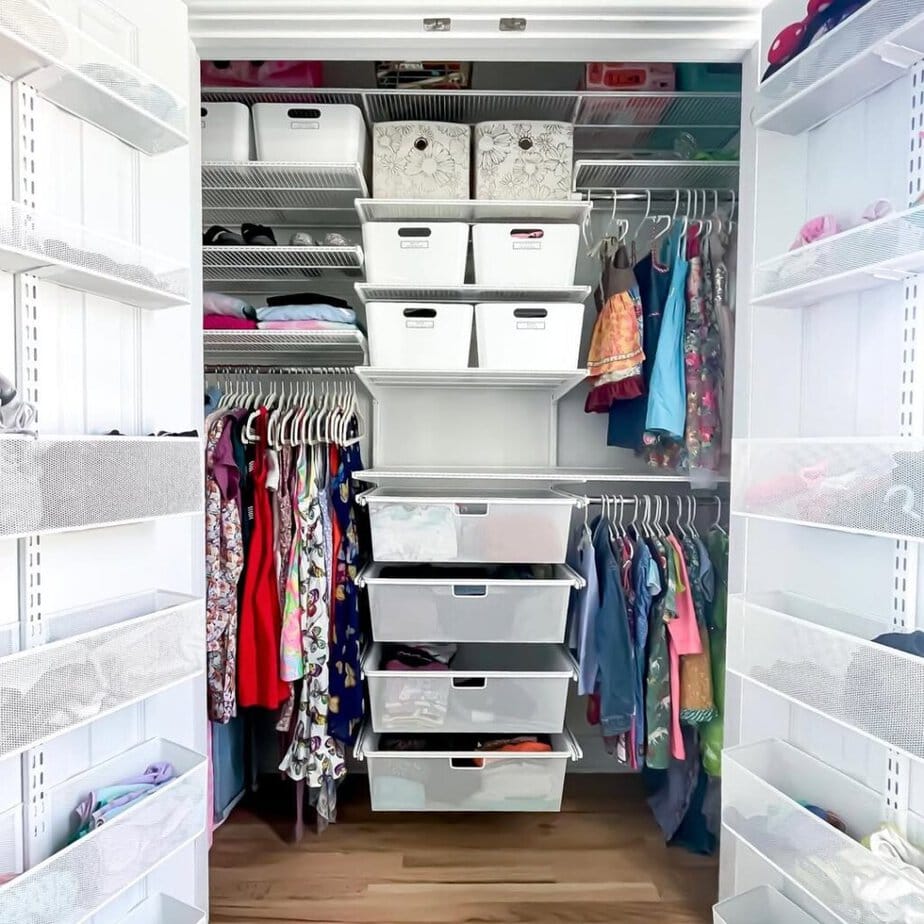
This small closet replaces a simple rod-and-shelf setup with a wire system that spans the entire wall. It uses every space from floor to ceiling. There are fabric bins at the top for overflow items, pull-out drawers in the middle for folded clothes, and two full-height hanging rods on each side.
The key organizational idea here is zoning. Each height section serves a specific purpose, so nothing overlaps within the same 6-inch space. This approach works because most closets waste vertical space. Most people use only the middle third, at eye level, and overlook the areas above and below.
Takeaway: Before you buy any organizers, divide your closet into three zones: top for overflow or seasonal items, middle for daily access, and bottom for bulky or less-used items. Shop for each zone separately rather than opting for a single generic system.
Best For: Kids’ closets or shared closets where different types of clothing, everyday wear, seasonal items, and accessories must all fit in one space.
The Basket-on-the-Floor Trick for Awkward Bottom Space
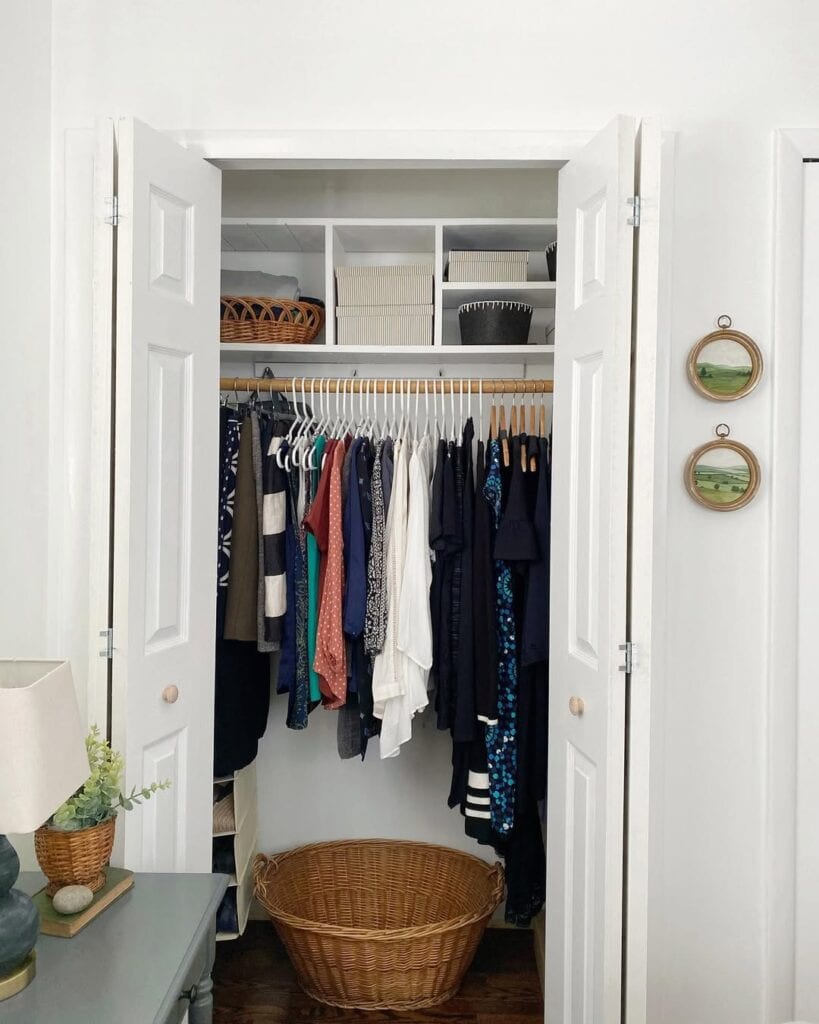
Instead of cramming a shoe rack or drawer unit into the closet floor, use a single large woven basket to hold loose items, such as laundry or accessories. Small fabric bins placed on the upper shelf can store folded extras. The organizational idea is that not every space needs a built-in solution; sometimes, a single flexible container is more useful than a rigid one.
Takeaway: If a corner of your closet is too oddly shaped or too small for shelving, don’t force a shelf in; simply add a large basket. It can serve as a flexible space for storage instead of leaving the area empty or messy.
Why This Works: A basket has no set compartments, allowing it to store oddly shaped or seasonal items that may not fit neatly into bins, without making the closet appear chaotic.
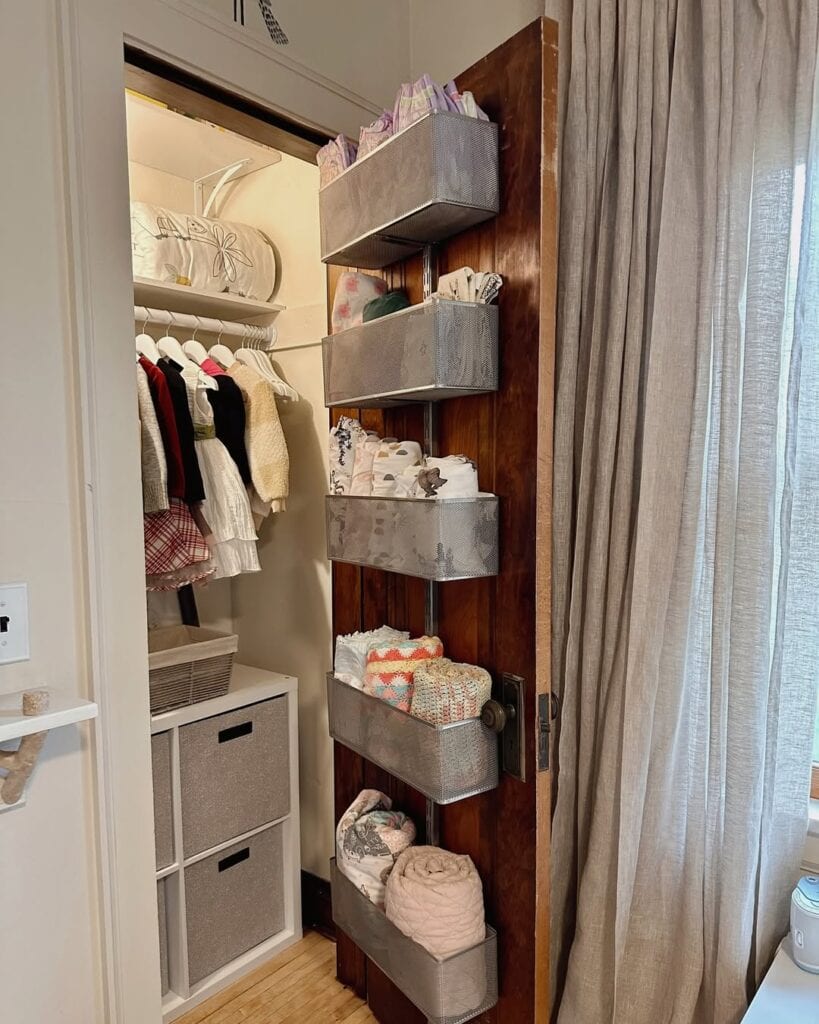
The Door-Mounted Mesh Bin Column
This is the organizational solution for closets with no spare floor or wall space: a vertical row of mesh bins attached to the back of the closet door to hold folded baby clothes and blankets. This method works because door space is usually completely unused, and mesh bins are light enough not to stress the door hinges over time.
Takeaway: Measure your closet door before buying any storage. An over-the-door rack or mounted bin system can provide the equivalent of an entire extra shelf without affecting the closet’s interior layout.
Common Mistake to Avoid: Don’t attach heavy or rigid bins to a door. Use lightweight mesh or fabric to avoid straining the hinges or warping the door over time.
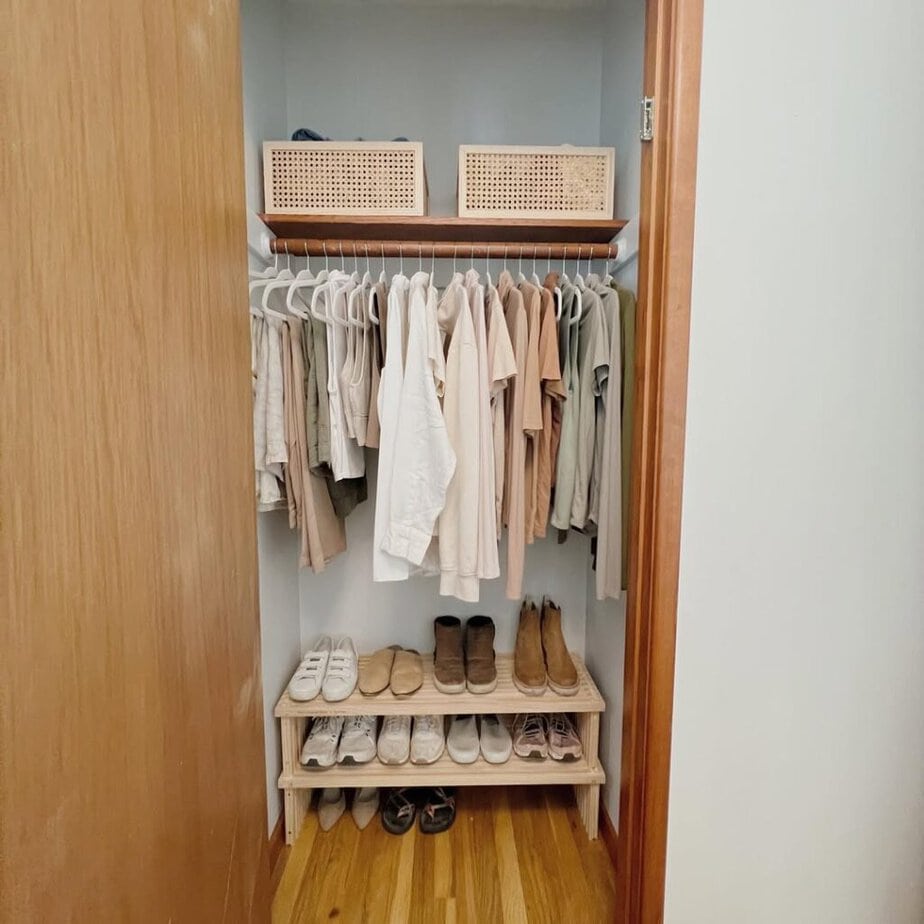
The Two-Tier Shoe Shelf That Frees Up Floor Space
Instead of allowing shoes to accumulate loosely on the closet floor, this organizational setup features a slim, two-tier wooden shoe shelf that sits beneath a single hanging rod, with color-coordinated clothing on top. The idea here is to create a dedicated spot for shoes so they don’t spread out across the floor and take up valuable space. This approach works because shoes have odd shapes and don’t stack well on their own, but a shelf with defined rows keeps them upright, visible, and organized.
Takeaway: Even a narrow two-tier shoe rack, only 12 to 18 inches deep, can double your shoe capacity in the same space where loose pairs would normally go.
Pro Tip: Keep the shoe shelf a few inches shorter than the hanging clothes above it. This visual gap makes a small closet appear more spacious, even when it’s fully stocked.
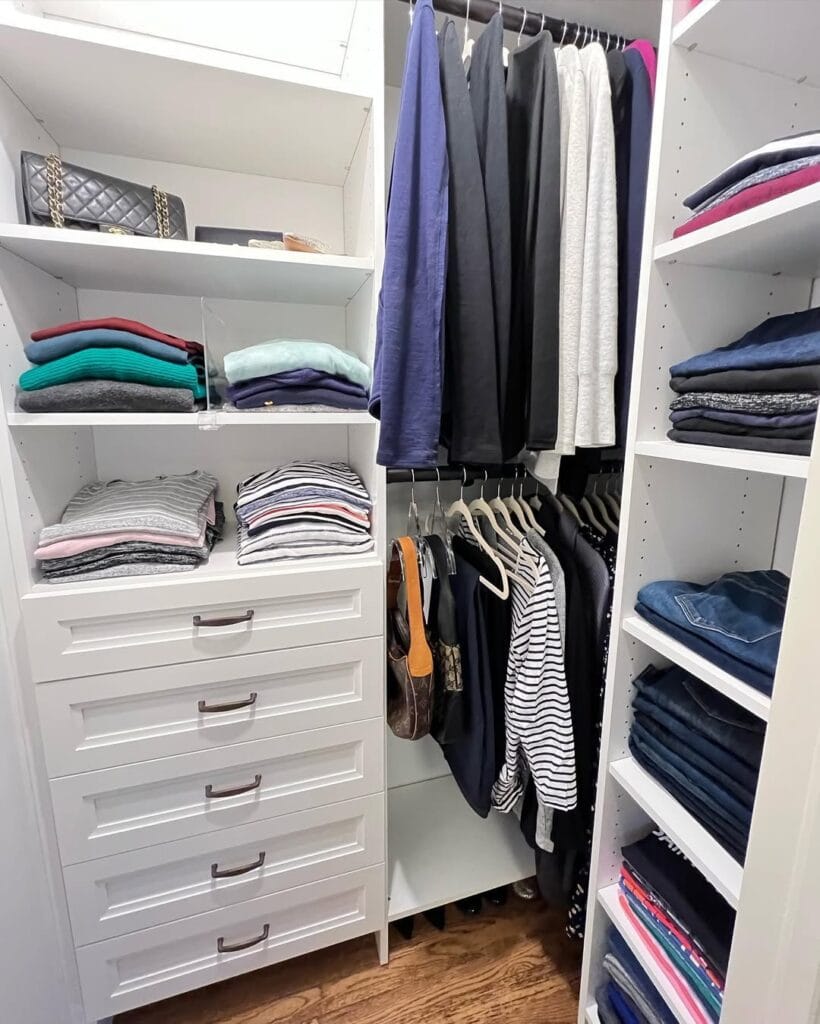
The Hybrid Hanging + Drawer Wall for Maximum Category Separation
This small closet organization features a tall five-drawer dresser, open cubbies for folded sweaters, a double-hung rod for shorter items, and adjustable shelving for jeans, all within one wall of built-ins. The design aims for clear category separation: folded knits, hanging tops, denim, and accessories each have their own space instead of being jumbled together.
This approach is effective because mixed storage, like folding some sweaters, hanging others, and tossing jeans on a shelf, makes finding one item a hassle. In contrast, category separation ensures you always know exactly where to look.
Takeaway: Even without a full built-in system, you can achieve this by assigning one drawer, one shelf, and one rod section to each clothing category. Keeping storage consistent helps save time when getting dressed.
Designer Tip: Use a small acrylic shelf divider, like the one used for the folded sweaters here, to prevent stacks from falling over. It’s a $10 solution that keeps folded storage organized.
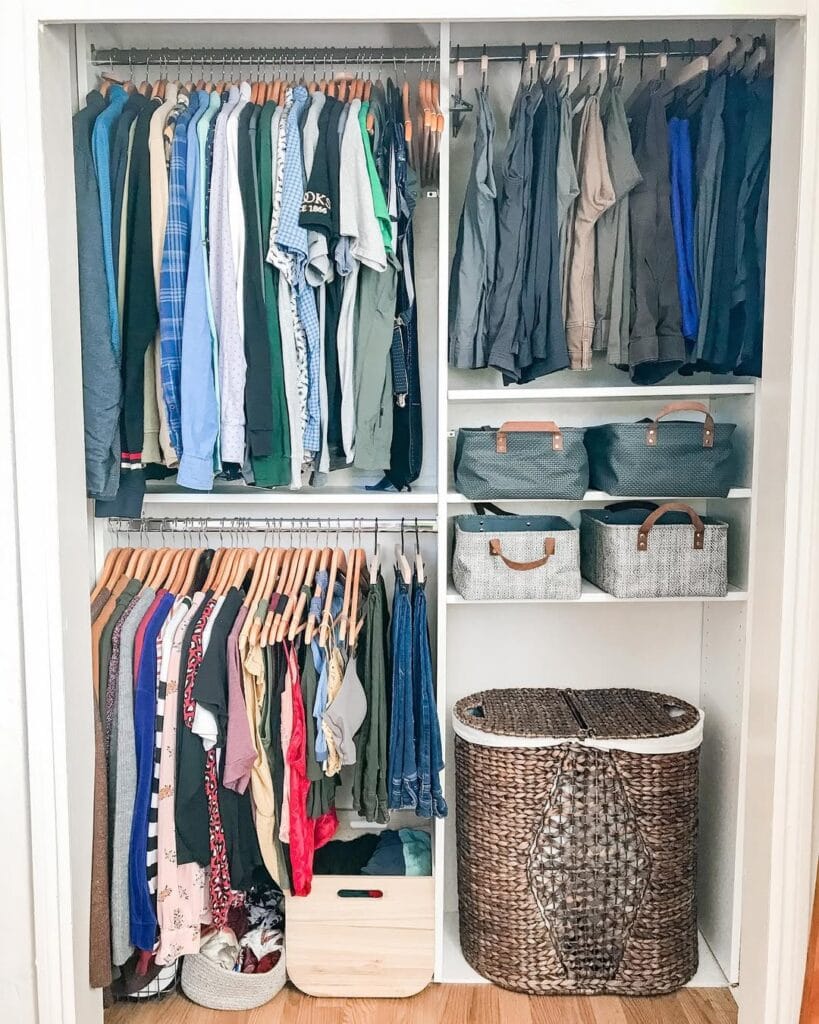
Splitting One Rod Into Two Distinct Hanging Heights
This shared small closet organization features a high single rod on one side for shirts and a double-stacked rod-and-shelf setup on the other. It also includes a dedicated open-shelf section for fabric bins and a hamper. The design focuses on organizing by garment length. Long-hanging items occupy one tall section, while shorter items, like folded tops and pants, are placed on two stacked rods below the same header shelf. This approach works because it matches the rod height to the garment length. Using a single uniform rod for everything creates wasted space below short items.
Takeaway: Measure your shortest hanging items. If they only need 24 to 30 inches of space, add a second rod underneath the first to avoid leaving that area empty.
Why This Works: A double-hung side can often hold nearly twice as many garments as a standard single-rod side, all within the same closet width.
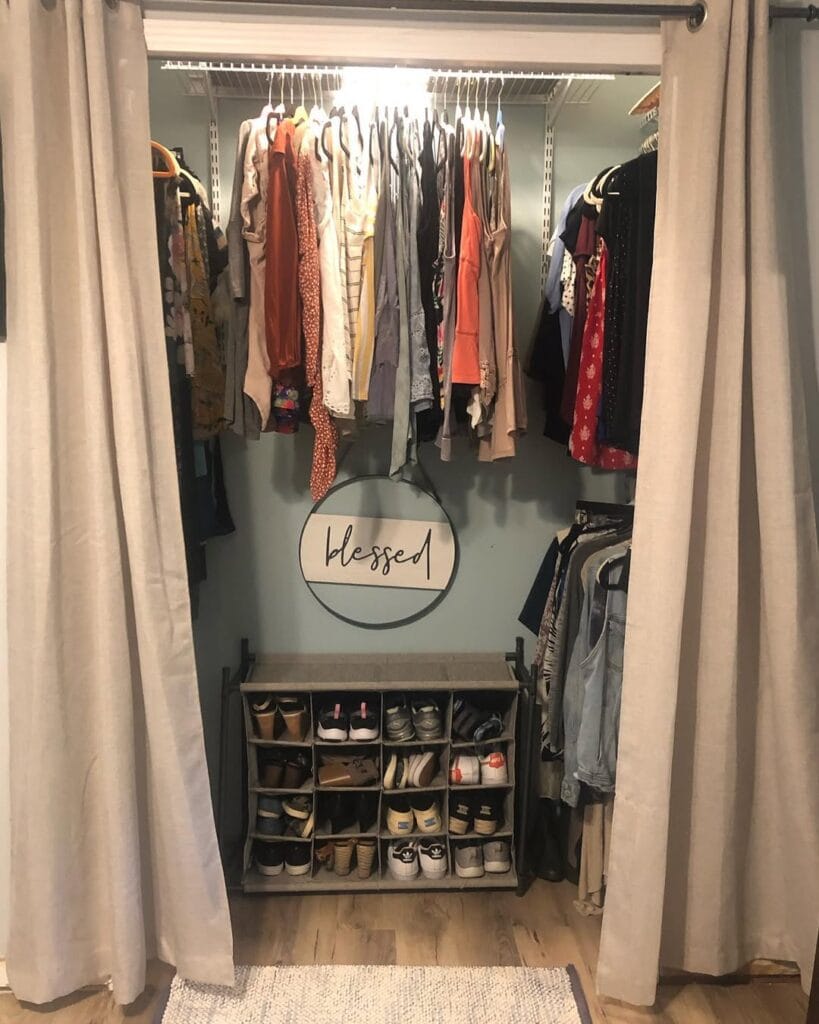
Hiding an Open Closet Behind Curtains for a Cleaner Look
This small closet has no doors; instead, it uses floor-to-ceiling curtains on a rod to hide the entire opening. A low shoe cubby and a decorative sign add character to the visible part. The organizational idea is that curtains solve two common problems for small closets: they eliminate the need for swinging or sliding doors, which often take up floor space, and they allow you to cover an open closet without the expense of installing actual doors.
Takeaway: If you have a doorless closet or want to get rid of bulky swing doors, a simple curtain rod and panel can quickly make the space feel complete and organized.
Budget-Friendly Alternative: Skip a custom closet door system entirely. A tension rod and two curtain panels cost much less than installing new doors and can be changed whenever your style shifts.
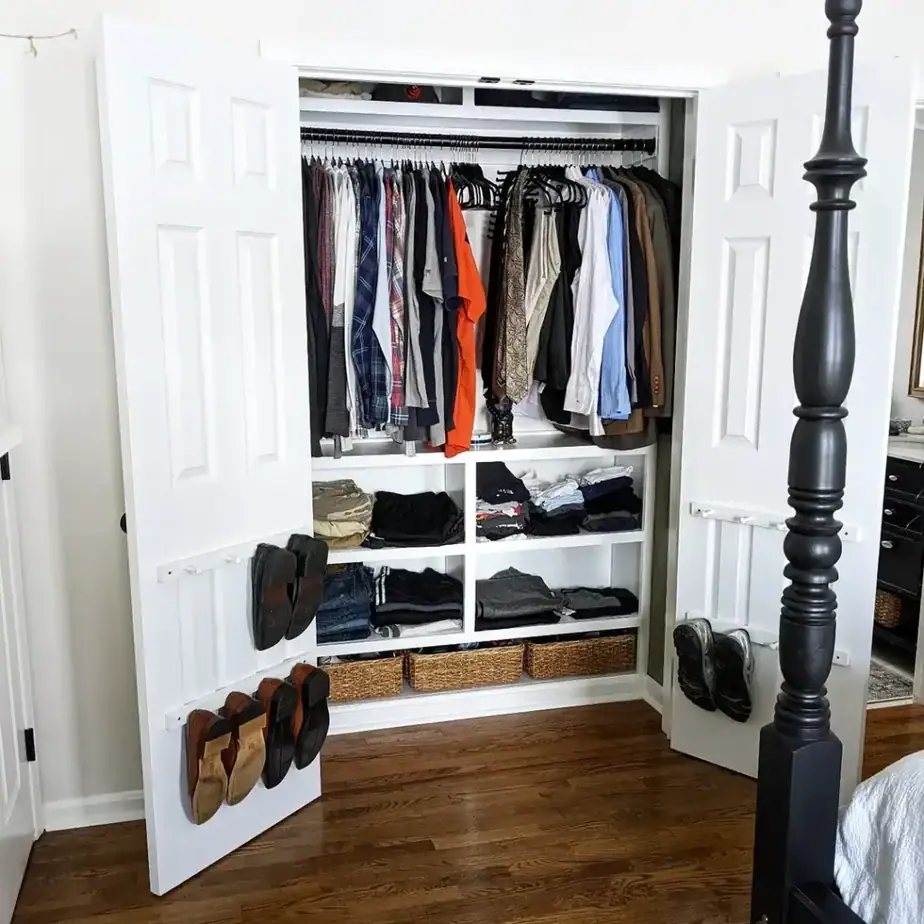
Turning the Inside of Closet Doors Into Shoe Storage
This his-and-hers small closet uses the flat inside panel of each swinging door to hang shoes with simple over-the-door hooks. This organizational setup clears the closet floor for shelving, baskets, and a central hanging section. The design treats the door as a storage surface instead of just a panel that opens and closes. This approach is effective because most closet doors provide 15-20 square feet of unused vertical space.
Takeaway: Before adding any floor-based shoe storage, check if simple stick-on or over-the-door hooks can hold a few pairs on the door itself. This would free up floor space for bins or baskets.
Common Mistake to Avoid: Avoid overloading door-mounted hooks with heavy boots or stacked pairs. Stick to lighter shoes so the door can continue to open and close smoothly without straining the hinges.
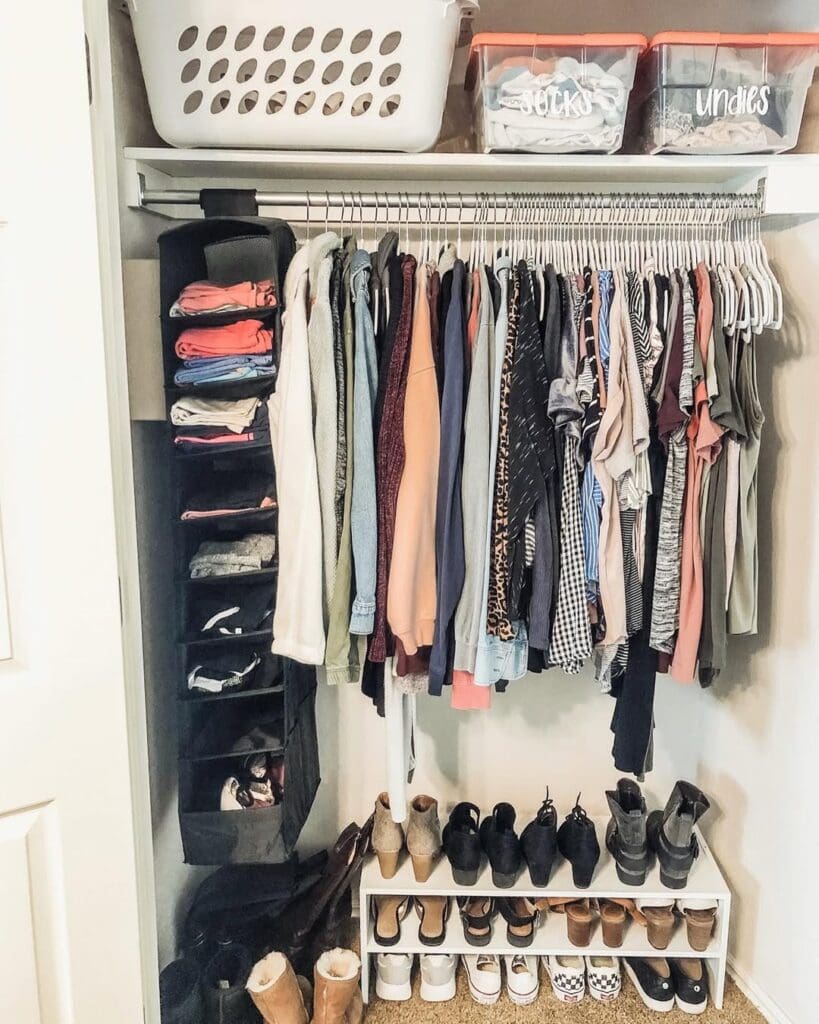
The Hanging Shelf Organizer for Soft-Sided Storage
Mounted directly from the closet rod, this fabric hanging shelf organizer creates eight extra compartments for folded items, socks, and accessories. It positions these compartments right alongside the hanging clothes instead of on a separate shelf. This organizational method works because it adds storage for folded items without needing any wall-mounted shelving or drawers; it simply clips onto the existing rod.
Takeaway: If your closet has a rod but no shelves, a hanging fabric organizer is the quickest and cheapest way to add folded storage without any installation or tools.
Budget-Friendly Alternative: These organizers usually cost $15-$20 and require no hardware, making them the easiest upgrade on this list.
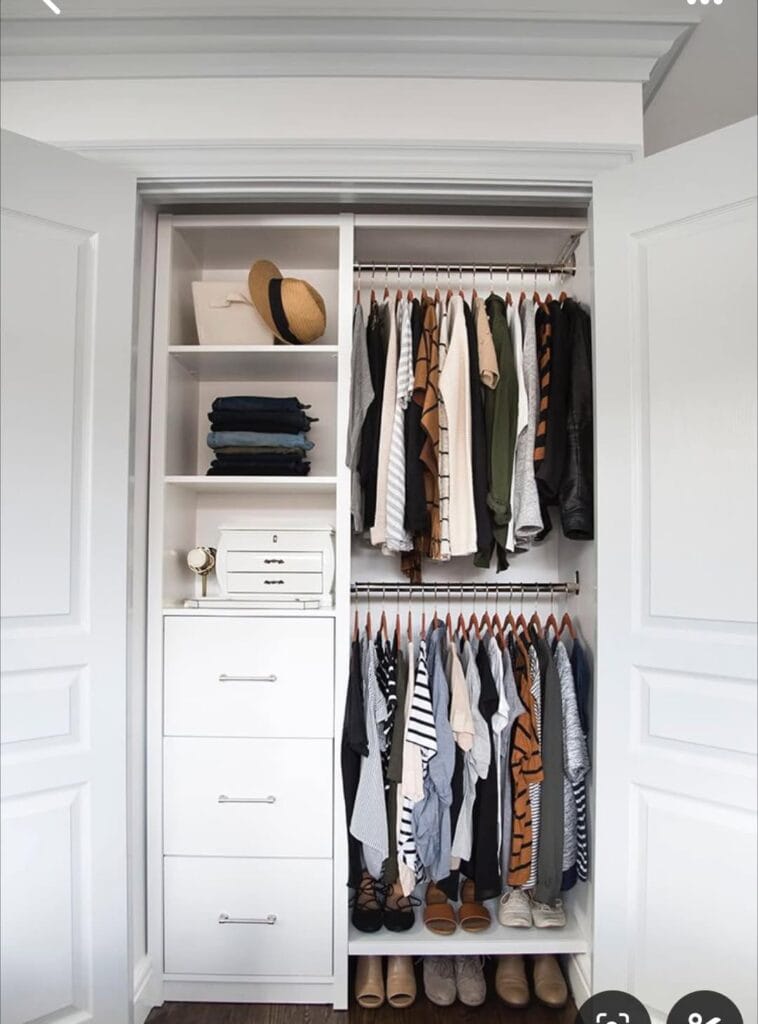
The His-and-Hers Double Rod With a Personal Touch
This small closet divides a single hanging bay into two separate rods at different heights. On the left, there is a slim column with shelves and drawers for folded items, hats, and a jewelry box. This organizational method uses the double-rod, but the main design feature here is the narrow side column. Instead of taking up hanging space, it serves as a standalone unit for folded and displayed items, keeping the hanging area neat.
Takeaway: If your closet is wide enough, think about giving up 12 to 15 inches of hanging space for a slim drawer-and-shelf column. Keeping all folded storage in one spot makes the closet easier to scan quickly.
Styling Suggestion: Use the top shelf of this column for one or two decorative or sculptural items, like a hat or a woven box. This adds a touch of style and prevents the closet from feeling strictly functional.
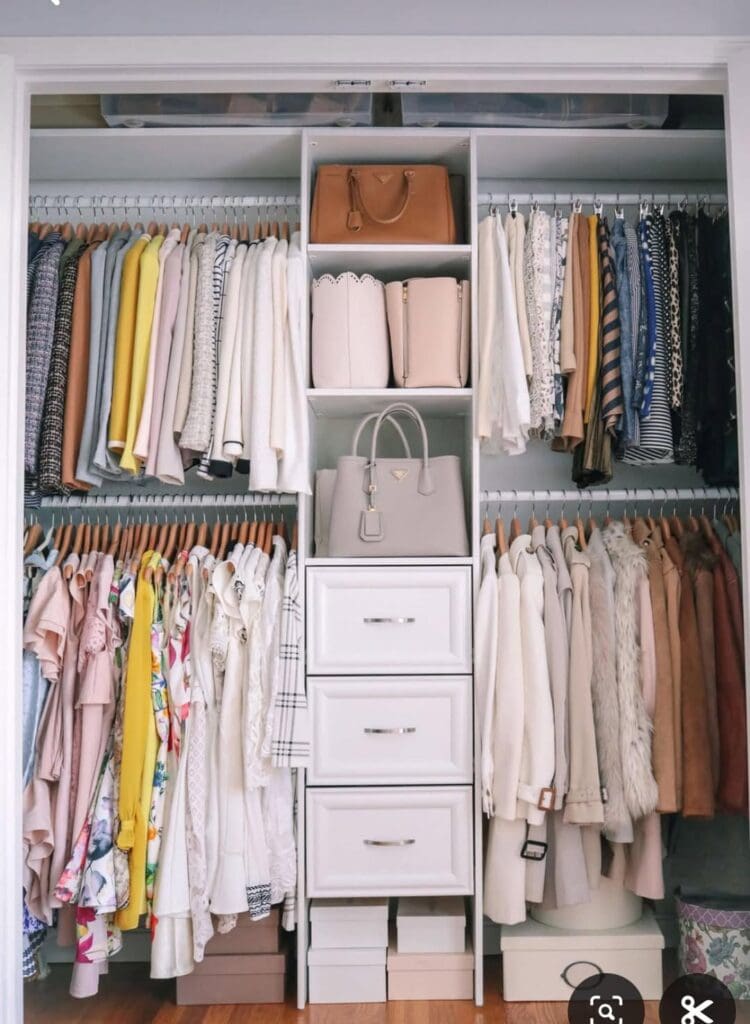
The Center Tower as a Bag and Accessory Display
This small closet divides its hanging space into two double-rod sections. The true innovation is the narrow center column designed specifically for handbags. Open cubbies above store bags upright, showcasing them like art objects, while the drawers below accommodate smaller folded items. The idea is to treat accessories as a separate category that needs its own space, rather than placing bags on a high shelf where they get crushed or forgotten.
Takeaway: If you have more than a few handbags, set aside one narrow vertical strip of shelving just for them, with the handbags standing upright. This keeps them visible, protects their shape, and turns a storage issue into a display feature.
Styling Suggestion: Stand structured bags upright instead of stacking them flat. This maintains their shape and makes each one easy to see at a glance.
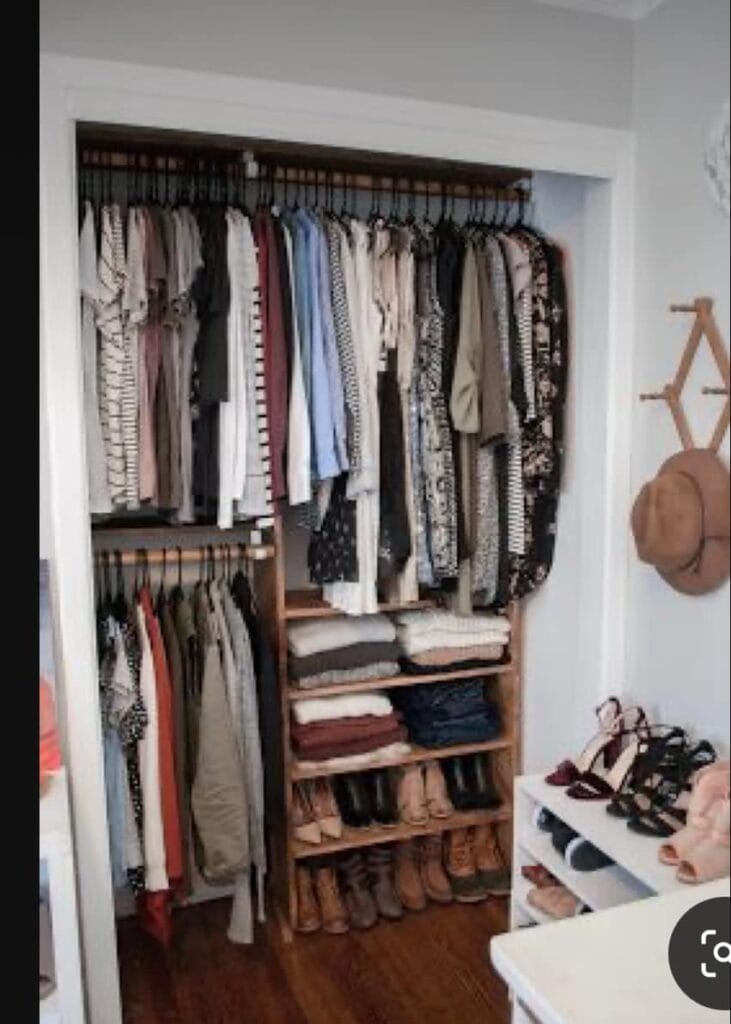
The Built-In Wooden Shelf Tower Between Two Rods
Instead of having one long rod across the small closet, build a custom wooden shelf tower in the center. This organizational design splits the area into two hanging zones and adds four shelves for folded sweaters and shoes. The method uses a furniture-style insert rather than standard shelving. It’s designed for the closet’s depth, so there’s no empty space between the shelf and the back wall, unlike some pre-made units.
Takeaway: If you are handy or can work with a carpenter, a custom shelf insert, even a simple one, will usually work better than a generic store-bought option because it fits your exact depth, leaving no wasted space behind it.
Best For: Closets with odd or non-standard depths where ready-made shoe racks and shelving units leave gaps.
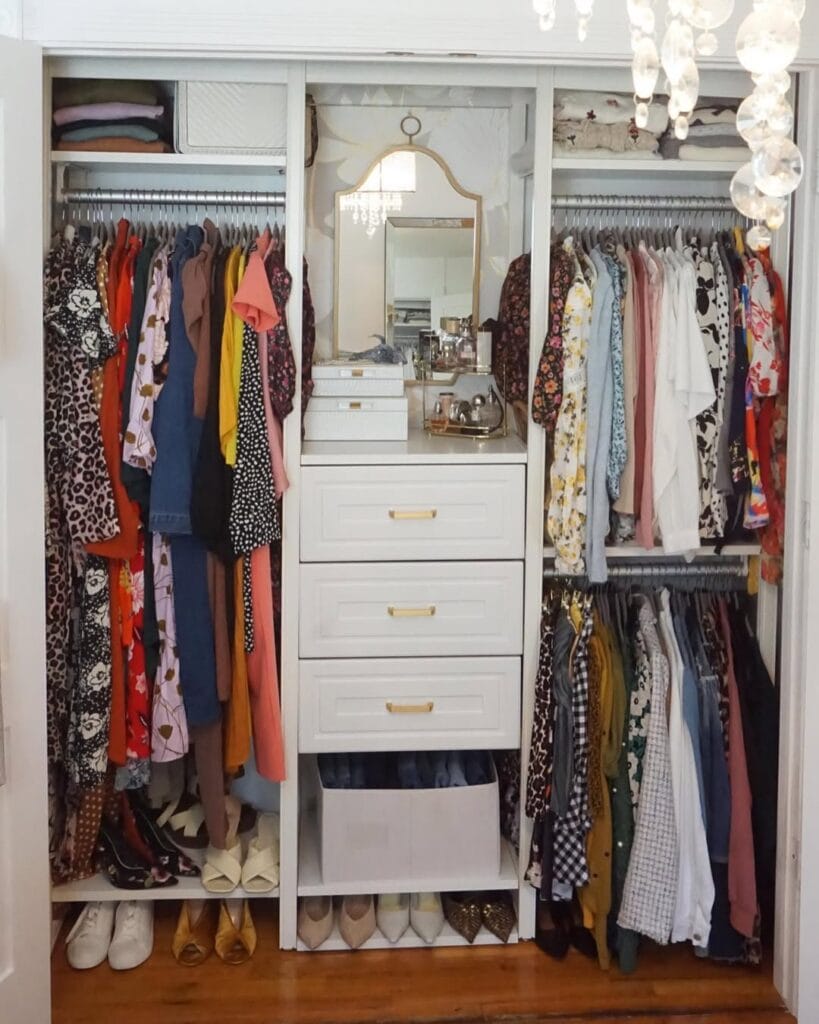
The Glam Closet With a Built-In Vanity Moment
This small closet takes the center-column idea a step further by transforming it into a mini vanity. A mirror, perfume tray, and jewelry boxes sit atop three drawers, surrounded by double-hung rods filled with color and pattern. The organizational concept is that a small closet doesn’t have to be just for storage. Setting aside even 12 to 18 inches for a styling area makes the entire space feel like a personal retreat.
Takeaway: If your closet is your only dressing area, consider giving up one narrow shelf or a drawer-top section for a mirror and a tray. This adds a daily-use function that the rest of the closet can’t provide.
Why This Works: Mixing a reflective surface, like a mirror, with varied textures, such as gold hardware and patterned wallpaper, makes the closet appear larger and more thoughtful rather than cramped.
Conclusion
Small closet organization isn’t about fitting more items in. It’s about giving each category of item, such as hanging clothes, folded clothes, shoes, bags, and accessories, its own defined space. This way, nothing competes for the same six inches of room. When you stop seeing your closet as one big box and start treating it as smaller areas for specific purposes, the closet size stops being a limit.
Choose the one section of your closet that frustrates you the most. The shoes piling up or a rod holding everything from coats to camisoles? Apply just one organizational technique. Once that section works well, move on to the next.
Your closet doesn’t need a complete makeover to function well. It just needs a plan that suits how you actually get dressed.