Small Front Porch Ideas: 12 Ways to Make a Tiny Entryway Feel Like a Destination
A small front porch often feels like an afterthought. It’s just a concrete slab you walk over to get inside, too narrow for real furniture, and too open to decorate. It’s easy to think that a “small porch” means there isn’t a real style, leading many to leave it empty.
However, how welcoming a porch feels has little to do with its size. The most charming porches aren’t the largest; they are the ones where every chair, plant, and light fixture has a purpose. A small space encourages better design choices. There isn’t room for clutter, so everything must serve a function and look good.
When done well, a compact porch creates a great first impression for your home. It can show that the person living there cares before a guest even rings the bell. The benefits aren’t only visual. A well-designed small porch also makes coming and going easier, gives you a spot to sit outside, and boosts curb appeal when selling your home.
Below are small front porches that show tight dimensions don’t limit personality, comfort, or style. You’ll also find specific techniques behind each example, helping you find ideas that work for your own entryway, no matter its shape.
12 Small Front Porch Ideas
Let the Architecture Do the Decorating
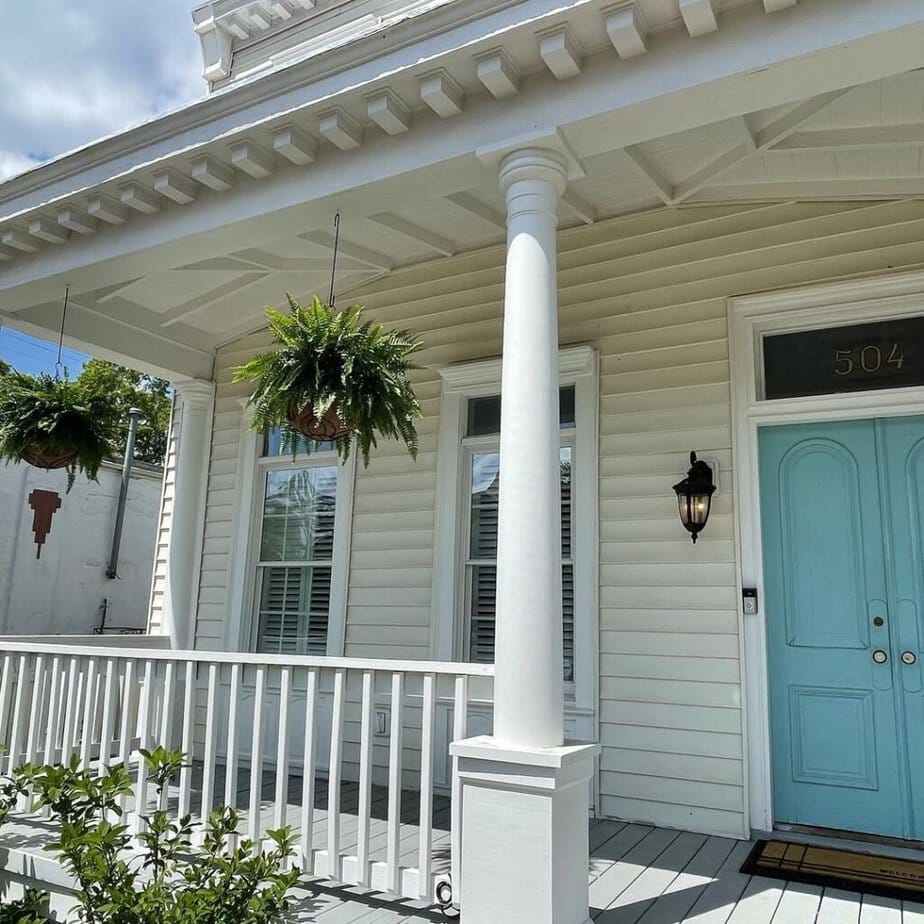
This historic shotgun-style porch shows that sometimes the best choice for small-porch styling is to keep it simple. A single round column, deep dentil-trimmed eaves, and a bright robin ‘s-egg-blue door provide all the visual appeal. Two Boston ferns hung at different heights serve as the only additional decor. This approach lets the strong existing architecture define the look, while a little greenery softens the hard lines without clashing with the trim.
Takeaway: If your porch has good features—like interesting columns, trim, or a great door color hold back on adding extra decor. One or two hanging plants is often just right, not the starting point.
Designer Tip: A high-gloss or bright door color serves a dual purpose on a small porch; it becomes the focal point and the decoration, allowing you to keep everything else minimal.
Build Up Instead of Out
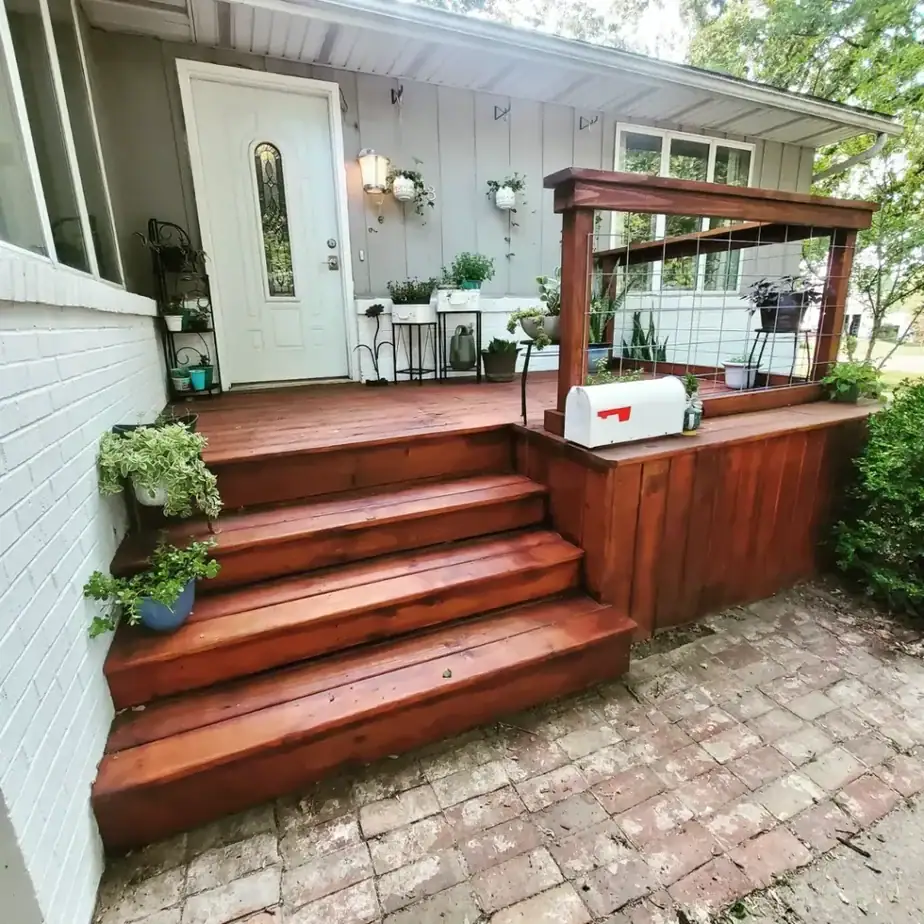
This compact wood landing addresses the small-porch issue by utilizing vertical space. A slim cedar trellis with wire mesh creates an “outdoor room” feel above the mailbox nook. A tiered plant stand against the house wall allows for stacking several pots within the space of one. By adding height with hanging baskets, wall hooks, and a multi-shelf stand, you can fit a full garden’s worth of plants in an area that is only slightly wider than the door.
Takeaway: Before adding more pots at floor level, look up. A vertical plant stand or a few wall-mounted hooks can expand your greenery without taking away any walking space.
Best For: Side-door or mudroom-style entries where floor space is limited but wall space is available.
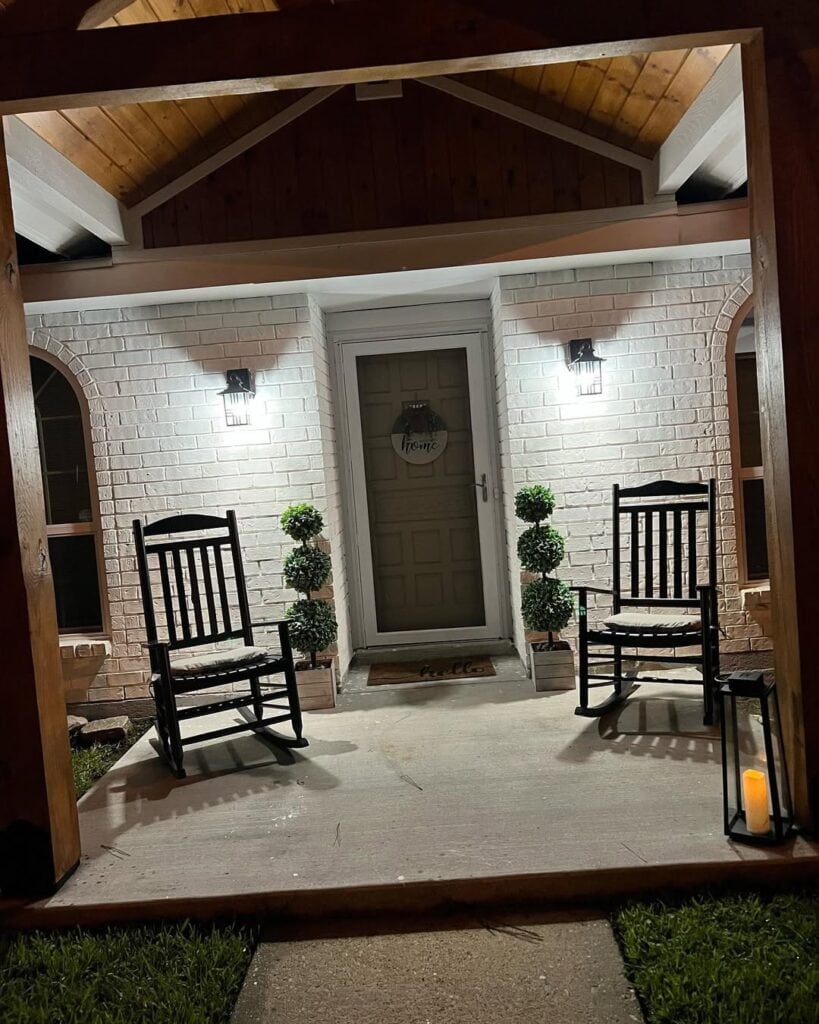
Frame the Entrance Symmetrically
Here, two matching black rocking chairs and twin spiral topiaries sit on either side of the front door in a strict mirror-image layout. The matching wall sconces above reinforce this symmetry. Symmetry is a reliable way to make a small space feel intentional instead of accidental. It signals a sense of design, even with just a few elements, because the eye quickly recognizes order and balance.
Takeaway: If you only have room for two items, place them in a mirrored pair flanking the door instead of off to one side. This makes the space look more thoughtful.
Why This Works: Symmetry gives a sense of formality and calm, making even a small concrete pad feel like a proper entrance rather than just a landing.
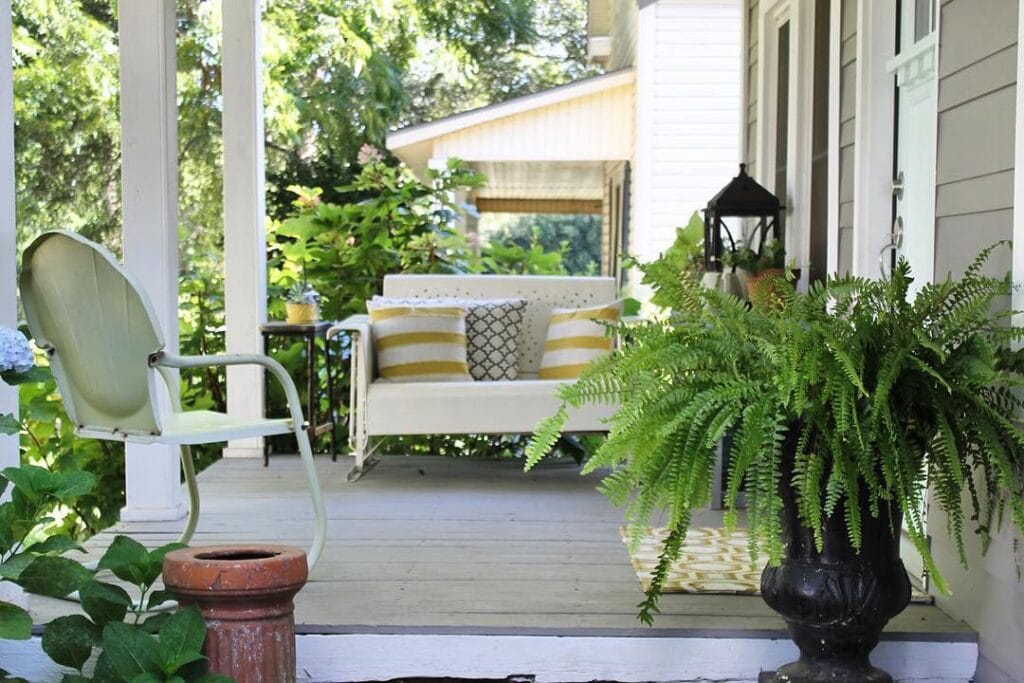
Mix Eras for a Lived-In Look
A vintage metal motel-style chair, a weathered clay chimney pot turned into a planter, and a white porch swing with graphic throw pillows all come together on this porch without clashing. The key is a tight color palette of creams, ochre yellows, and greenery. This allows truly different eras and materials, like mid-century metal, antique terracotta, and contemporary patterned textiles, to coexist harmoniously. On a small porch, a controlled palette makes eclectic furniture feel curated instead of cluttered.
Takeaway: You don’t need matching furniture to achieve a cohesive look. A color palette of 2-3 colors that every piece can fit into, regardless of age or style, is enough.
Common Mistake to Avoid: Mixing too many colors alongside different furniture styles. Choose one of the two elements to vary either the furniture eras or the color palette, and keep the other consistent.
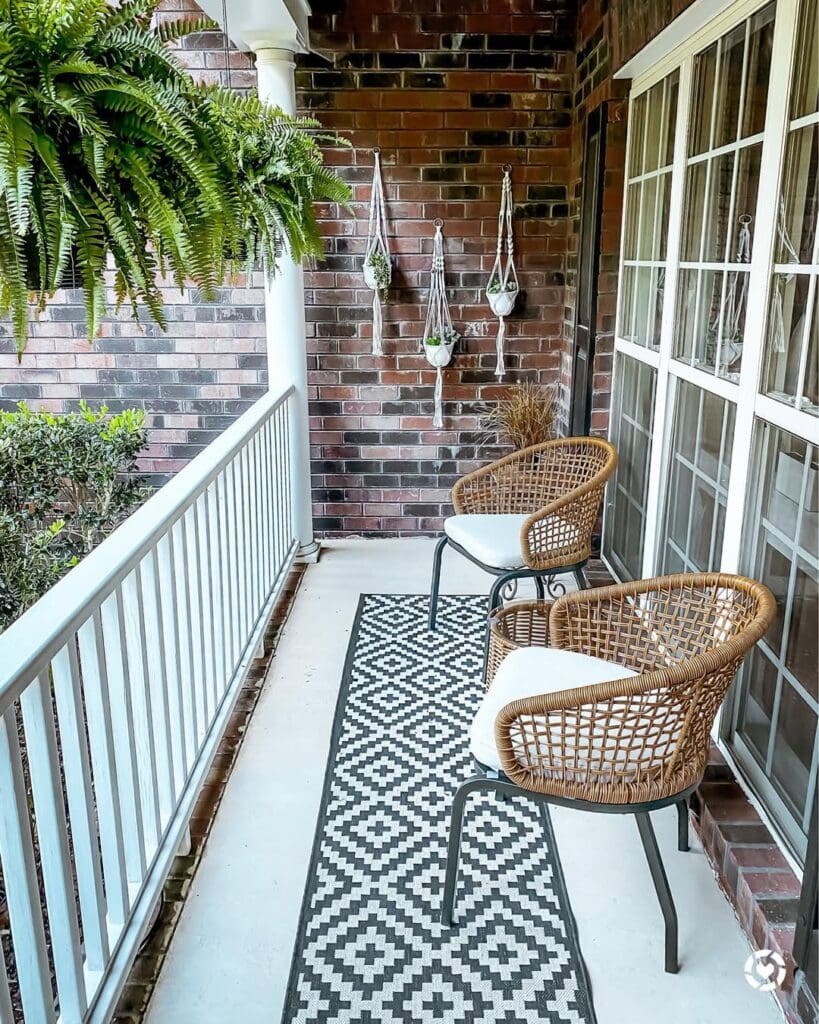
Choose Furniture That Tucks, Not Sprawls
This narrow brick-walled porch accommodates two woven wicker chairs. The chosen pieces have slim frames and minimal visual weight. The see-through wicker backs and exposed metal legs make the space feel open instead of cramped. A graphic black-and-white runner marks the seating area and clearly defines where to sit without the need for a wall or railing. Macramé planters mounted on the brick add vertical greenery without taking up floor space.
Takeaway: On a narrow porch, a patterned runner rug is the most affordable way to create a defined seating zone. It shows the eye where to stop, even when the floor space doesn’t change.
Budget-Friendly Alternative: If you can’t commit to wall-mounted macramé hangers, a single tall planter with a trailing fern in the corner provides a similar softening effect without any installation.
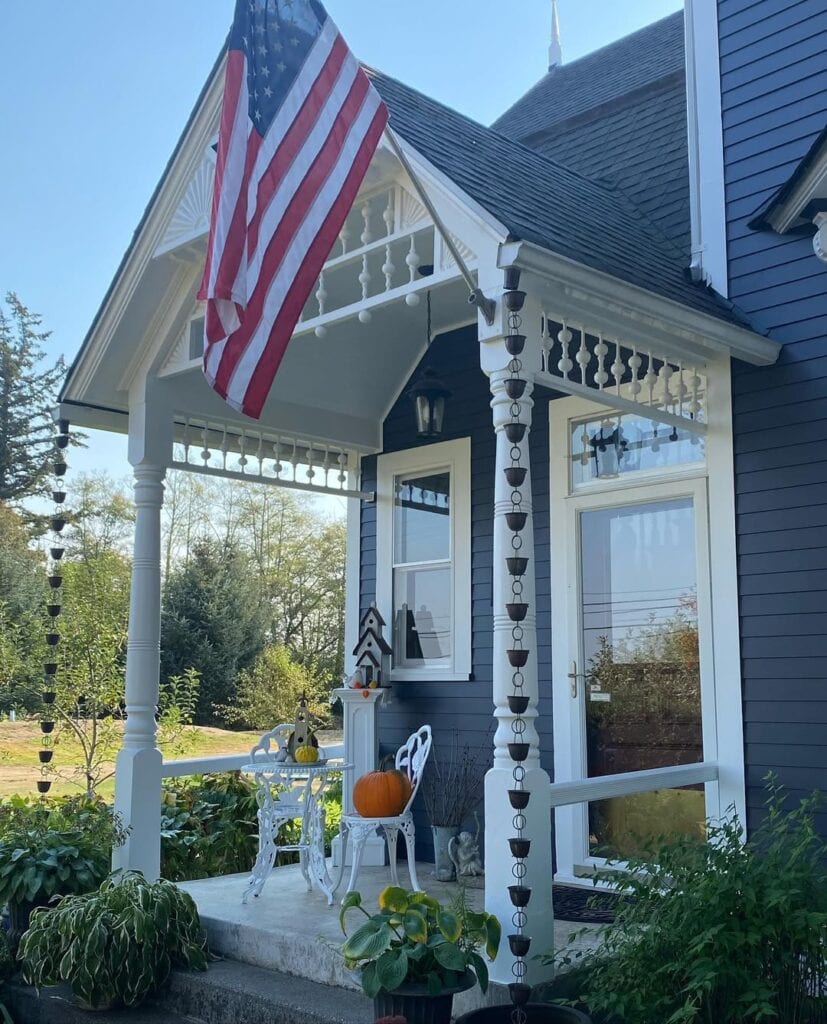
Use a Statement Accent to Anchor a Tall, Narrow Space
Victorian gingerbread trim, a deep navy facade, and a striking copper rain chain add considerable visual interest to this narrow porch. However, it’s the oversized American flag, mounted at an angle, that truly anchors the space. It fills the tall, vertical gap under the gable, making what could feel like an empty area above the small porch feel much more complete. A simple bistro set below maintains a lightweight look, allowing the eye to focus on the architectural details above.
Takeaway: If your porch is narrow but high, look for one large vertical feature, like a flag, a tall trellis, or a hanging light fixture, to fill the height rather than trying to fill the floor space.
Why This Works: Small porches often have unused vertical space above eye level. Filling that area prevents the porch from feeling like an overlooked sliver next to the rest of the house.
Let a Loveseat Replace a Full Seating Set
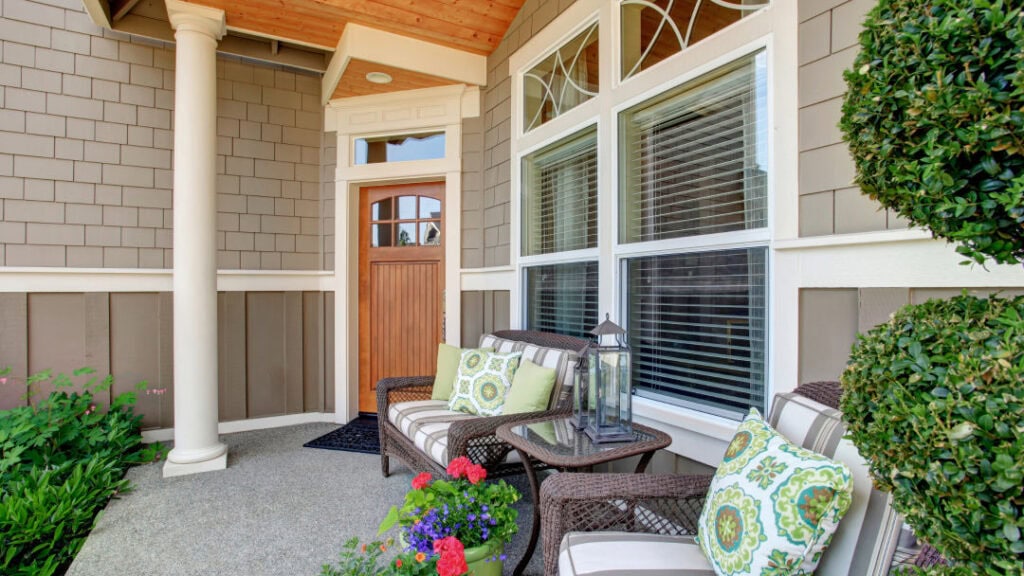
Instead of trying to fit in two chairs and a side table, this small porch has one wicker loveseat and a single round accent table. Both are placed against the window wall. This approach uses one larger piece instead of multiple smaller ones. A loveseat can seat two people, as do two chairs, but takes up less floor space and keeps the area by the front door clear.
Takeaway: Before buying a bistro set, measure how much space two chairs and a table actually need compared to one loveseat and a side table. The loveseat usually comes out on top in porches less than 6 feet deep.
Best For: Small Porches that also serve as a walkway to the front door, where seating is needed but a clear path is important.
Prioritize One Big Move Over Many Small Ones
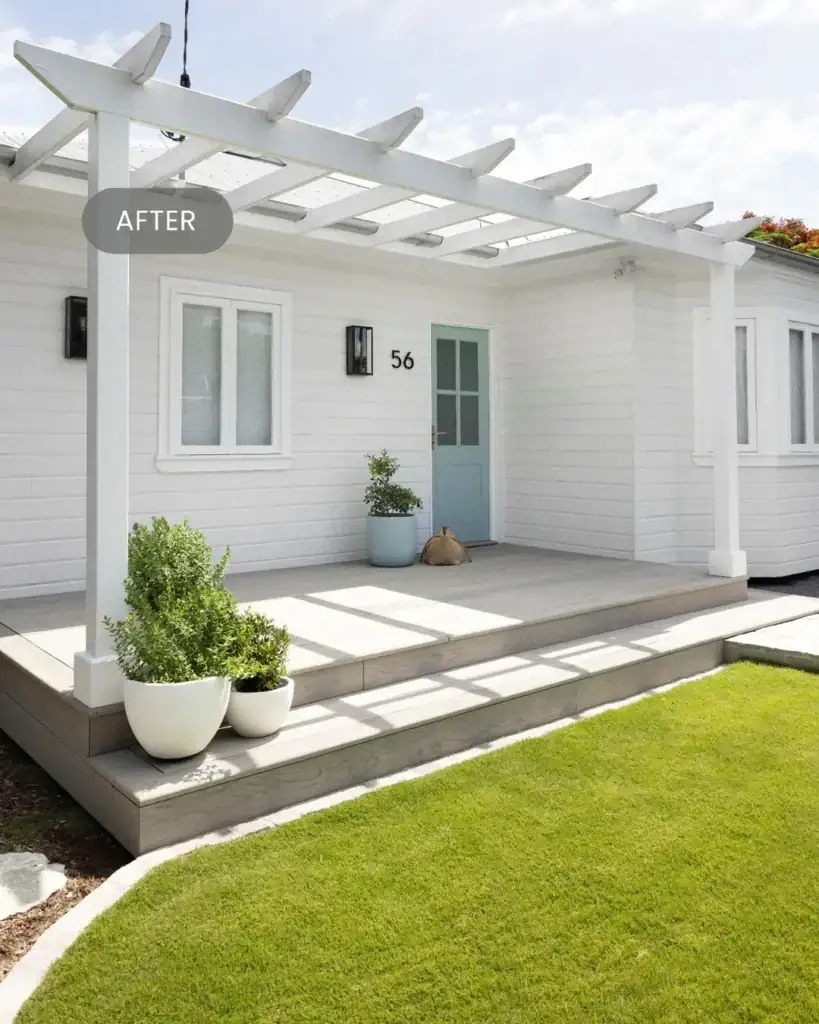
This small porch shows the impact of a single structural addition: a simple white pergola, sized to match the width of the existing slab. Instead of decorating an open, shadeless stoop, the homeowners first added overhead architecture. This instantly gave the space a sense of “room” and definition that no furniture or planters alone could provide. After that, they added two simple potted shrubs and a soft sage door. This choice was minimal, so the pergola remains the main focus.
Takeaway: If your porch feels unfinished, consider whether the problem is decor or structure. Sometimes, one overhead element, such as a pergola, an awning, or even a curtain rod with outdoor drapes, can solve the “is this even a porch?” issue more effectively than a single throw pillow.
Pro Tip: A pergola doesn’t need complete coverage to serve as a “shade structure.” Even open slats like these create enough shadow play to define the space below.
Make the Entry the Hero with a Symmetrical Greenery Frame
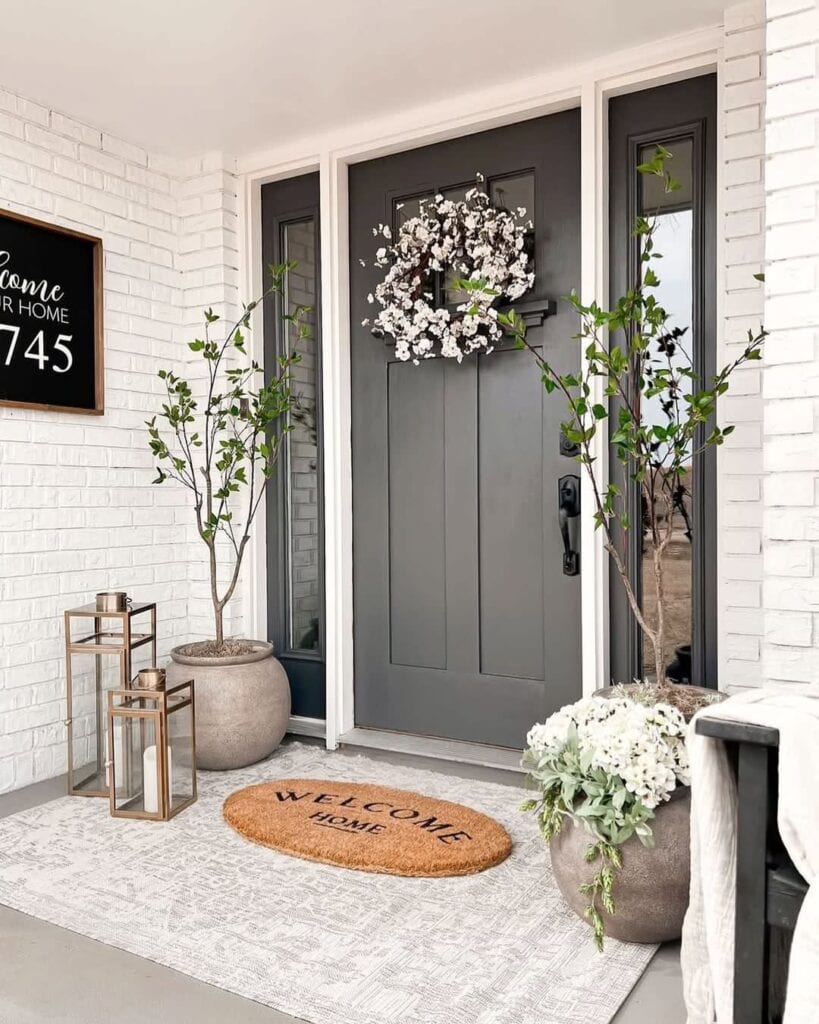
A nearly black front door stands out here, surrounded by two matching potted trees of the same height and a pair of wood-and-glass lanterns. The symmetry is a key feature, but this entryway adds something extra: a large floral wreath that fills most of the door’s upper panel. It is purposefully big so it can be seen clearly from the front walk. A textured jute doormat in a warm color breaks up what could be an all-gray and all-white look.
Takeaway: When choosing a wreath, size it to about one-third of your door’s height; smaller wreaths can get lost on a full-size door, even in photos.
Designer Tip: Matching planters on both sides of a door is one of the quickest and cheapest ways to create the symmetry that makes a small entry look polished.
Mix Vintage Collectibles as Functional Decor
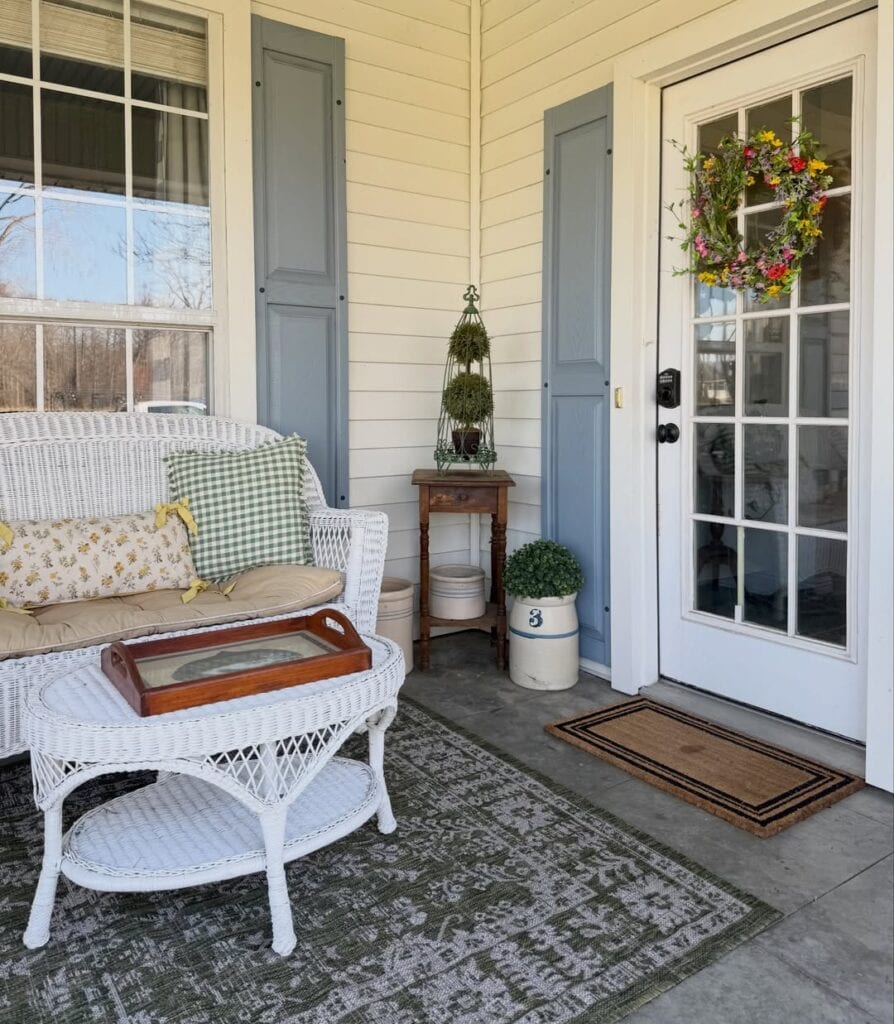
A wicker settee and matching oval coffee table occupy most of this small porch. What makes it feel curated instead of crowded is the use of vintage stoneware crocks as both decor and side-table replacements. These crocks are stacked at different heights in the corner, next to a tiered topiary frame. Soft blue shutters and a wildflower wreath bring seasonal color without needing to swap out any furniture.
Takeaway: Antique crocks, vintage tins, or stacked vintage suitcases can serve as side tables on a porch that’s too small for conventional furniture. They add storage and personality simultaneously.
Common Mistake to Avoid: Overcrowding a small porch with too many items at the same height. Vary the heights, like having a tall topiary, a mid-height crock stack, and a low side table, so the corner appears as a vignette rather than clutter.
Conclusion
A small porch isn’t just a smaller version of a big porch. It presents its own design challenge, in which simplification is key. Homeowners who achieve the most appealing results don’t find downsized versions of everything. Instead, they choose one or two ideas and commit to them fully, allowing simplicity to work its magic.
If you’re on your own narrow stoop or shallow landing and feel unsure about where to begin, don’t start with a shopping list. Instead, choose one focus based on what you’ve seen, like a pergola, a trellis, or a bold door color; symmetry with a pair of mirrored chairs, planters, or sconces; or layering with a rug, lighting, and one standout plant. Expand from there. One well-executed idea will always be more effective than several incomplete ones in a small space.
Your porch doesn’t need more square footage to leave a strong first impression. It just needs one clear decision to fully commit to. Choose yours, and notice how much larger it feels.