15 Small Vegetable Garden Ideas That Prove Tiny Spaces Can Still Feed You
A small yard, a balcony, or just a sunny strip along a fence isn’t the problem; it’s how you approach the design. A tiny area forces you to make choices that larger gardens don’t need to make.
You have to decide what to grow vertically instead of horizontally. You need to find containers that serve as both planters and supports. You also need to plan harvest times so the same square foot can provide food in spring, summer, and fall.
Limited space doesn’t reduce your options; it highlights the best ones. Let’s dive into the techniques.
15 Small Vegetable Garden Ideas
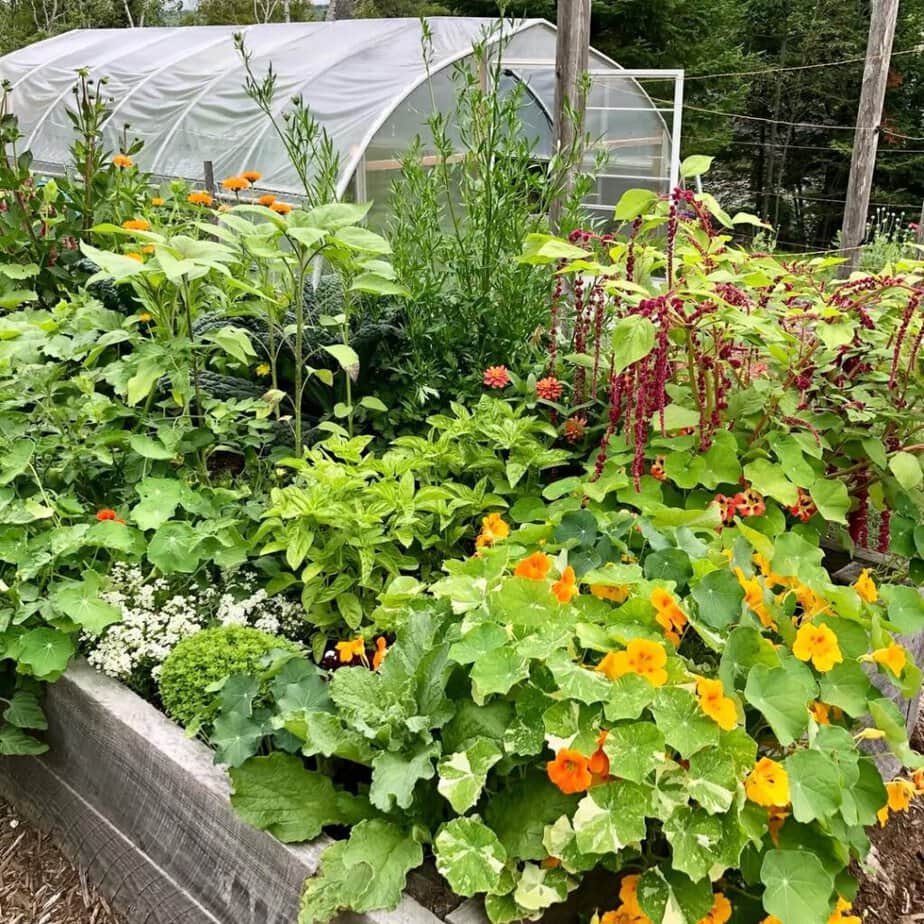
The Polyculture Raised Bed (No Bare Soil, No Wasted Inches)
This single raised bed functions like five separate garden zones. Kale, basil, zinnias, nasturtiums, amaranth, and parsley are all packed together.
The method here is interplanting based on height and harvest timing. Tall seed-heads and amaranth anchor the back. Medium herbs and greens fill the middle.
Trailing nasturtiums spill over the front edge of the bed, ensuring every layer of vertical space has a purpose. The flowers are not just for looks; they attract pollinators for the vegetables and act as living mulch that shades the soil and prevents weeds.
Takeaway: Before you plant, group your vegetables by their final height: tall, medium, and trailing. Arrange them from back to front in that order. Then, fill any remaining gaps with a flowering edible like nasturtium to keep all soil covered.
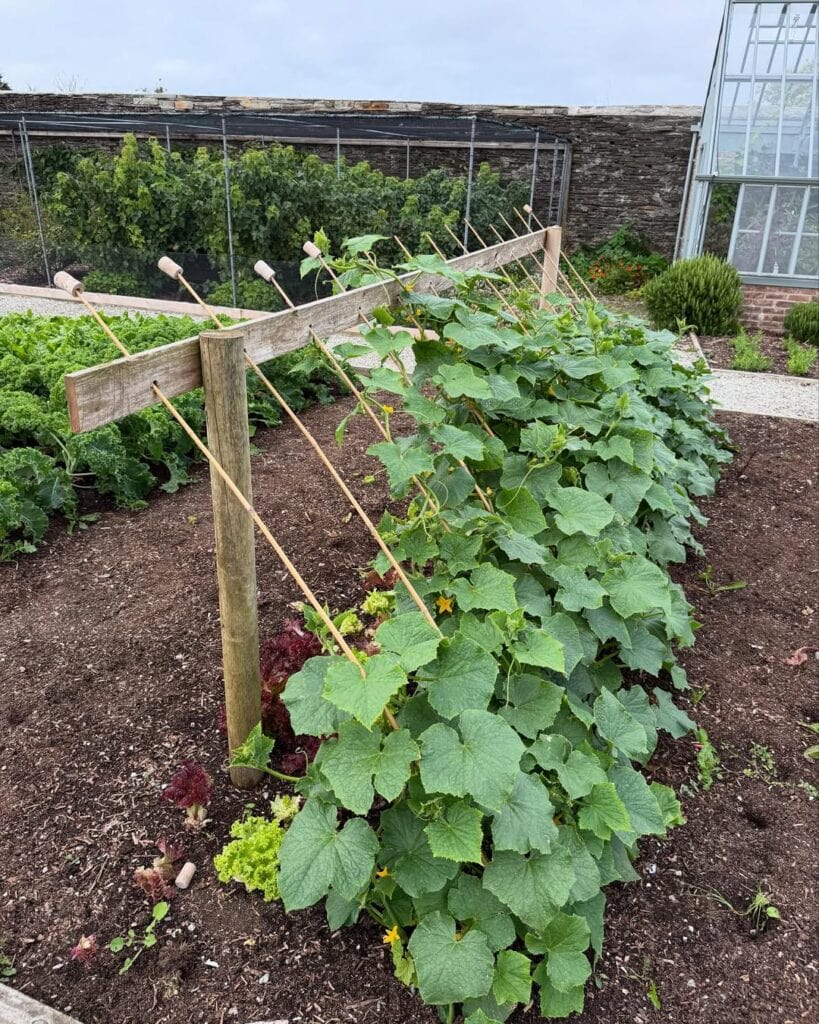
The A-Frame Trellis That Turns Vines Into a Wall
A simple A-frame made from two posts and crossbars, strung with garden twine, gives this row of cucumbers a vertical surface to climb instead of spreading across the ground.
The idea is clear: vining crops like cucumbers, beans, and peas take up a lot of space if left to grow along the ground. By directing them upward, they create a dense green wall while only needing less than a foot of ground space.
This also makes harvesting much easier, as the fruit hangs down at eye level instead of hiding under leaves on the ground.
Takeaway: Any vining vegetable, such as cucumber, pole bean, snap pea, or even small squash, can be trained onto a vertical frame. Budget roughly 1 foot of ground space per plant and let the trellis take care of the height instead.
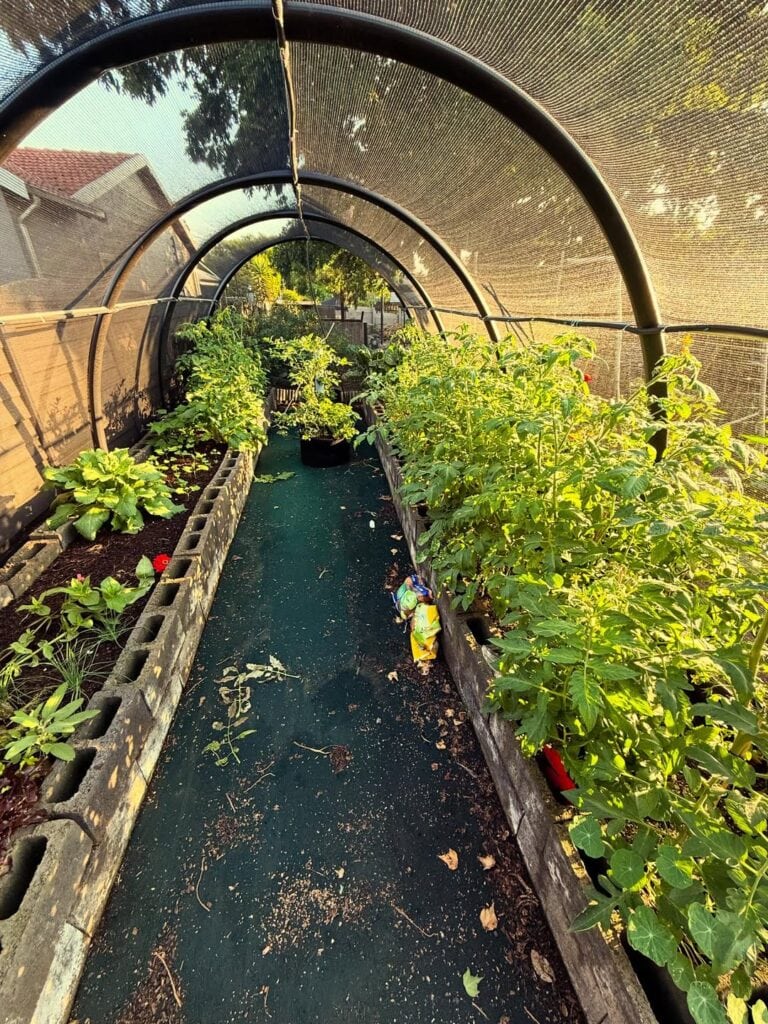
The Shade-Tunnel Bed for Hot Climates
This narrow tunnel bed, lined with cinder blocks and covered with shade netting instead of clear plastic, uses a method designed for intense sun rather than cold.
It’s a hoop structure meant to filter and reduce light, not trap heat. The cinder-block walls serve as raised-bed sides and thermal mass, while the netting softens the harsh afternoon sun. This way, heat-sensitive greens and tomatoes can keep growing during the hot months without burning.
Arranging the bed in a long, narrow line allows each plant to be close to the open aisle, making it easy to reach in for harvesting or watering without stepping into the bed.
Takeaway: If your area receives strong afternoon sun, replace a solid greenhouse cover with breathable shade cloth (30-50% shade rating) over your bed frame. It protects plants without causing heat buildup like plastic does.
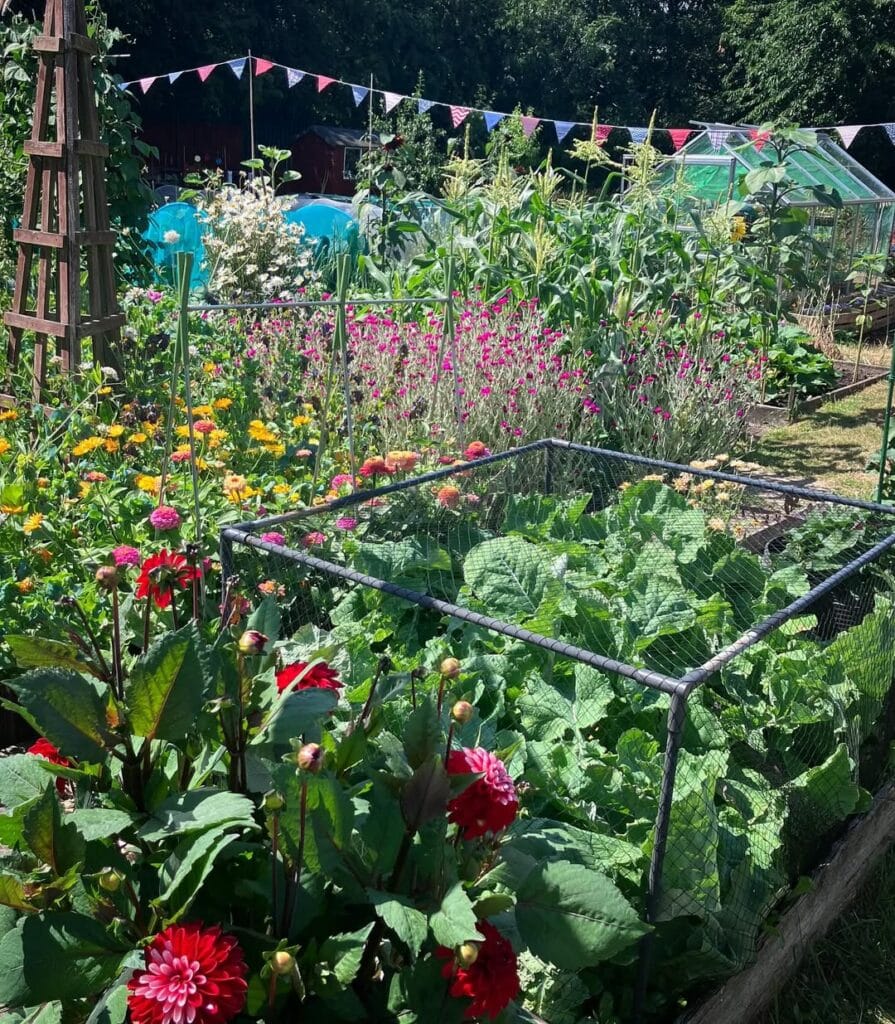
The Caged Bed Inside a Cutting-Garden Border
Here, a vegetable crop, likely collards or chard, is completely enclosed in a netted frame. It sits right in the middle of an ornamental cutting garden filled with dahlias, calendula, and cosmos.
This technique uses land in two ways. The flowers are not just decoration; they serve as border plants that attract pollinators and beneficial insects to the vegetable bed at the center. The wire cage addresses the problem of pests and birds targeting leafy greens, eliminating the need for a separate vegetable plot.
This shows that a small vegetable garden doesn’t have to have its own area; it can thrive within a flower garden and take advantage of its beauty.
Takeaway: If you lack space for a separate vegetable patch, consider placing one or two caged vegetable plants directly in an existing flower bed. The surrounding blooms will help attract pollinators and visually hide the cage.
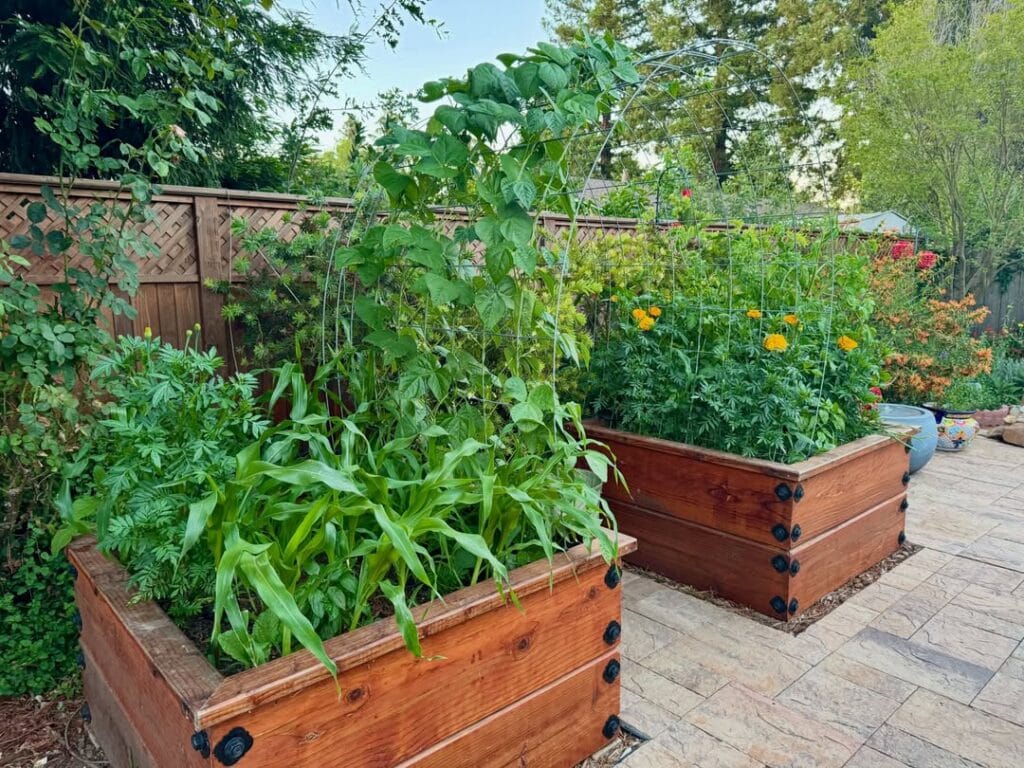
The Matching Raised Beds With Built-In Arched Trellises
Two nearly identical cedar raised beds sit side by side, each with its own freestanding arch trellis. One bed grows pole beans, while the other supports tomatoes and marigolds.
The small vegetable garden design uses a simple method of repetition. Instead of one large bed trying to host everything, two smaller, equally sized boxes each have a dedicated vertical structure suited to their plants. This setup improves airflow and access overall.
The marigolds at the base of the tomato trellis are not randomly placed; they form a classic companion-planting pairing that helps keep pests away from the tomato roots.
Takeaway: If you’re building more than one raised bed, make them the same size and add a matching trellis arch to each. This uniformity makes planning easier and keeps maintenance routines, like watering and feeding, the same across the beds.
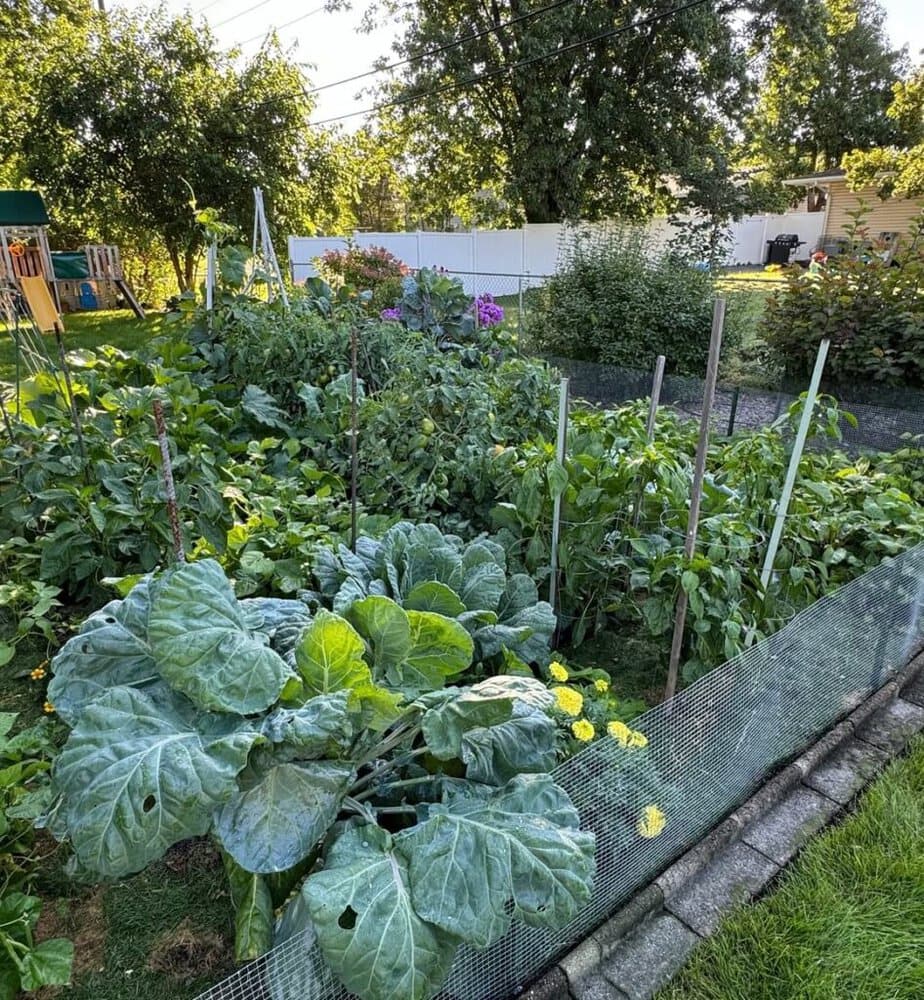
The Staked Row With a Low Mesh Border
This dense small vegetable plot showcases cabbage, tomatoes, and peppers in tight rows, with each plant staked individually. A short mesh fence runs along the front edge of the bed.
This method involves giving each tall or top-heavy plant, especially tomatoes, its own stake. This prevents them from leaning into their neighbors. The low fence keeps rabbits and small pests out without blocking sunlight or airflow above.
Staking plants individually also allows for closer spacing since you aren’t limited by a shared structure.
Takeaway: Stake top-heavy plants like tomatoes and peppers individually instead of grouping them on one shared trellis. This approach allows you to space plants according to their root needs, rather than the reach of a single support.
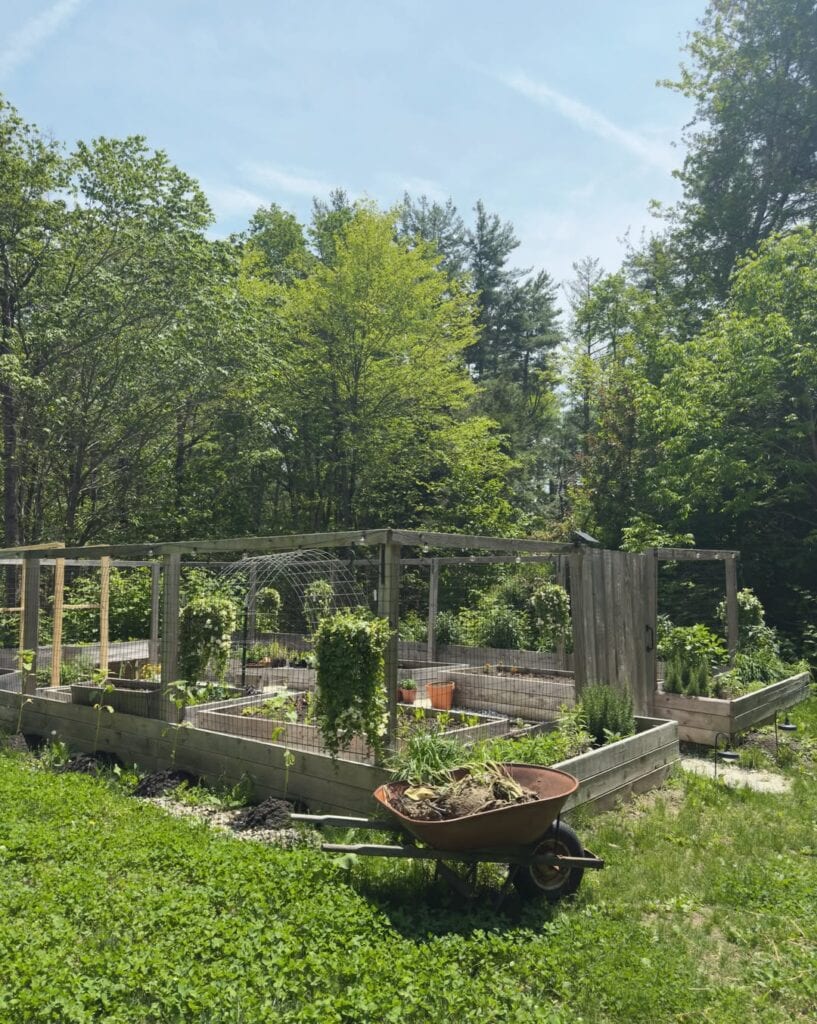
The Fully Caged Garden Compound
This small vetebale gardes uses a raised-bed system is surrounded by a tall wire-and-post cage that acts like an outdoor room. Hanging baskets and a center arch trellis provide vertical growing space inside the protected area.
Instead of using fencing or netting for each bed, the whole growing area has one perimeter barrier. This keeps deer, rabbits, and birds out and turns the vertical space above the beds into useful trellis and hanging-basket areas.
Building the frame tall enough for easy access means maintenance doesn’t require reaching over a fence.
Takeaway: If pests are a continuous issue across multiple beds, create one tall perimeter cage around the entire growing area instead of fencing each bed separately. This approach uses less material overall and allows space for hanging plants.
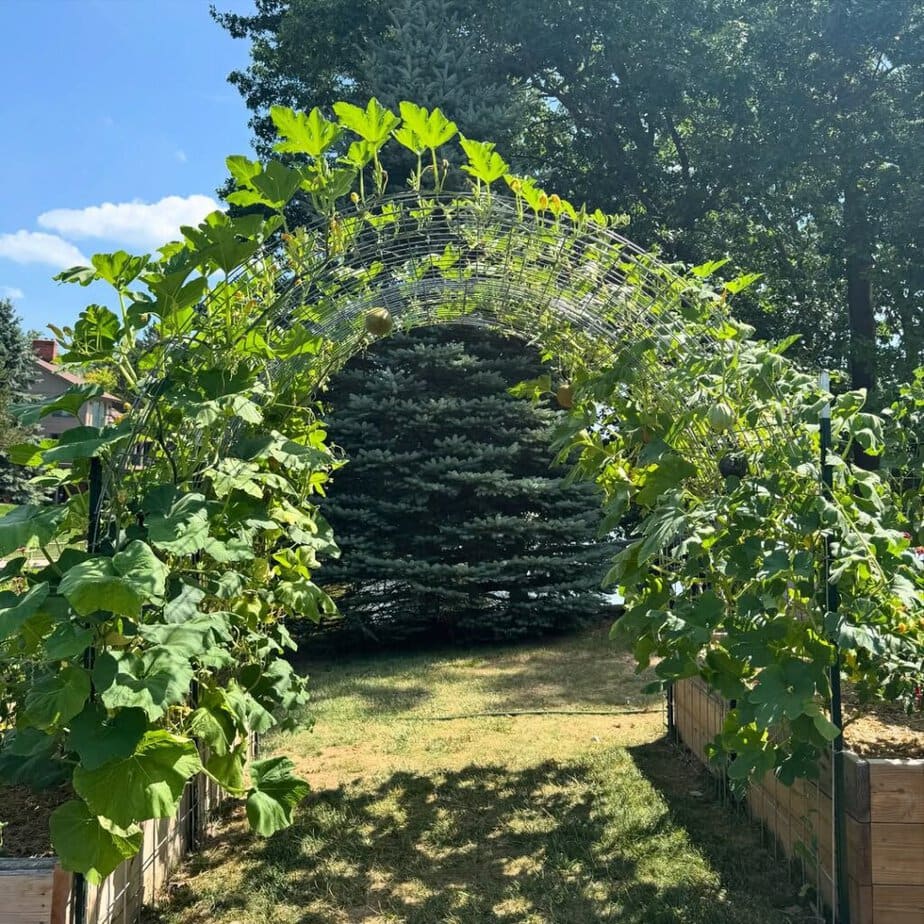
The Squash Arch Over a Walking Path
A single metal arch over a small vegetable garden path is completely covered by a sprawling squash vine. This vine creates a green tunnel, with small fruits hanging at head height.
The method makes use of the empty space above the walkway. A path is just air from the ground to head height. By training a heavy vining crop like squash, melon, or gourds to grow on an arch above it, you turn that unused space into an area for growth without taking up any bed space.
The fruit that hangs through the open lattice also stays clean and easy to see since it doesn’t rest on damp soil.
Takeaway: Consider any path or walkway in your small vegetable garden as space for growing. A simple arched trellis above it allows vining crops to produce overhead while keeping the ground beneath fully walkable.
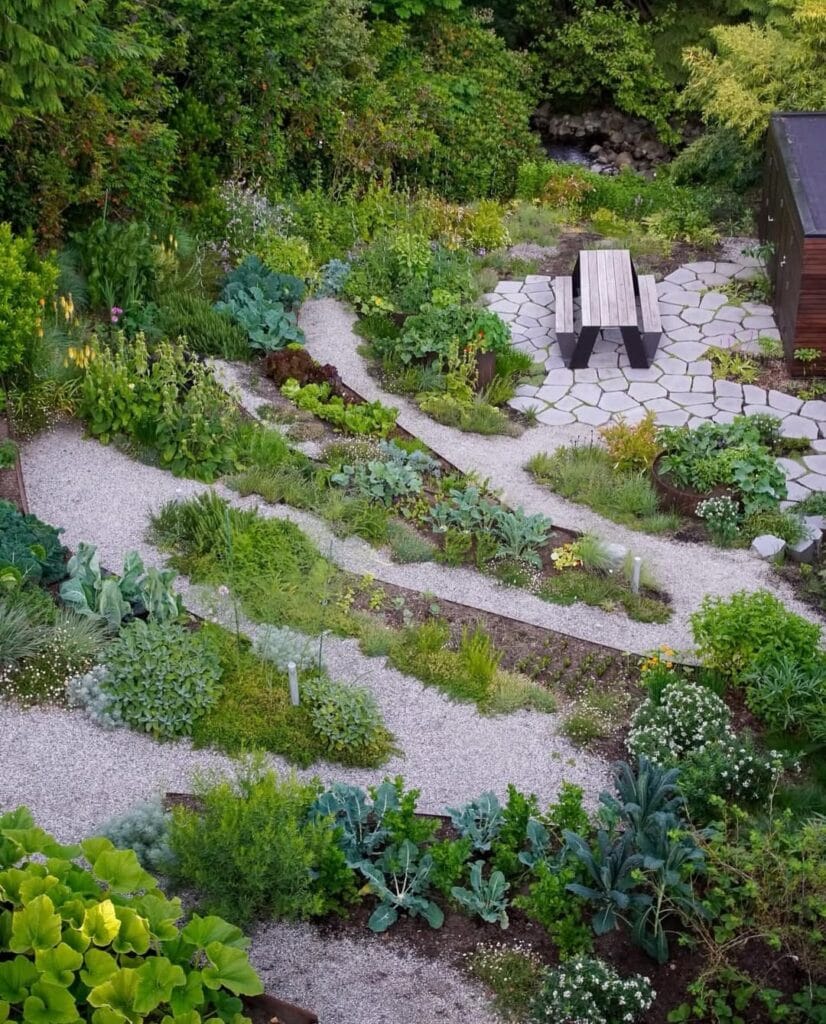
The Curved-Bed Kitchen Garden With Integrated Seating
This aerial view shows vegetable and herb garden arranged in soft, curving rows that follow gravel paths leading to a picnic table.
This design blurs the line between “vegetable patch” and “garden room.” The method used is contour planting.
Instead of rigid rectangular rows, the beds are shaped to follow the natural flow of the paths. This approach makes the growing space feel integrated into the whole gardeninstead of just tacked onto a corner.
It places a destination, like the seating area, at the center of the productive space, encouraging daily visits rather than neglect.
Mixing herbs, greens, and cabbages directly into these curved beds without hard divisions allows harvesting to become part of walking through the area, rather than a separate task.
Takeaway: If your space allows even a little flexibility, curve your bed edges to follow your natural walking path instead of forcing straight rows. This makes a small garden feel intentional rather than cramped.
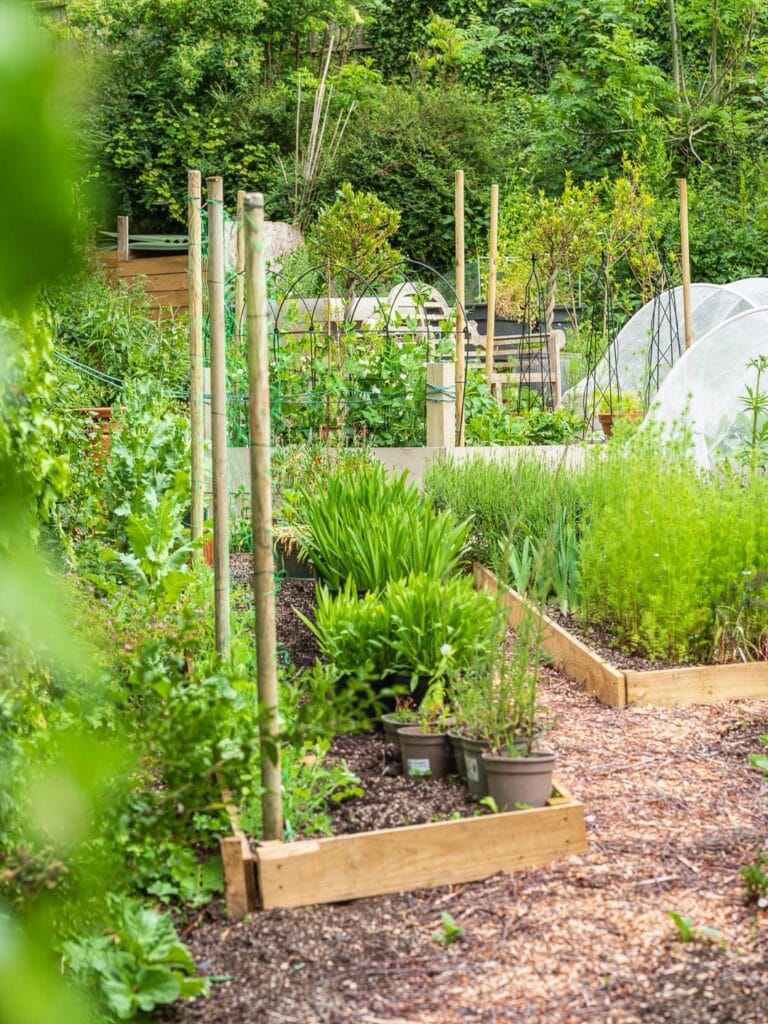
The Layered Trellis Zone With Repurposed Materials
This corner of small vegetable garden features several support structures working together: wooden stakes for peas, a wire obelisk, a mini hoop tunnel, and a low timber-edged bed, all within a few feet of each other.
This method is called structure stacking by crop need. Instead of using one trellis style for the entire garden, each plant gets the specific support and protection it needs. For example, use stakes for climbing peas, a hoop cover for frost-sensitive seedlings, and an open obelisk for ornamental height.
Since each structure has a small footprint, several can fit in a tight corner without blocking light. This setup also allows the gardener to upgrade or replace one structure without redesigning the whole layout.
Takeaway: Don’t stick to one trellis style for your entire vegetable garden. Match the support to the plant use stakes for peas, hoops for frost protection, and an obelisk for height—so you can mix and adjust as your beds change from season to season.
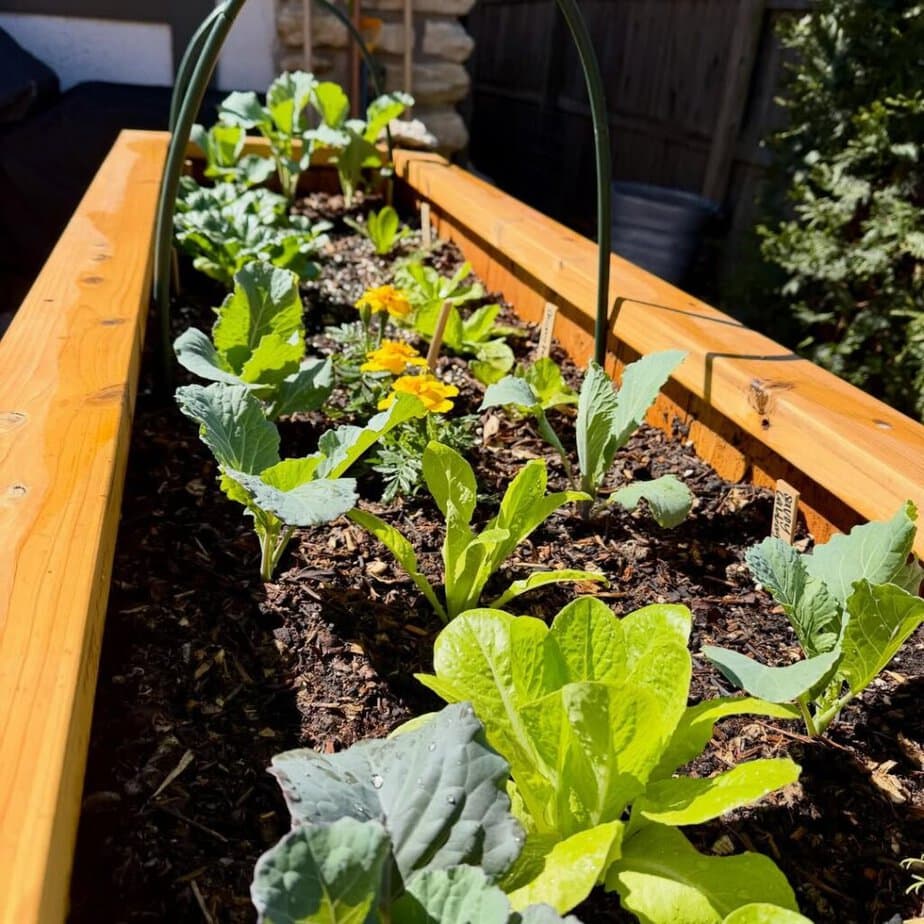
The Long, Shallow Cold-Frame Style Box
A single long, narrow planter holds a mix of lettuce, kale, and marigolds. Hoops are arched over one end, ready to support a cover for frost or pest protection. This method focuses on protecting specific areas within one container when working with a small vegetable garden.
Instead of covering the whole box, the hoops are placed over the section with the most vulnerable seedlings. This way, you can shield what needs protection while allowing hardier plants in the same box to get full sun and airflow. The shallow, elongated shape fits well along a fence line or deck edge, where a square bed wouldn’t.
Takeaway: You don’t need to cover the entire bed with hoops. Just place arch covers over the most vulnerable section, such as new seedlings or heat-sensitive greens, and leave the rest of the box open.
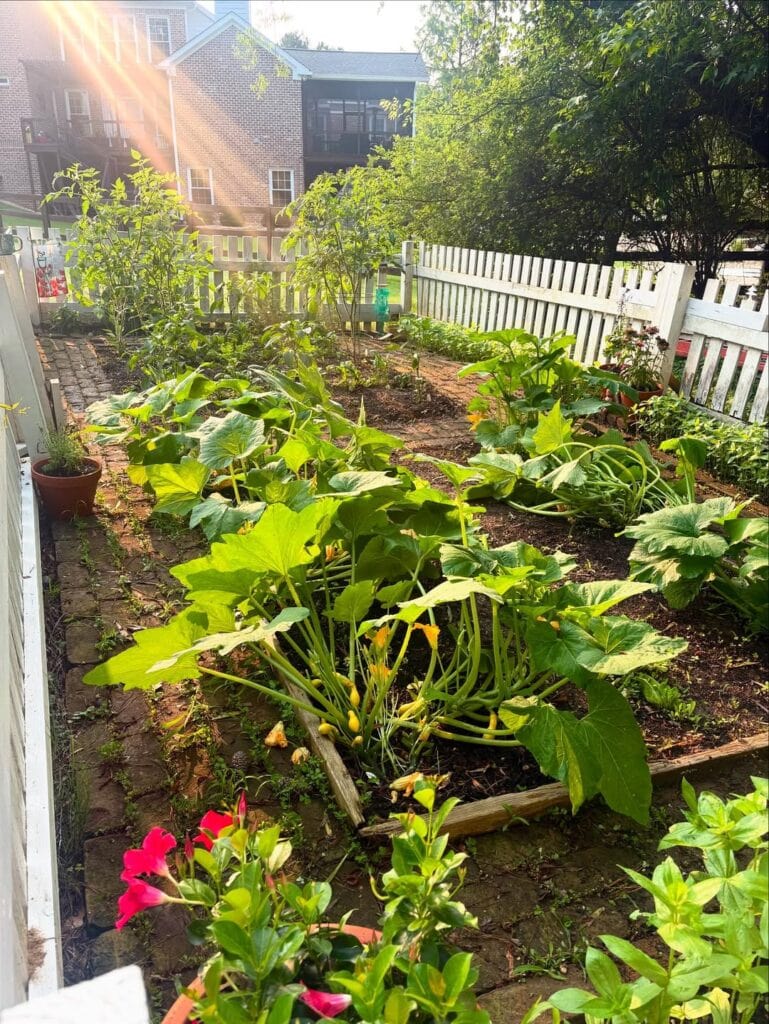
The Foundation-Edge Vegetable Strip
This narrow strip running along a fence and house foundation is filled with squash, tomatoes, and peppers. It uses reclaimed brick for informal bed edging, and the fence acts as a backdrop for staked plants.
This method reclaims the “dead zone” along property edges. The space between a fence and a lawn is often seen as useless. Use loose brick to mark the bed, and stake tall crops against the fence to turn a few feet of overlooked area into a productive growing row.
Allowing the squash to sprawl toward the open brick path rather than into the lawn keeps the vine contained without a trellis.
Takeaway: Walk around your yard and check the strip between your fence and lawn. Even 18 inches of edged soil along a foundation or fence can support a full row of staked tomatoes or peppers.
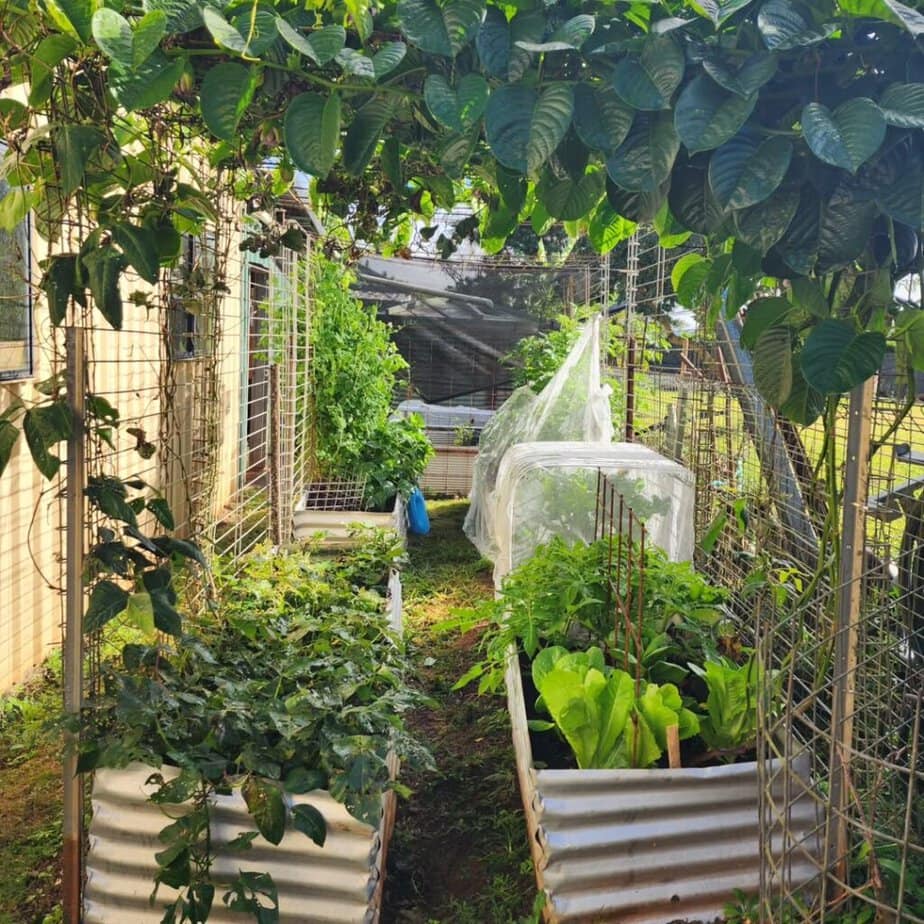
The Corrugated Metal Tunnel Garden
A narrow side of a small vegetable garden has been changed into a useful corridor with corrugated metal raised beds on each side. Frost cloth covers hoops in the middle of the row, while a vine canopy grows overhead between two structures.
This approach fully utilizes the narrow space. The metal beds are deep enough for roots to grow without needing a large area. The hoop-and-cloth cover protects delicate seedlings in one section, leaving the rest of the row open.
The overhead vine takes advantage of the airspace between the two structures, acting like a living roof. This design shows that a side yard as narrow as a hallway can still work as a complete garden if you purposefully use every dimension; depth, width, and height.
Takeaway: In a narrow side yard, opt for deep raised beds instead of wide ones. Depth allows roots to expand without requiring extra space, and you can still train vines above to use the airspace.
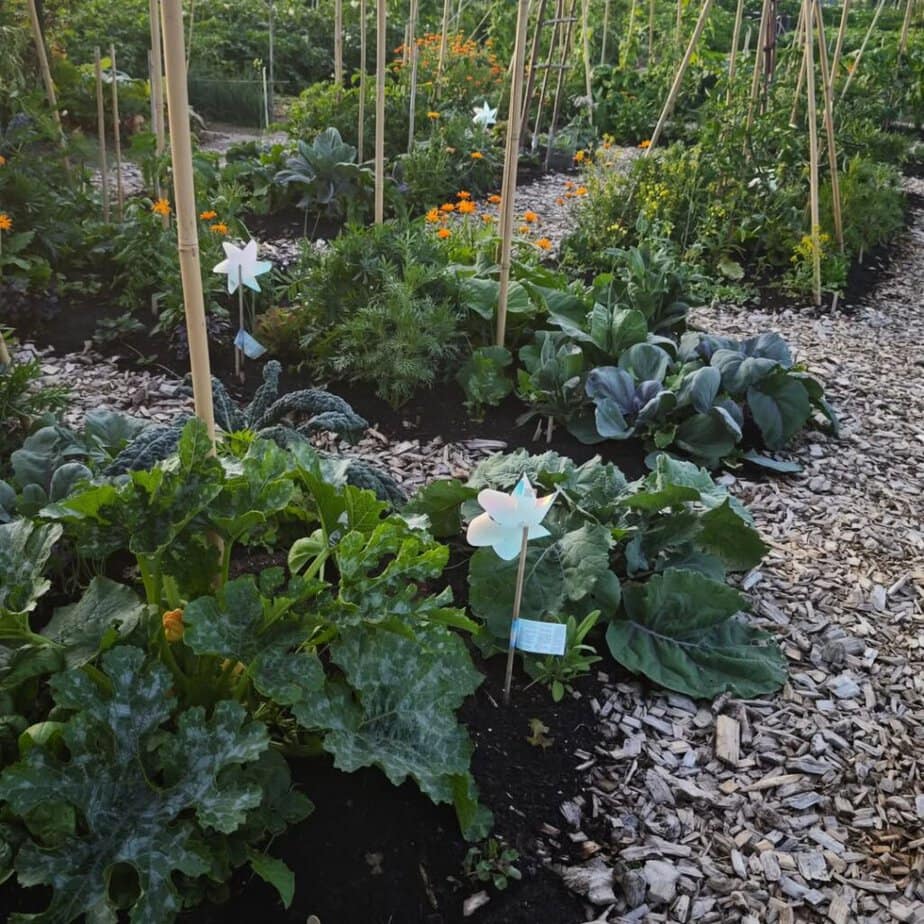
The Curved Bed With Sacrificial Border Crops
Marigolds and dill grow in tight rows in this small vegetable garden among cabbage, kale, and zucchini. They are planted in a curved bed with wood-chip mulch paths and charming garden markers. This technique is sacrificial companion planting along the bed’s edge.
Aromatic flowers and herbs like marigold and dill are planted there to confuse pest insects searching for the cabbage and squash behind them. They serve as a living buffer instead of just decoration.
The wood-chip paths between the curved sections help keep foot traffic limited to the paths, protecting the growing soil.
Takeaway: Plant some marigolds or a row of dill along the outer edge of any vegetable bed. They do more than just fill space; they help mask the scent that pest insects use to find your crops.
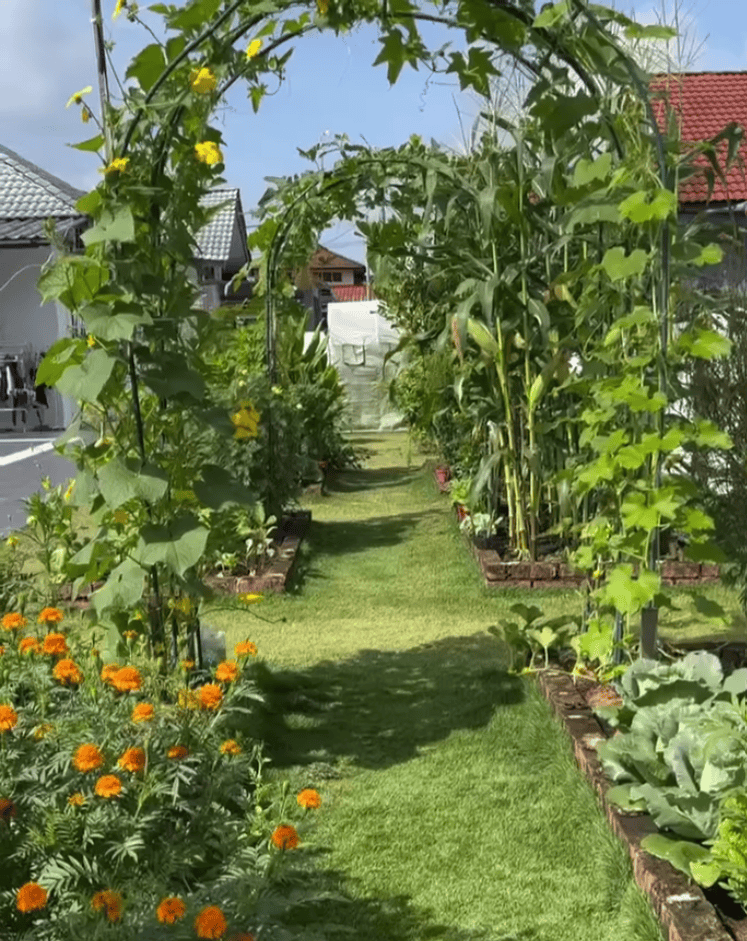
The Symmetrical Arch Walkway
Two matching metal arches frame a grassy path. Cucumber and bean vines climb one side, while corn anchors the other. Below, marigolds and cabbage fill the beds at ground level.
This small vegetable garden layout uses vertical symmetry. By placing matching trellis structures on both sides of a central path, you not only maximize growing space but also create a clear visual “doorway.”
This makes the vegetable garden appear to be a purposeful, walkable space rather than just a utility area. Since the vines climb rather than spread out, the grass path remains completely clear and easy to mow.
Takeaway: If you have two beds facing each other across a path, mirror the same trellis shape on both sides. This transforms an ordinary walkway into a defined entrance while keeping the path usable.
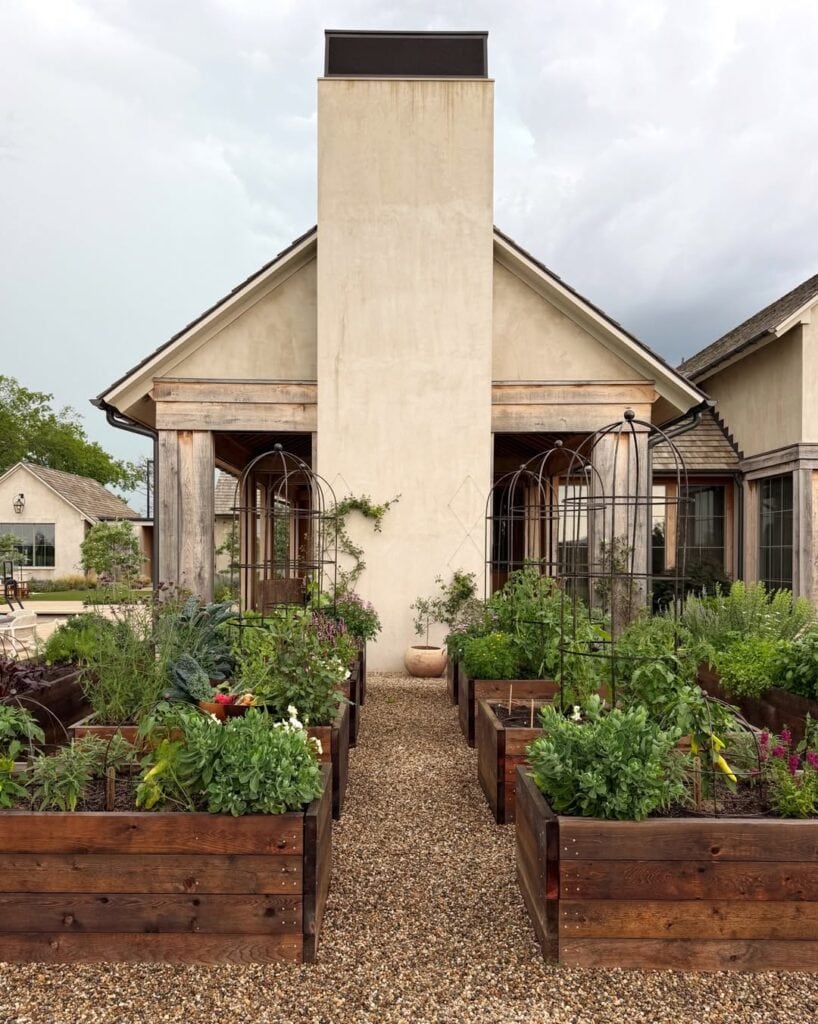
The Formal Obelisk Pair Flanking an Entry
Four matching wooden raised beds sit in symmetrical pairs on either side of a gravel path that leads straight to the back of a house. Each bed features a black metal obelisk trellis that rises above the greenery.
This technique is known as architectural mirroring. By repeating the same bed size, material, and obelisk shape on both sides of the path, the small vegetable garden takes on the formality of the home’s symmetrical facade.
It appears to be a well-designed extension of the house, rather than just a utility area added on the side. The obelisks also provide peas, beans, or small cucumbers with a clear vertical point that resembles the home’s columns above.
Takeaway: If your space is near a symmetrical structure, such as a door, a pair of windows, or a path, match your raised beds and trellis shapes on both sides. This approach makes a vegetable garden feel more like a thoughtful design choice rather than an afterthought.
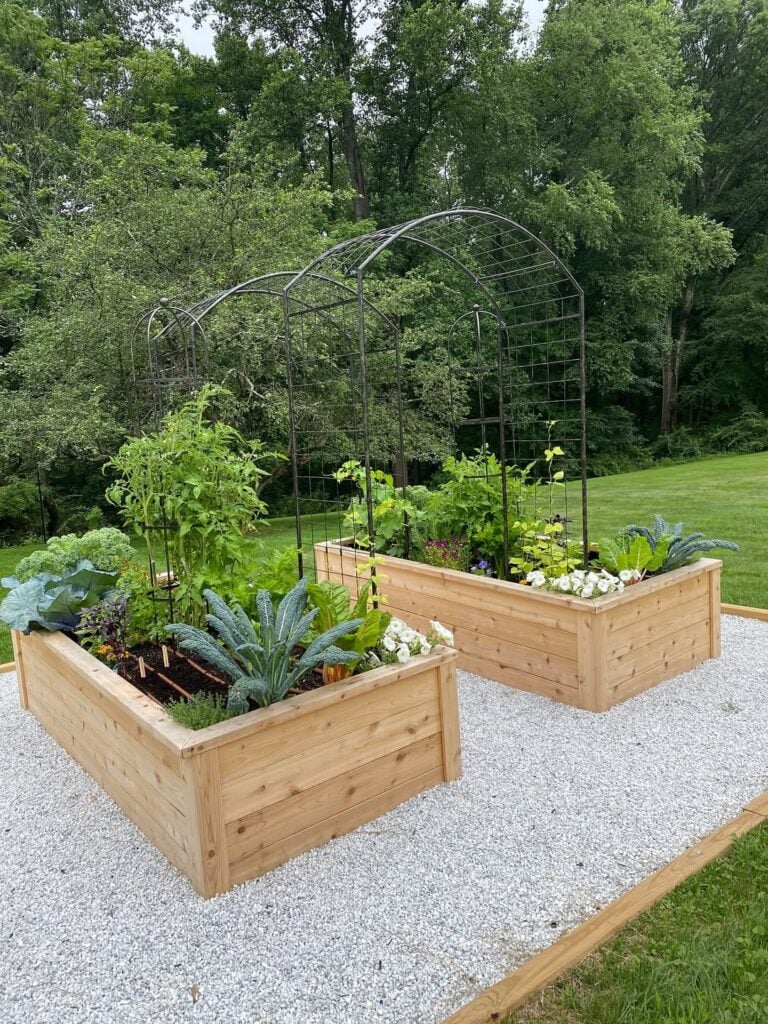
The Twin Box Beds With Shared Arch Trellis
Two identical cedar raised beds sit end-to-end, with matching arched trellises rising between and behind them. These trellises support climbing peas and beans, while kale and chard occupy the open space below.
This approach uses shared structural anchoring. Instead of giving each bed its own separate trellis, the arches are placed where the two boxes meet.
This way, one structure serves both beds visually and functionally. It also keeps the climbing crops centered and balanced, preventing them from leaning to one side.
Takeaway: When building two raised beds side by side, place a single shared trellis at the point where they meet rather than two separate ones. This method is more efficient and creates a natural focal point between the boxes.
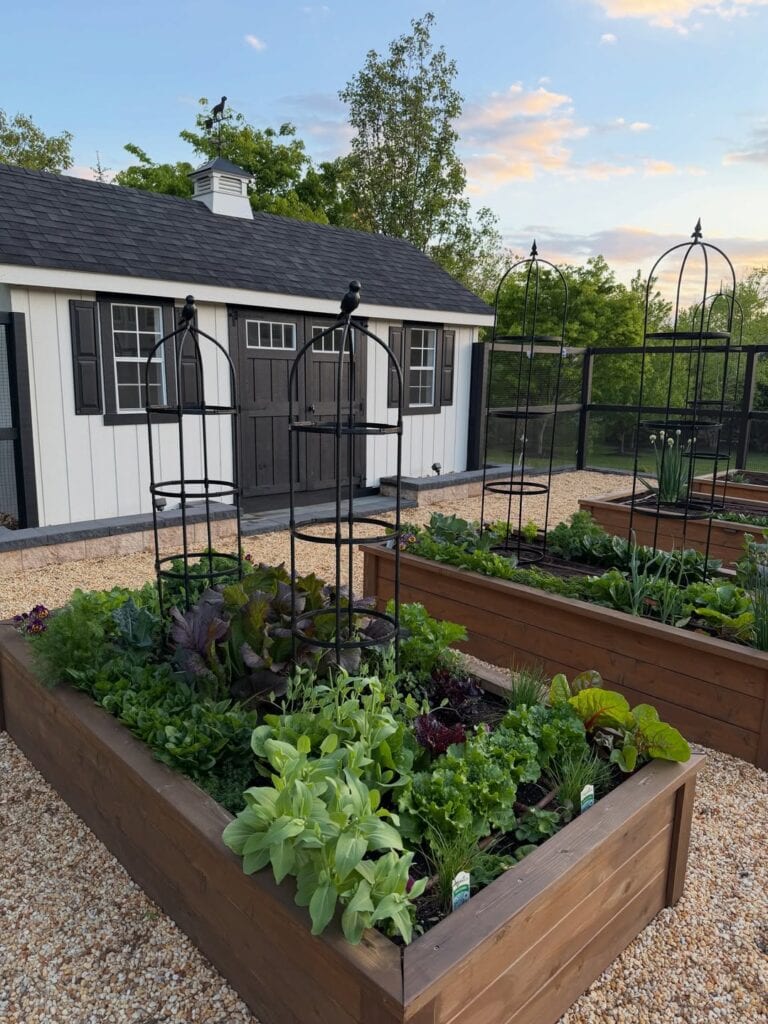
The Sentinel Obelisk Row With a Garden Building Backdrop
Black metal obelisks rise like sentries from the corners and centers of several raised beds. They stand against the backdrop of a matching black-and-white garden shed, with bird finials topping each trellis.
The technique uses the same obelisk style at every vertical point in the garden. This avoids mixing arches, stakes, and cages, creating a visual rhythm across the beds. The matching shed material connects the hardscape and the trellis hardware into one cohesive look.
This kind of consistency helps a productive small vegetable garden appear curated rather than haphazard.
Takeaway: Choose one trellis or obelisk style and use it at every vertical point across your beds. Visual consistency adds more to a “designed” look than any individual plant choice.
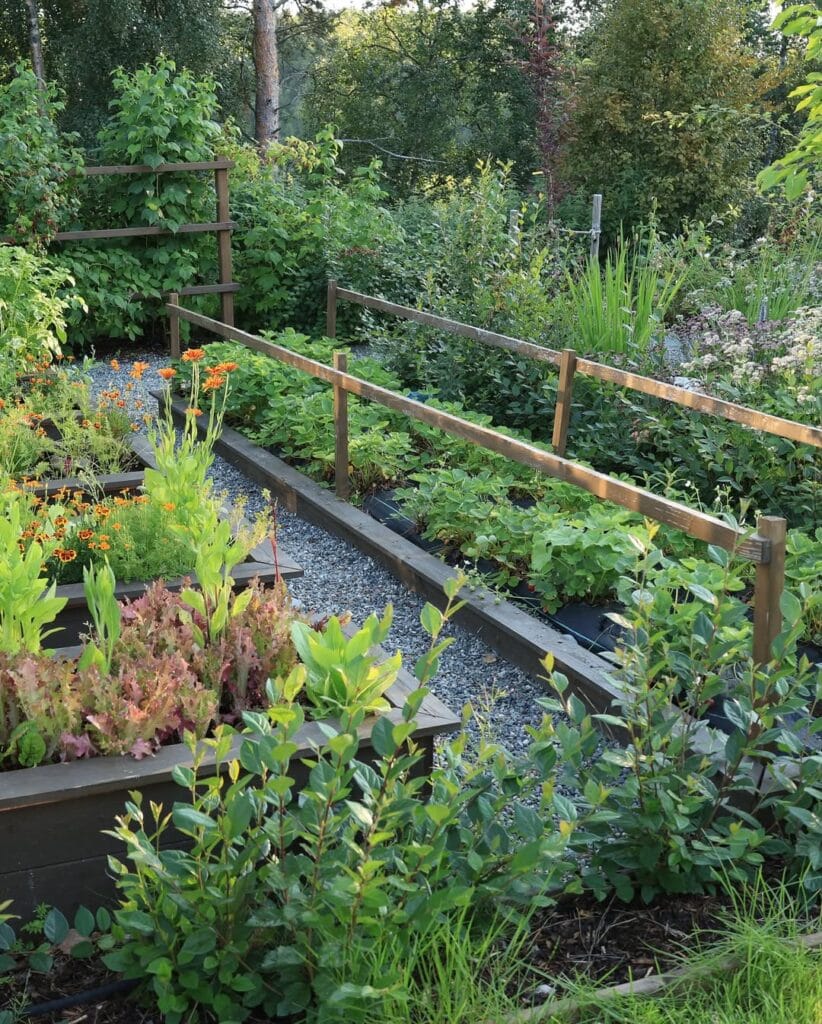
The Terraced Berry-and-Herb Run on a Slope
This sloped property features a series of stepped beds made from low timber, connected by a gravel path with a simple wood handrail. These beds are full of strawberries, herbs, and flowering edibles in distinct tiers.
This method is called terracing for grade. Instead of fighting against the slope, each bed is leveled individually and positioned down the hill. This approach prevents soil and water from washing downhill during heavy rain, and it creates several short, accessible beds instead of one long bed that is too steep to work on comfortably.
The handrail along the path also serves as a subtle barrier, keeping foot traffic on the gravel and off the beds.
Takeaway: If your yard slopes, don’t try to level the whole area into one bed. Instead, create a few smaller, individually leveled terraces connected by a path. This method is much easier to build and helps prevent soil erosion.
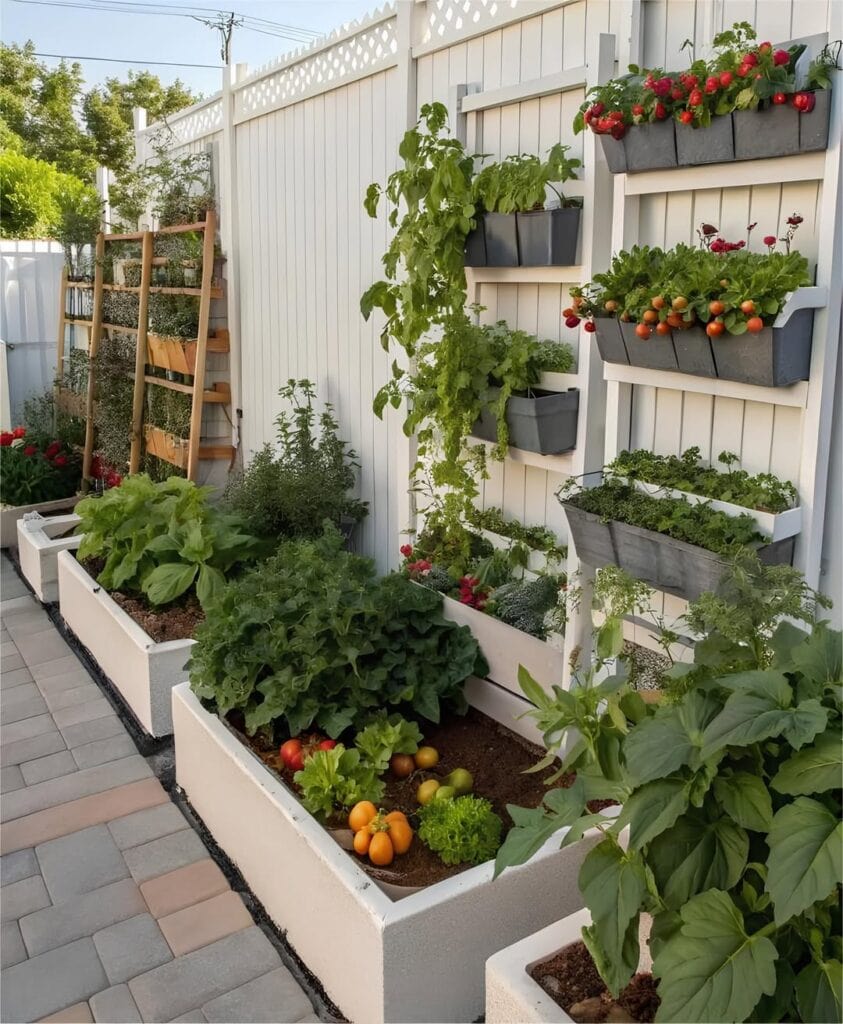
The Vertical Wall-Mounted Planter System
Along a narrow side passage, a white wall has tiered wall-mounted boxes that hold strawberries, cherry tomatoes, and herbs. These boxes are stacked above-ground-level raised beds, allowing for growing on two separate levels at once.
This method effectively doubles the small growing space without expanding the footprint. The wall-mounted boxes use vertical space that would otherwise be a blank fence.
Placing fruiting crops like strawberries and cherry tomatoes at eye level also makes harvesting easier, eliminating the need to bend over for ground beds. This setup is particularly useful in narrow side yards where ground space is limited, not light.
Takeaway: If you have a narrow side yard, mount tiered planters directly on the fence or wall above your ground beds. This adds a second growing layer without taking up any extra floor space.
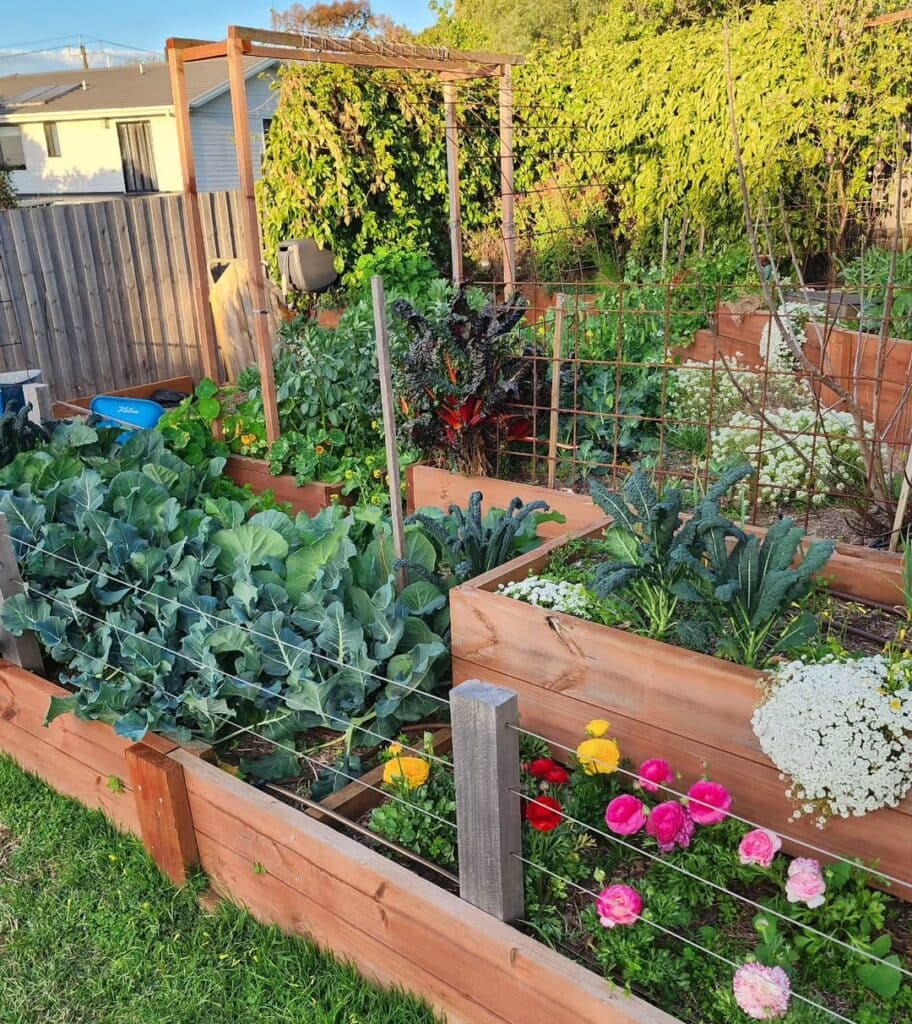
The Layered Raised Beds With Mixed Trellis Types
This abundant small vegetable garden corner features several raised beds.
One is filled with broccoli and collards, another has a tepee-style overhead arch covered in vines, and a third uses a flat wire grid trellis for peas. These elements come together with a low wire fence and a path of bright ranunculus below.
This technique is zone layering within a small area. Each bed has a different trellis tailored to its specific crop: a tepee arch for heavy climbers, a flat grid for lighter vines, and open beds for leafy greens.
This design avoids the visual monotony of repeated structures while maximizing every available inch. The flower border in front softens the look of the working garden without taking away growing space from the vegetables.
Takeaway: In a tightly packed garden, vary your trellis types based on what is climbing them. Use a sturdy arch for heavy vines and a lighter grid for peas, rather than using one style throughout. This approach keeps the space functional and prevents it from appearing repetitive.