15 Small Bathroom Storage Ideas That Actually Work Even in Tiny Spaces
Does your small bathroom feel like a daily struggle, with towels piled on the toilet tank, a drawer that won’t close because of three hair tools, and a vanity cluttered with bottles you can’t put away due to lack of space? You are not bad at organizing. You simply have a small bathroom. Small bathrooms don’t do well with generic storage solutions.
The good news is that square footage isn’t actually the issue. The real problem is that most storage advice targets normal-sized rooms and is then just downsized, rather than tailored to meet the unique challenges posed by small bathrooms. These challenges include narrow wall gaps, a lack of linen closets, awkward corners behind doors, and vanities with no drawer space.
Once you begin storing items behind and inside the surfaces you already use, a cramped bathroom can hold more than you might expect while also appearing neater.
In this list, you will find real examples of small bathrooms that solved specific storage issues. You’ll see narrow shelving that fits into gaps you never knew were usable, over-the-toilet units that turn unused space into a linen closet, vanity organization that increases capacity without adding more furniture, and a few clever tips that cost very little to replicate.
Let’s dive in.
15 Ideas for Small Bathroom Storage
The Wall-Mounted Tower: Vertical Storage That Floats Above the Toilet
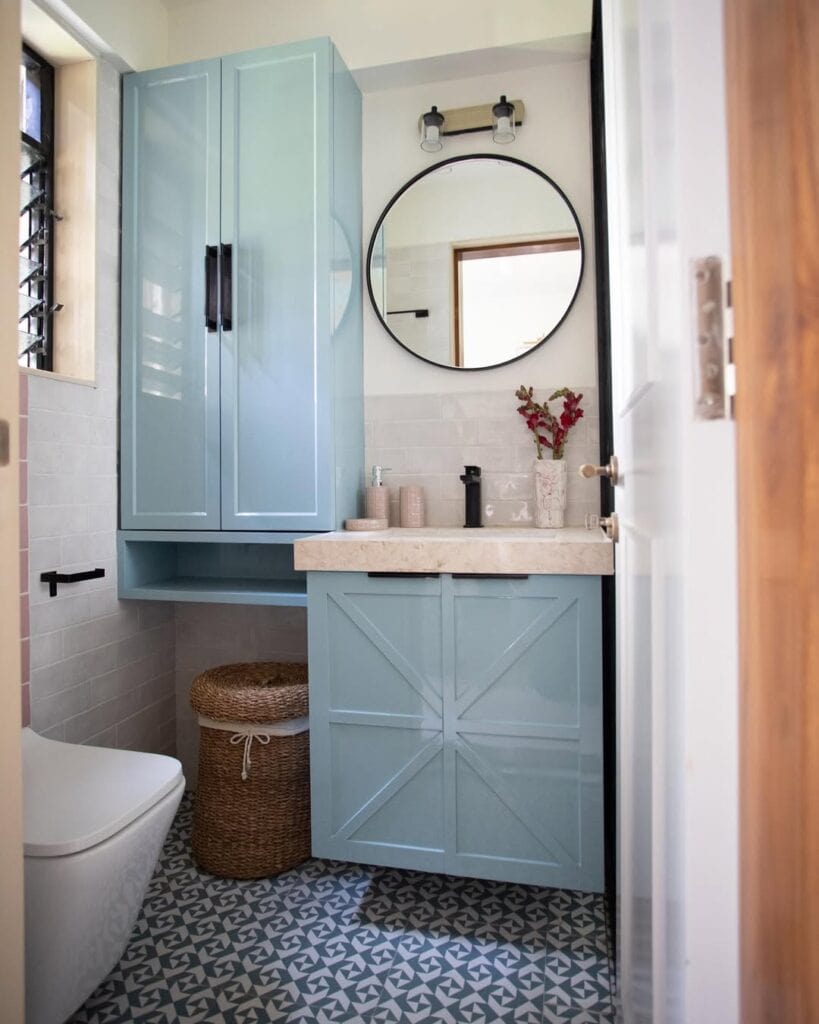
This bathroom addresses the lack of a linen closet by mounting a tall, shiny two-door cabinet directly above the toilet. Below it, there’s an open shelf for items you need to grab quickly.
Since the unit is wall-mounted, it doesn’t take up any floor space. The open shelf below helps avoid a heavy feel in the room. The glossy finish reflects light and prevents the large piece from making the room feel smaller.
Takeaway: If your small bathroom has empty space above the toilet, consider that your linen closet. Opt for a wall-mounted unit instead of a floor cabinet, and include one open shelf to keep the storage from looking too heavy.
Best For: Bathrooms with high ceilings, an empty wall above the toilet, and no extra floor space.
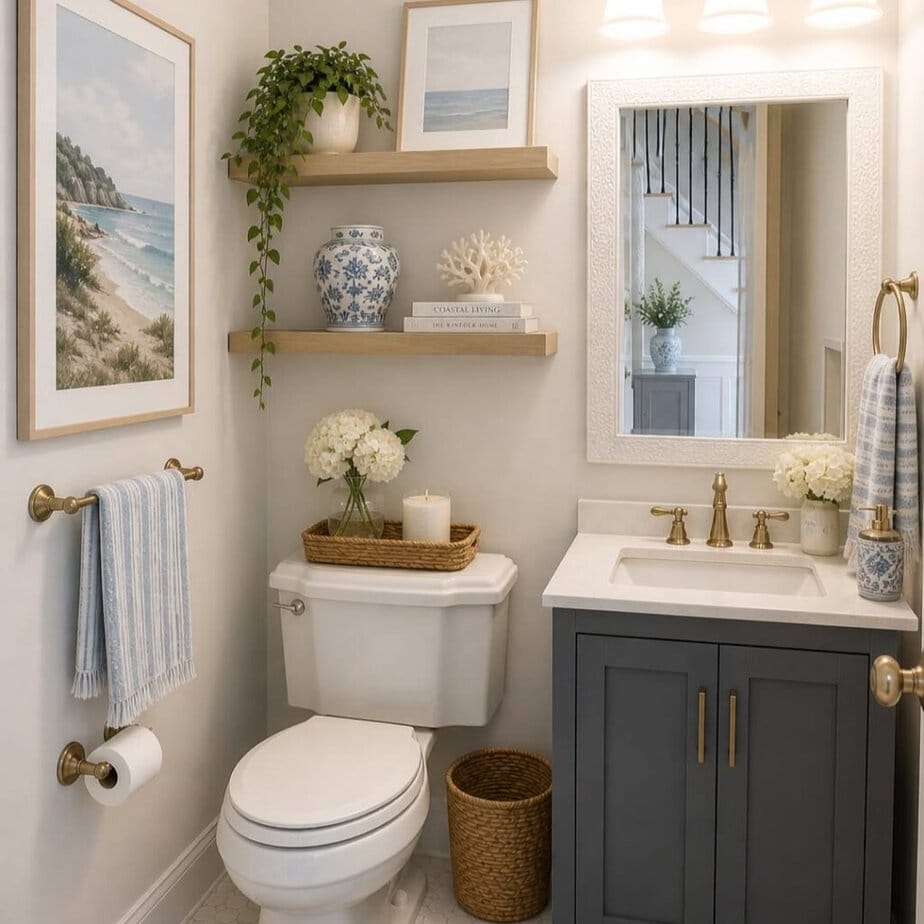
Floating Shelves as a Decorative Linen Closet
Two slim floating shelves above the toilet hold everything from coffee-table books to a vase and a trailing plant. The styling trick helps it work well: items are grouped by height. The tall vase and plant are at the back, with shorter objects in front. This arrangement prevents a crowded look, even though the shelves serve a real storage purpose.
Floating shelves also blend in better than a boxy cabinet. There’s no bulky frame or doors, only the objects themselves. This arrangement makes the wall feel curated, not cluttered.
Takeaway: When storage also serves as decor, stagger items by height and leave visible gaps between groups. The negative space, rather than the shelf itself, keeps an open shelf from looking messy.
Designer Tip: Limit each shelf to 3-4 “moments,” which are clusters of grouped objects. This approach makes the arrangement look styled, while the lines of items read as simple storage.
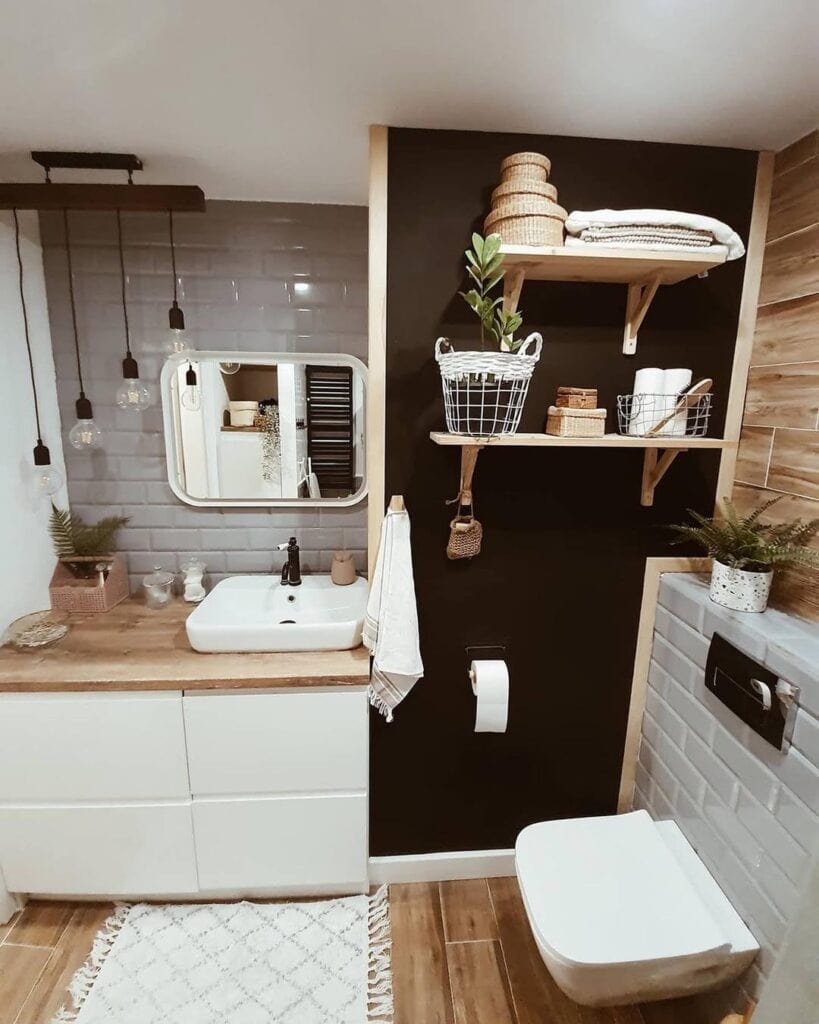
The Dark Accent Wall That Doubles as a Display Nook
Here, a deep charcoal-black wall has two bracketed wood shelves, creating a built-in storage nook without any actual construction. The dark background is the smart part; it makes the woven baskets, rolled towels, and wire caddies on the shelves stand out, turning functional storage like extra towels, toilet paper, and bath tools into the room’s focal point instead of its clutter.
It also separates the “storage zone” from the sink and vanity area next to it, so the small room feels organized instead of chaotic.
Takeaway: Paint the wall behind your open shelving a dark, rich color. This will make the storage look intentional and give your eye a clear area to focus on instead of a messy wall.
Common Mistake to Avoid: Placing open shelving on a wall that matches the rest of the room. Without contrast, baskets and supplies just appear as visual clutter instead of a styled display.
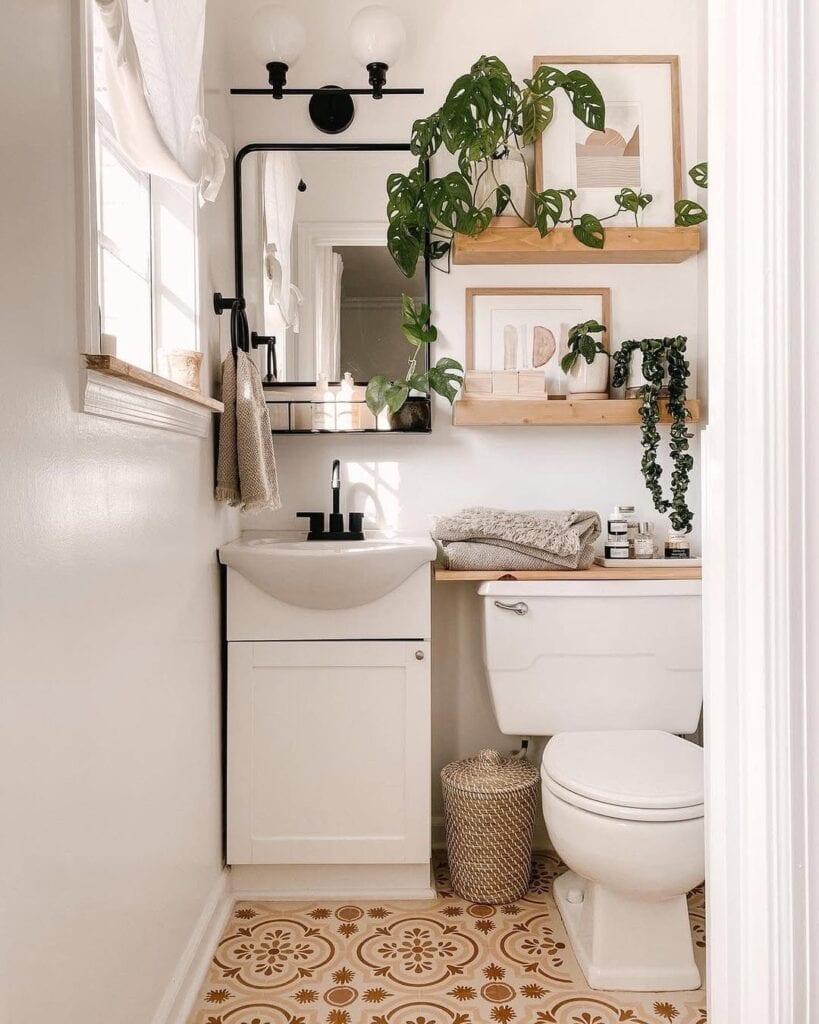
Maximizing a Narrow Footprint with a Slim Vanity + Shelf-Over-Tank Combo
This bathroom is genuinely tight. The solution is a smaller vanity, replaced by a compact pedestal-style sink with a small cabinet below.
A slim wood shelf runs across the width of the toilet tank. It catches folded towels and toiletries. The shelf sits at counter height, effectively extending the vanity’s surface into the space above the toilet, an area that most small bathrooms leave empty.
Adding trailing plants and framed art above draws the eye upward, diverting attention from the limited floor space.
Takeaway: Measure the width of your toilet tank. A custom or cut-to-fit shelf at that exact width transforms the wasted space above the tank into usable counter space, even in a bathroom that is too narrow for a full vanity.
Budget-Friendly Alternative: Skip custom carpentry and use a tension-mounted “over-the-toilet” shelf unit, which is widely available for $30-60. This option provides the same effect without needing tools.
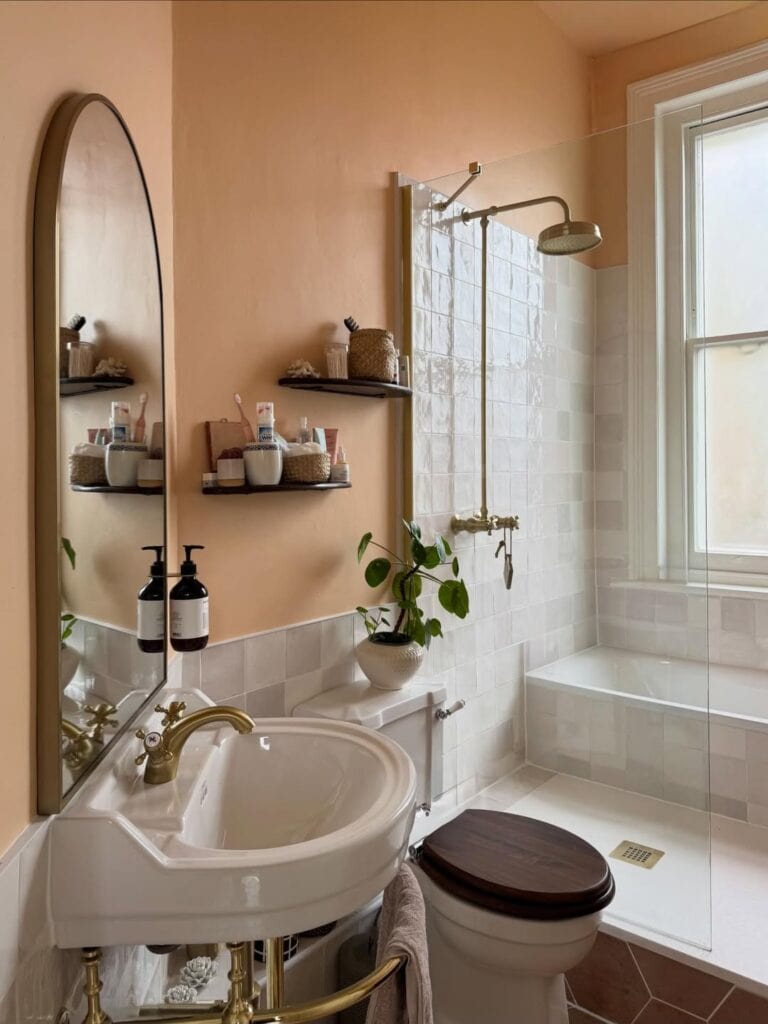
Corner Shelves That Use Dead Space Beside the Mirror
In a long, narrow bathroom with very little counter space, two small corner shelves are mounted on the unused wall beside the mirror. They hold everyday toiletries that would otherwise clutter the sink.
The clever part is the location. Corners next to a mirror are often empty in small bathrooms because people usually think only of using the wall behind the sink.
Moving daily-use items, like toothbrushes and skincare products, onto these side shelves keeps the sink edge clear. This change makes the room feel less cramped, even though the footprint hasn’t changed.
Takeaway: Look at the wall space beside your mirror, not just above your sink. Small corner or floating shelves can hold your daily-use items and free up your counter.
Styling Suggestion: Use matching containers on corner shelves, such as the same baskets or glass jars. These shelves are at eye level, so any mismatch will stand out more than on a higher shelf.
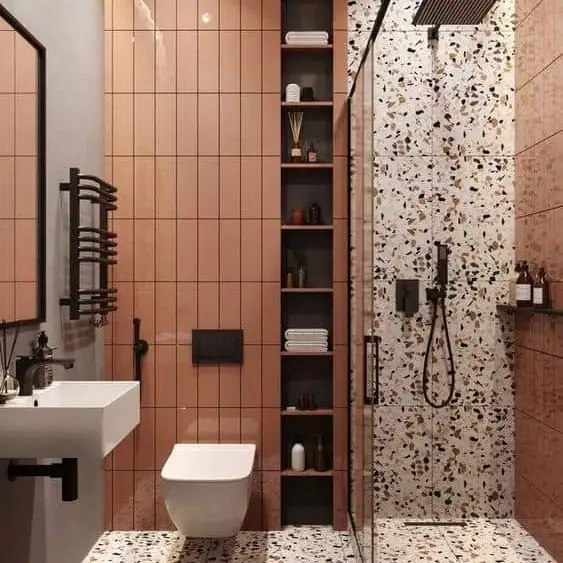
Built-In Niche Shelving Carved Into the Wall Between Toilet and Shower
Instead of attaching a cabinet to the wall, this design creates a tall column of open shelving that fits directly into it. The shelves extend from the floor to the ceiling, positioned right at the seam between the toilet and the shower glass.
Because the shelving is flush with the tile and does not protrude, it adds storage without taking up space in the room. This is especially important in a narrow bathroom.
The dark color of the niche also makes the toiletries and folded towels look styled rather than messy, even though it stores the same everyday items as a medicine cabinet.
Takeaway: If you’re tiling or renovating, talk to your contractor about creating a niche in a stud wall instead of adding a surface-mounted cabinet. This approach provides the same storage capacity without sacrificing any floor space.
Best For: Anyone who is renovating or building new. This technique needs access to the wall cavity, so it’s not suitable for retrofitting. However, it’s worth considering if you’re already opening up walls.
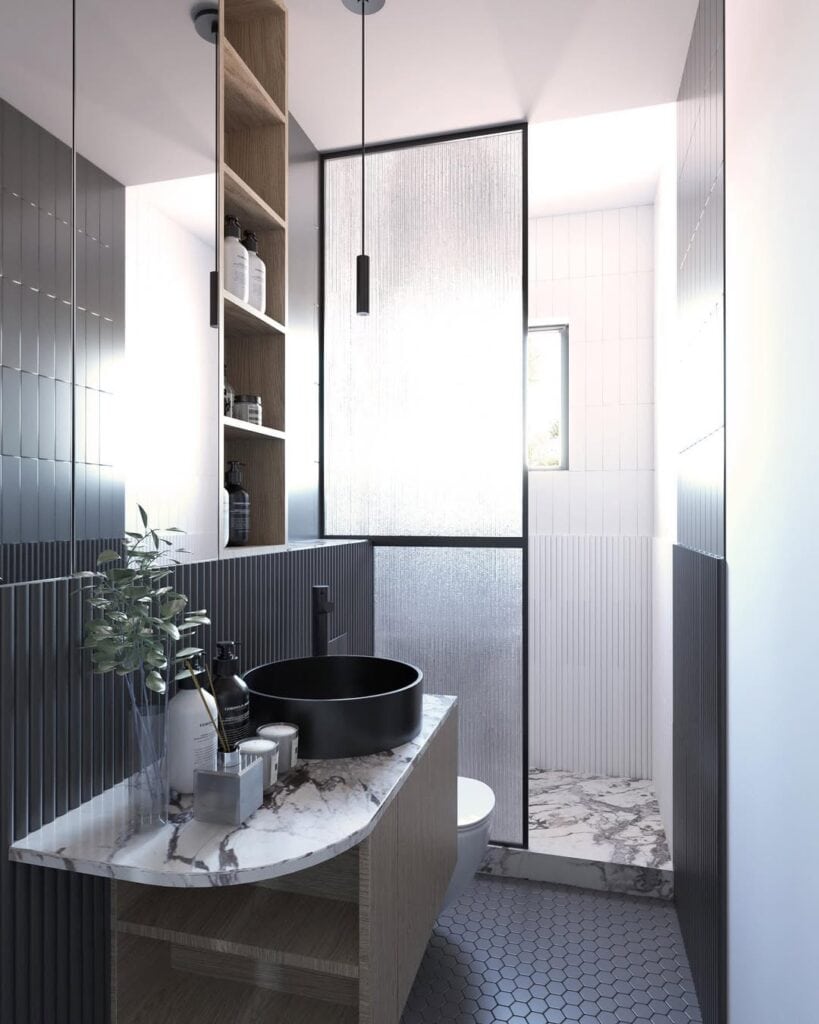
The Vanity-Side Open Cubby for Grab-and-Go Storage
This floating vanity replaces a second drawer with an open cubby on one side, which can hold a few rolled towels in plain sight. This is a small trade-off: you have less hidden storage in exchange for a significant benefit.
Open cubbies are easier to use daily than drawers that you need to pull open and dig through. The empty space under a floating vanity, unlike a floor-standing one, helps the room feel more open.
By having an open cubby and a closed drawer on the other side, homeowners can hide less attractive items, like cleaning supplies, while keeping towels easy to reach.
Takeaway: If you are selecting a vanity, look for one with at least one open cubby next to closed drawers. This gives you a dedicated, visible spot for rolled towels, preventing them from ending up on every other surface.
Why This Works: Combining open and closed storage in a single piece lets you sort items by how often you use them, rather than treating all storage as equally hidden or visible.
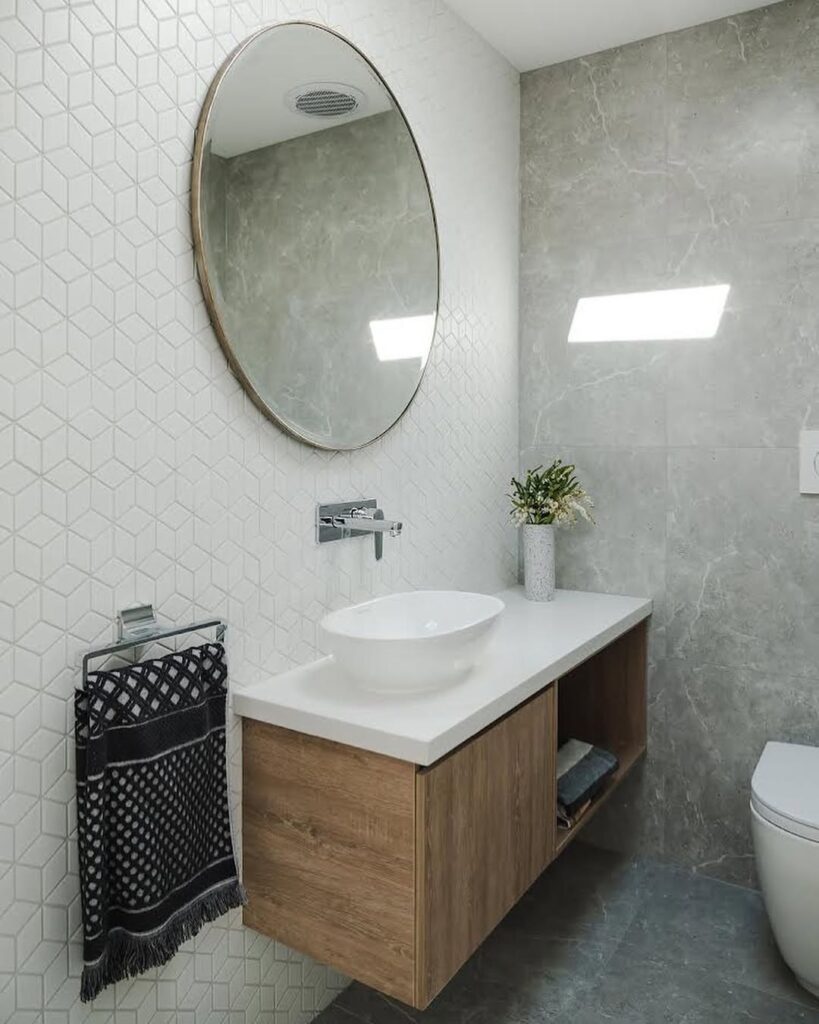
Tucking a Towel Shelf Into the Vanity’s Open Underside
Here, the wall-mounted vanity hangs above the floor. The open space beneath the countertop, which would usually be wasted, allows for neat storage of folded towels on a small built-in shelf instead of in a cabinet.
Since this storage is open rather than behind a door, it reduces visual clutter on a wall that already has patterned tile and a large mirror. This approach works well in a narrow bathroom, where any cabinet door needs room to swing open, which an open shelf does not require.
Takeaway: Before you buy a vanity, see if it has an open shelf underneath or can be fitted with one instead of a second cabinet. In small bathrooms, saving that swing clearance really makes a difference.
Budget-Friendly Alternative: If you don’t have a floating vanity, a slim wire or wooden basket placed under any pedestal or open-leg sink can create the same visible towel-storage look for under $20.
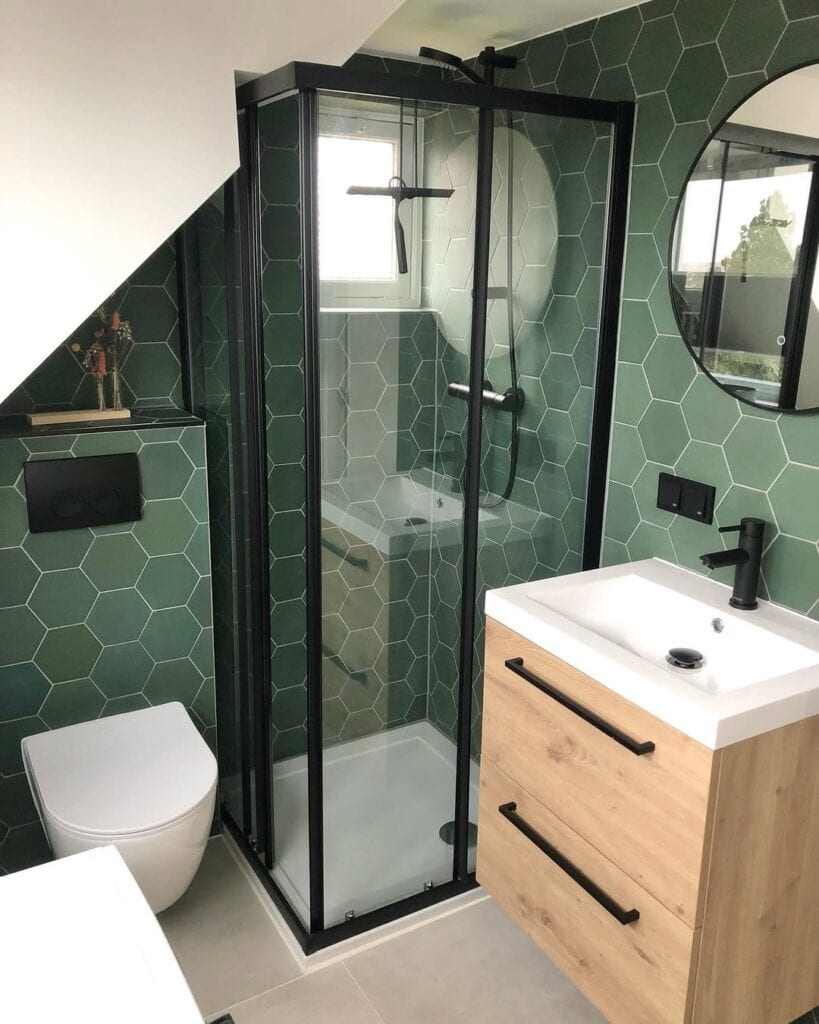
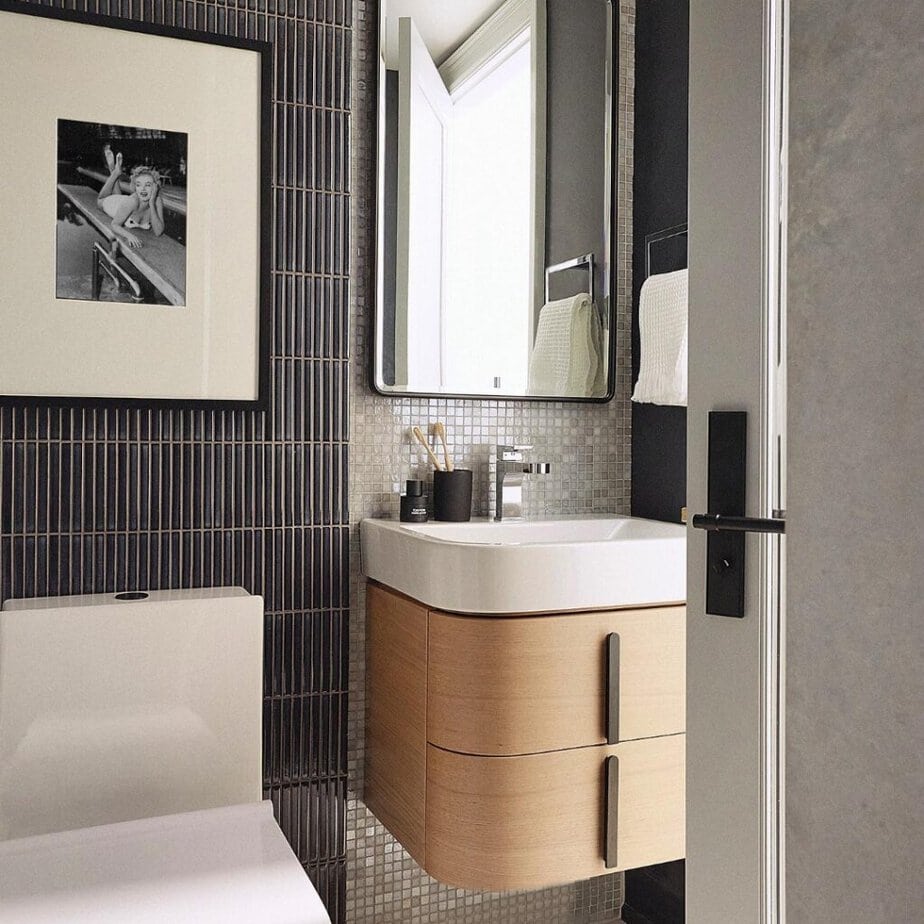
The Compact Two-Drawer Floating Vanity
In a genuinely small footprint, this curved wood vanity packs two full-width drawers into a unit barely wider than the sink basin itself. It shows that floating vanities don’t have to give up storage for space.
The rounded front edges are also practical. In a tight area where you brush past the vanity to reach the toilet, sharp corners are the first thing you’ll bump into.
Mounting it to float above the floor, instead of having it sit directly on the ground, keeps the small room from feeling cramped.
Takeaway: When shopping for a vanity for a tight bathroom, prioritize drawer depth over drawer width. Two slim, deep drawers stacked vertically often hold more than one wide, shallow one while taking up the same wall space.
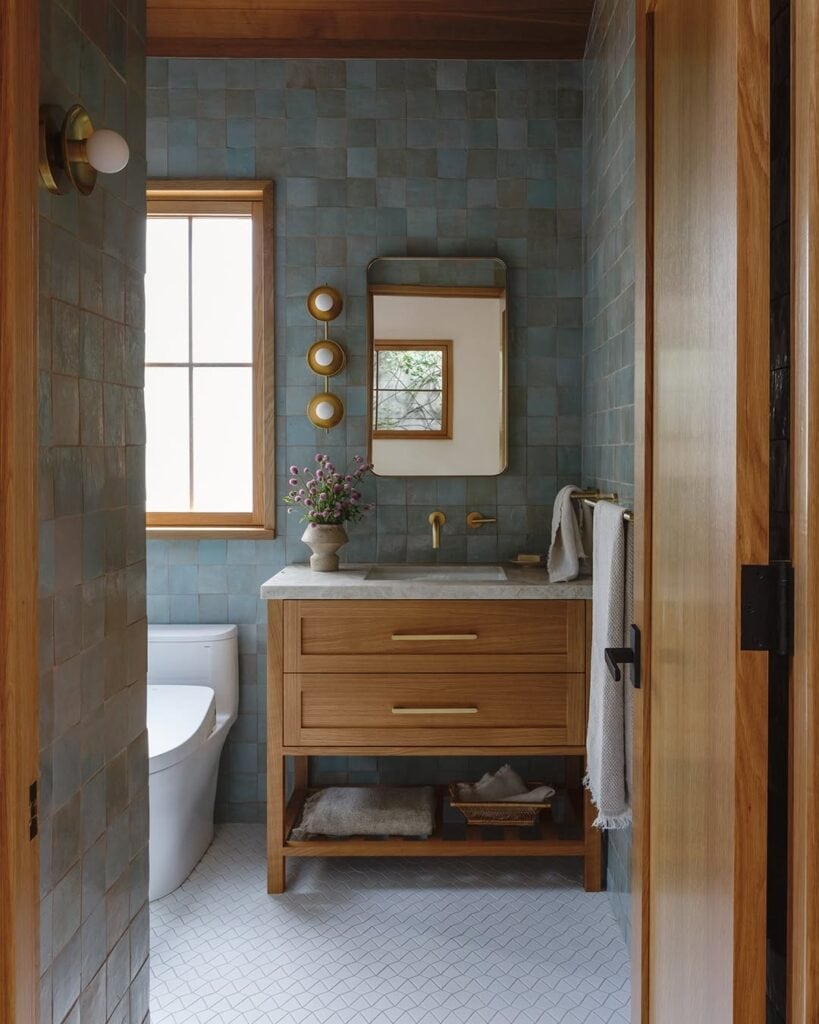
The Furniture-Style Vanity With an Open Shelf at the Base
This vanity looks more like a standalone piece of furniture than built-in storage. It features two drawers on top and a slatted open shelf underneath for towels and baskets.
The open shelf serves two purposes: it holds large items that don’t fit in the drawers, like rolled towels, and the visible space below the drawers makes the substantial wood vanity feel lighter. Using a similar color scheme, a wood vanity, matching tile, and neutral grout means the storage blends into the room’s design instead of standing out.
Takeaway: If you have even six inches of space under your vanity, an open slatted shelf can hold bulky towels and baskets that would otherwise pile up on the floor or on the closed toilet lid.
Styling Suggestion: Use one basket and one folded stack on the open shelf—avoid overfilling it, as that can undermine the “furniture, not storage” effect that makes this approach work.
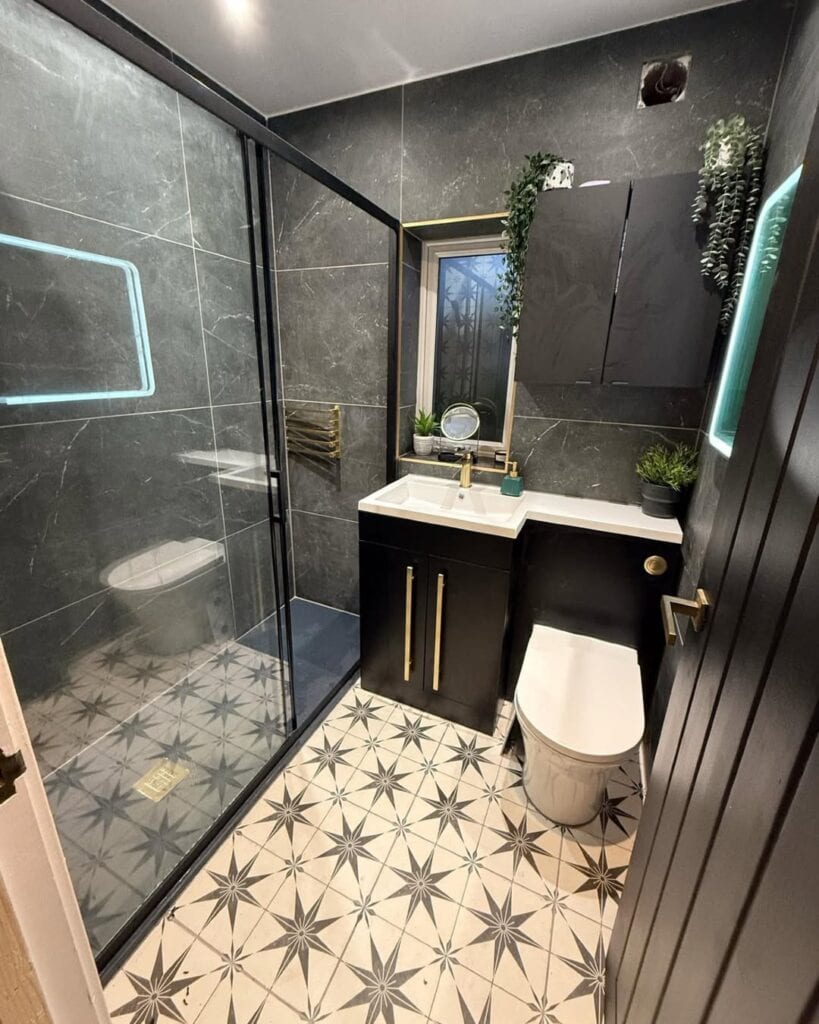
The All-in-One Vanity-and-Cistern Unit
This is a smart solution for bathrooms where the toilet tank takes up valuable wall space. The vanity cabinet is designed to extend over the toilet’s tank, creating a seamless storage and counter area instead of leaving two awkward gaps. By enclosing the tank, the design also conceals unattractive plumbing. The matching black-and-gold finish on both pieces gives the unit a custom look rather than making it seem like two separate items pushed together.
Takeaway: If your toilet tank is exposed and disrupting your layout, consider a combined vanity-and-tank unit. This type of unit turns wasted plumbing space into practical storage and counter space.
Best For: Small bathrooms where the toilet is right next to the sink, and the tank creates an awkward, unusable gap.
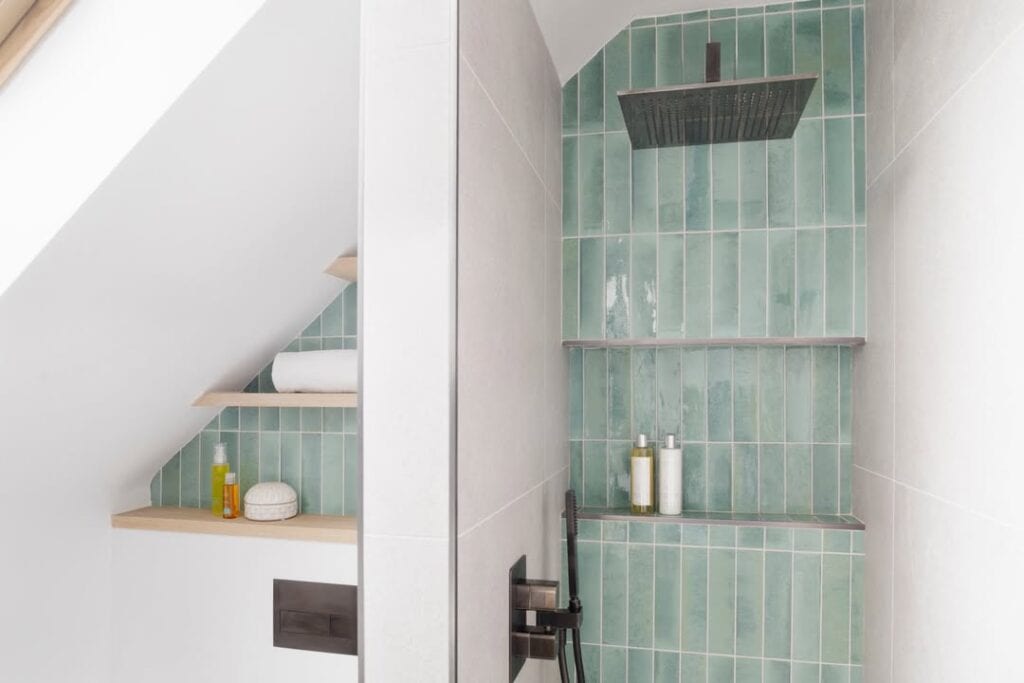
Built-In Tiled Niches Inside the Shower Wall (Sloped Ceiling Edition)
In a shower under a sloped attic ceiling, two recessed tiled niches are built directly into the wall. One holds shampoo and body wash within arm’s reach of the shower head. The second, tucked into the sloped eave outside the shower, is for a spare towel.
The eave shelf is particularly impressive. That triangular wall space under the slanted ceiling is often seen as unusable. However, a slim shelf fitted at its angle turns it into a towel storage space.
Takeaway: If your bathroom has a sloped or attic ceiling, don’t consider the low triangular wall space wasted. A custom-fit shelf can be the only area in the room with extra space.
Pro Tip: Keep items on a sloped-ceiling shelf to one or two pieces. The shrinking headroom toward the back makes taller items look cluttered or unstable.
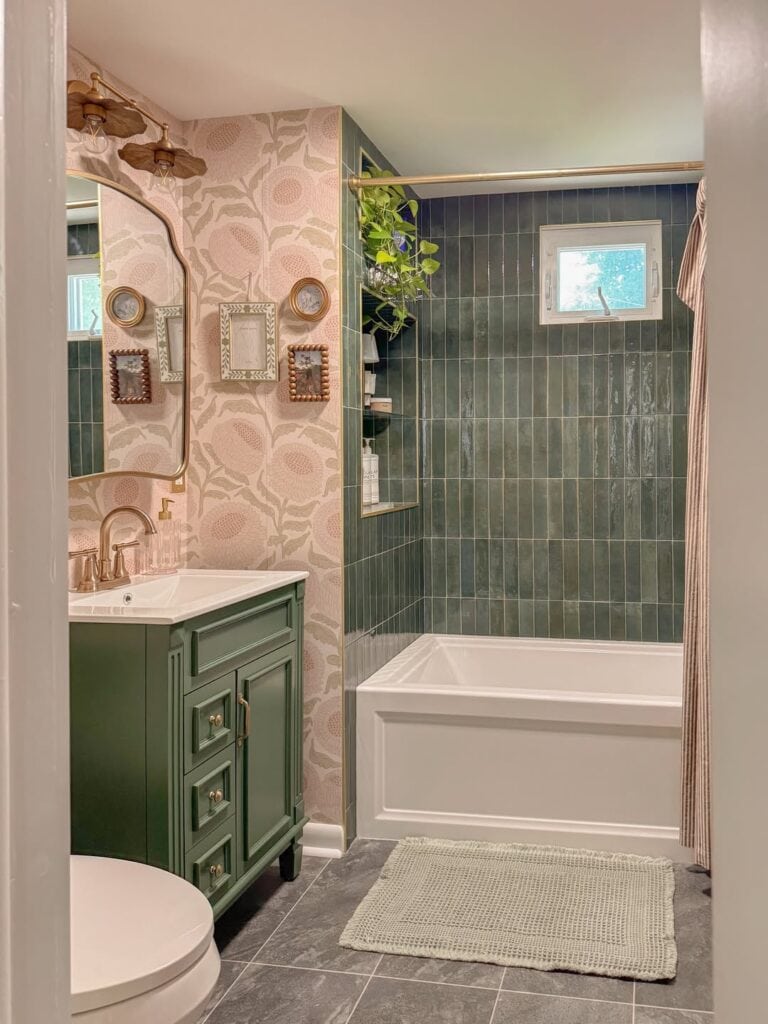
The Hidden Storage Niche Disguised as a Tile Accent
This shower niche is integrated into the same vertical tile pattern as the rest of the wall. This design choice makes it seem more like a planned break in the tile rather than just a storage space. By using the same tile color in the niche and cutting it off at a clean horizontal line, the storage area appears to be part of the original structure rather than an afterthought. This is important in small spaces because every visible storage solution can either enhance the design or take away from it.
Takeaway: When tiling a shower niche, use the same tile and grout line treatment inside it as on the surrounding wall. Matching materials makes built-in storage look like a part of the architecture rather than something added later.
Why This Works: A niche that uses a different color or material stands out and is recognized as “storage.” A matching niche blends into the wall and is less noticeable until you need it.
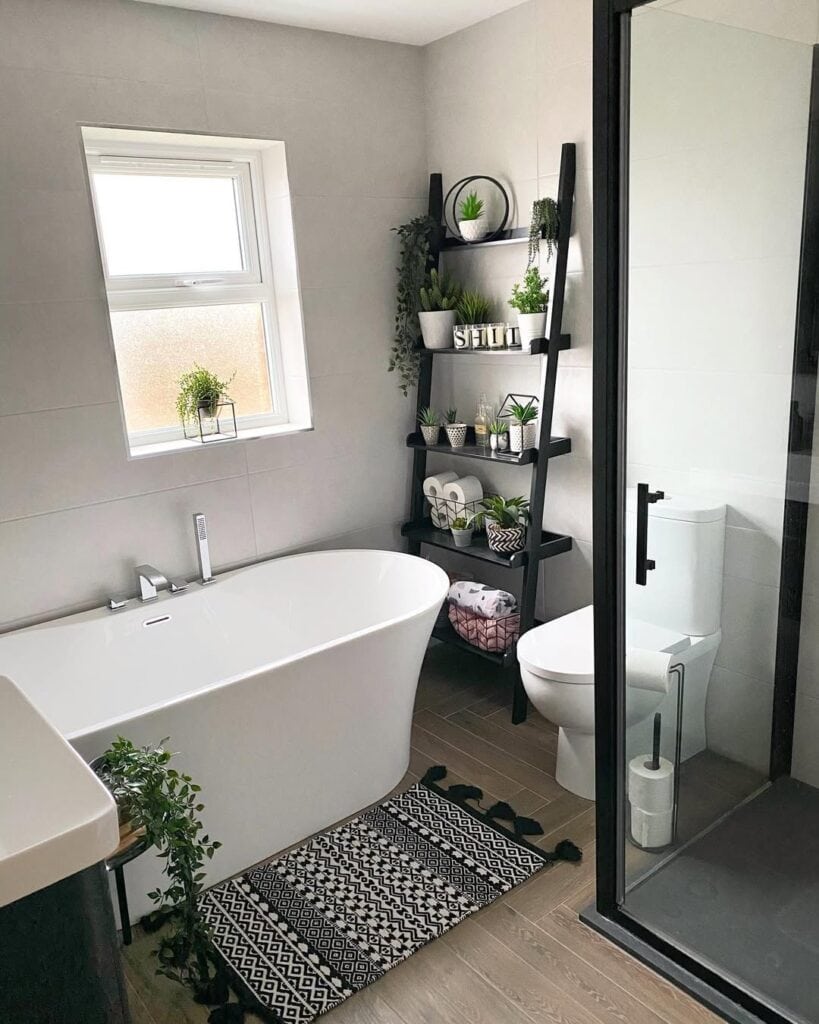
The Ladder Shelf as Freestanding, No-Drilling Storage
For renters or anyone who can’t or doesn’t want to install shelves into tile, this leaning ladder shelf rests against the wall behind the toilet. Its angled shape fits into a slim gap that most furniture can’t.
Each rung holds a different category, such as toilet paper on one and decor on another. This keeps the open shelving organized by zone rather than a single, jumbled surface.
Since it stands freely, you can move it easily. This is the main advantage over any built-in or wall-mounted option on this list.
Takeaway: If you’re renting or don’t want to drill into tile, a ladder shelf is the only storage solution on this list that requires no installation. Just make sure to assign each rung a category so it doesn’t turn into a catch-all.
Budget-Friendly Alternative: Ladder shelves are widely available at most home goods stores for $40-80, making this one of the most accessible techniques on this list.
Conclusion
Small bathroom storage isn’t just about getting smaller furniture. It’s about learning to see every wall, niche, and gap as a chance for a shelf. You should match whatever you add to the room’s colors and materials so it looks like part of the design, not clutter.
The difference between a “storage solution” and a “cluttered shelf” is rarely about how much it holds. It’s about whether it looks like it fits.
If you’re unsure where to start, use this simple guideline: look at your bathroom and find the most obvious dead zone – above the toilet, beside the sink, under the vanity, or in a sloped corner. Start with that area first.
Then, choose your method based on how permanent you want it to be. Consider a ladder shelf or basket if you’re renting and want no commitment. If you own your space, floating shelves or a wall-mounted cabinet offer a more built-in look. If you’re renovating, a recessed niche can work well since you can access the wall.
Your bathroom doesn’t need more space; it needs you to notice the space that already exists. Once you start seeing it that way, you’ll likely discover a second and third spot you missed at first.