Small Hallway Ideas – 15 Genius Layouts That Make Tiny Entryways Feel Twice the Size
Your hallway is likely the most ignored room in your house, yet it can be the most frustrating when it’s a mess. A narrow, cluttered entry can set a negative tone for your home before guests even hang up their coats.
When space is limited, it often feels like the only option is to keep it empty and hope for the best.
Here’s the good news: small hallways can change a lot with the right design. Since the size is fixed, every choice you make, like color, lighting, storage, and sightlines, has a big impact. A few smart changes can make a cramped corridor feel intentional, bright, and even spacious, all without tearing down any walls.
In this collection, you’ll find real small hallway ideas, each explained so you can understand why it works, not just how it looks. From clever storage ideas to lighting tricks and color methods that fool the eye, you’ll learn techniques you can use in your own entryway, no matter its quirks.
Let’s dive in.
15 Small Entryway Ideas
Checkerboard Floors and Curtain Camouflage
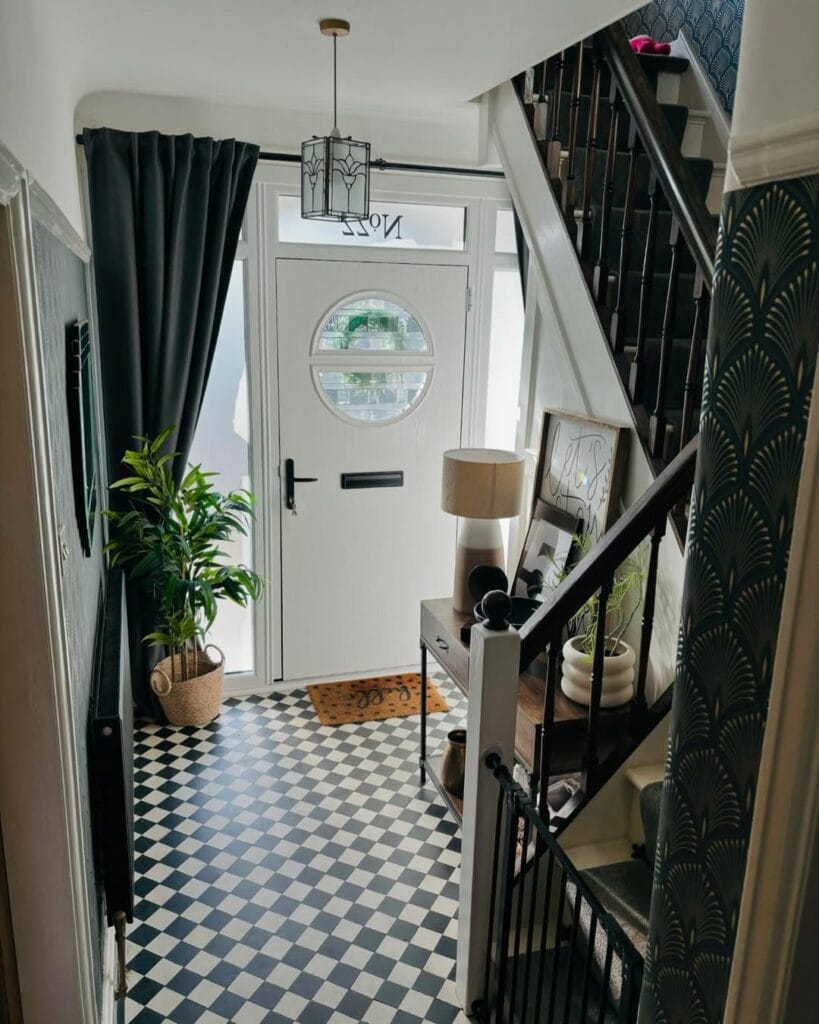
This small, narrow entry embraces drama rather than avoiding it. It features a bold black-and-white checkerboard floor and a slim console table tucked beneath the stairs.
The clever choice is the floor-length black curtain on the left wall; it doesn’t dress a window, but it hides a radiator and clutter behind it. This turns an eyesore into a clean vertical line that matches the dark stair spindles and banister.
By keeping the disguise the same color as the home’s other dark accents, it appears as an intentional design rather than a quick fix.
Takeaway: If you have an unsightly fixture you can’t remove, cover it with a floor-length curtain in a color that appears elsewhere in the hallway. It will look styled instead of hidden.
Common Mistake to Avoid: Don’t match a hallway runner or floor pattern to the rest of your home’s flooring just for uniformity. A high-contrast statement floor like this one actually makes a narrow space feel more grounded and thoughtful, not smaller.
Gallery Wall as a Length Illusion
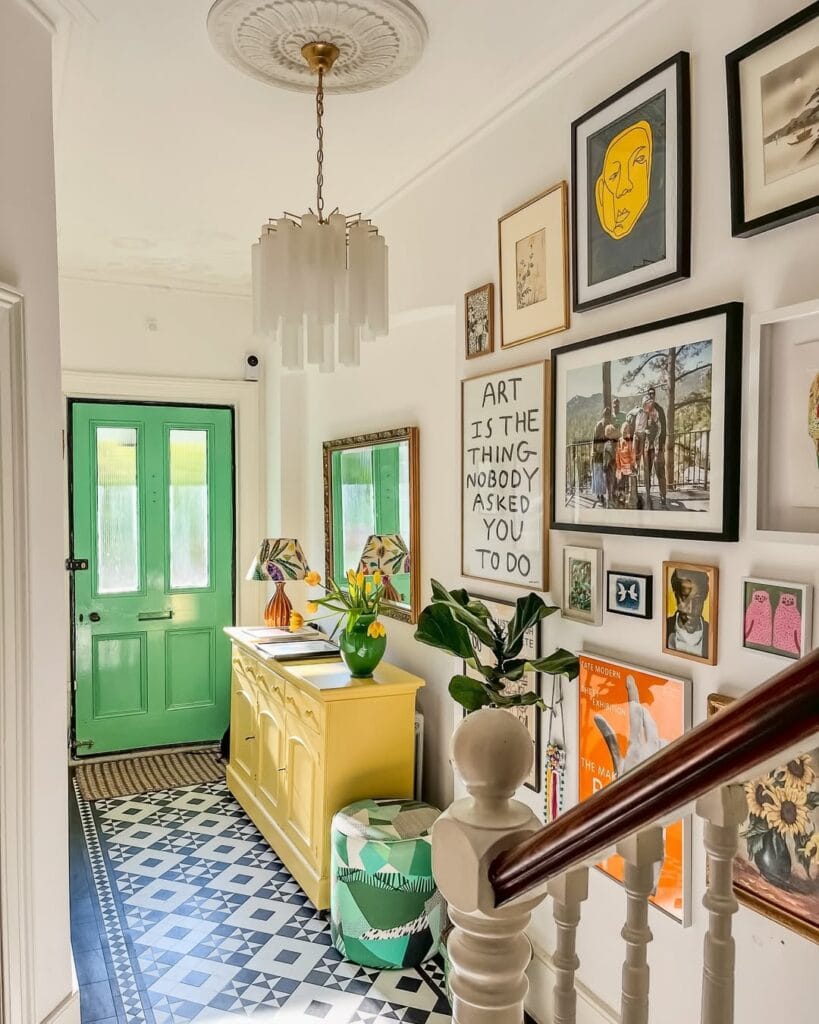
Here, a large gallery wall spans the entire length of the hallway. It features a mix of frame sizes and art styles. This variety draws your attention and slows your gaze as you move down the corridor.
As a result, the small hallway feels longer and more intentional, rather than just a quick passage. The yellow vintage cabinet at the far end adds a contrasting color, providing a clear focal point instead of allowing the space to feel like it simply fades away.
Takeaway: In a long, narrow hallway, create a gallery wall on one side and add a bold piece of furniture at the far end. This gives your eyes both a journey and a destination.
Why This Works: Keeping the art on one wall only maintains the opposite wall clear for movement. This is crucial in tight spaces where furniture on both sides could cause a bottleneck.
Layered Lighting Over a Radiator Cover
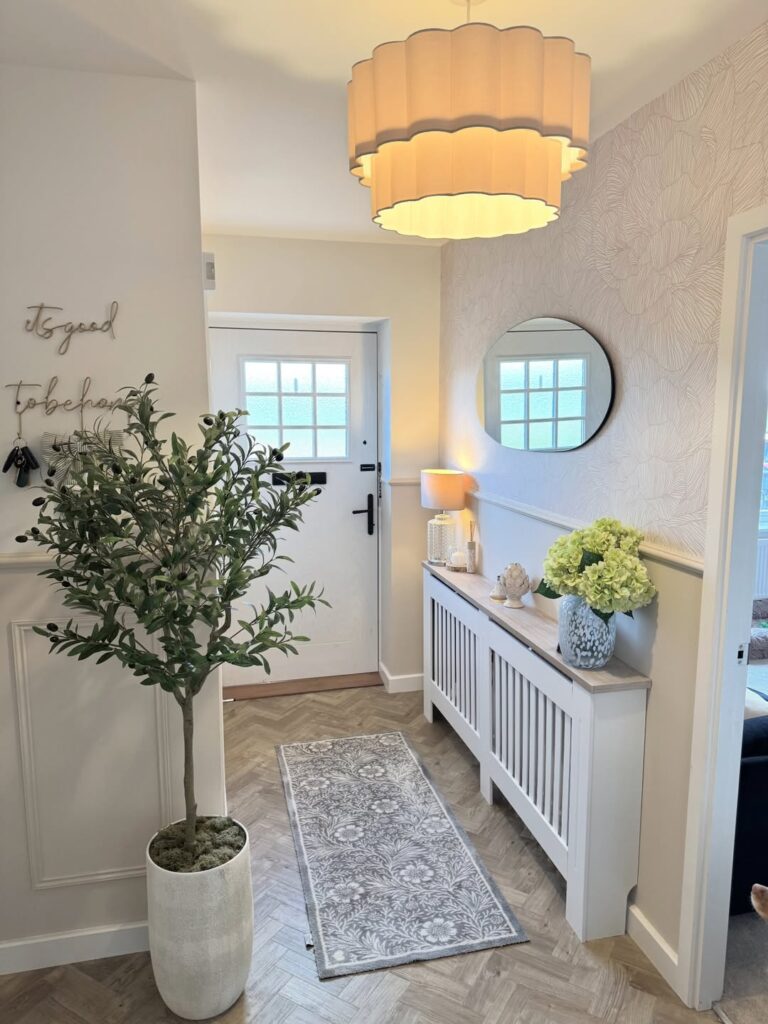
This soft, neutral hallway features a scalloped double-tier pendant light as a sculptural focal point above where a console table would usually go. Instead, a slim radiator cover serves that purpose.
Adding a wood-effect cap to the cover transforms it from a simple, functional item into a styled console alternative. This change frees up floor space that a freestanding table would have occupied.
The round mirror next to it reflects the pendant’s warm light throughout the hall, making the area feel brighter without the need for another light.
Takeaway: If your small hallway has a radiator, place a fitted wooden cap on it to create a console-table style without losing any walking space.
Best For: Hallways with a radiator awkwardly positioned along the main walking path; this change turns an obstacle into a design feature.
Full-Height Built-In Storage
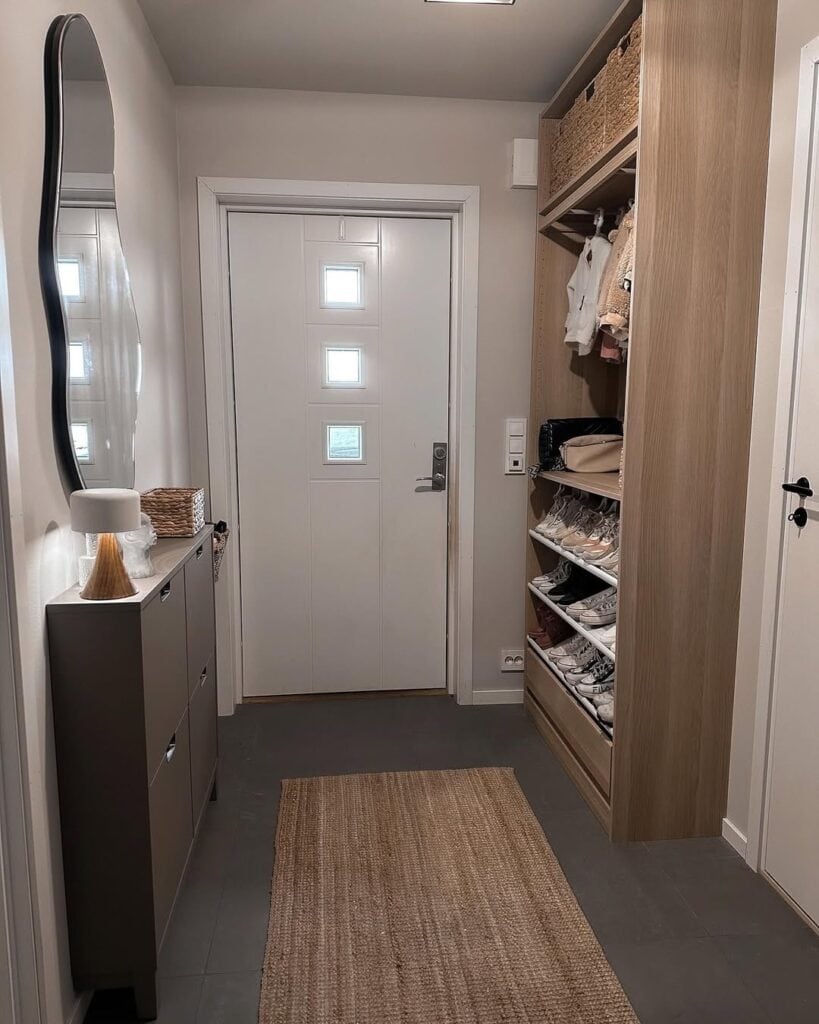
Instead of a shallow console or shoe rack, this hallway dedicates an entire wall to a floor-to-ceiling built-in unit. It features open shoe shelves, space for hanging items, and woven storage baskets at the top.
The open-shelf design makes the unit feel lighter, even with its size. Organizing items by category, hanging coats high, placing shoes at eye level, and using baskets above for overflow gives everything a clear home.
This arrangement helps prevent a small entry from becoming a dumping ground. A slim, full-length mirror on the opposite wall keeps that side looking open and reflects light back into the space.
Takeaway: When floor space is too tight for both a console and storage, use one wall for vertical storage and keep the opposite wall a mirror. This approach offers more storage than a console would in the same area.
Designer Tip: Choose open or slatted shelving instead of solid doors on a narrow wall. Solid cabinetry can feel like a block in a tight hallway, while open shelving allows light and sightlines to flow through.
Wainscoting and a Wall-Mounted Runner Cabinet
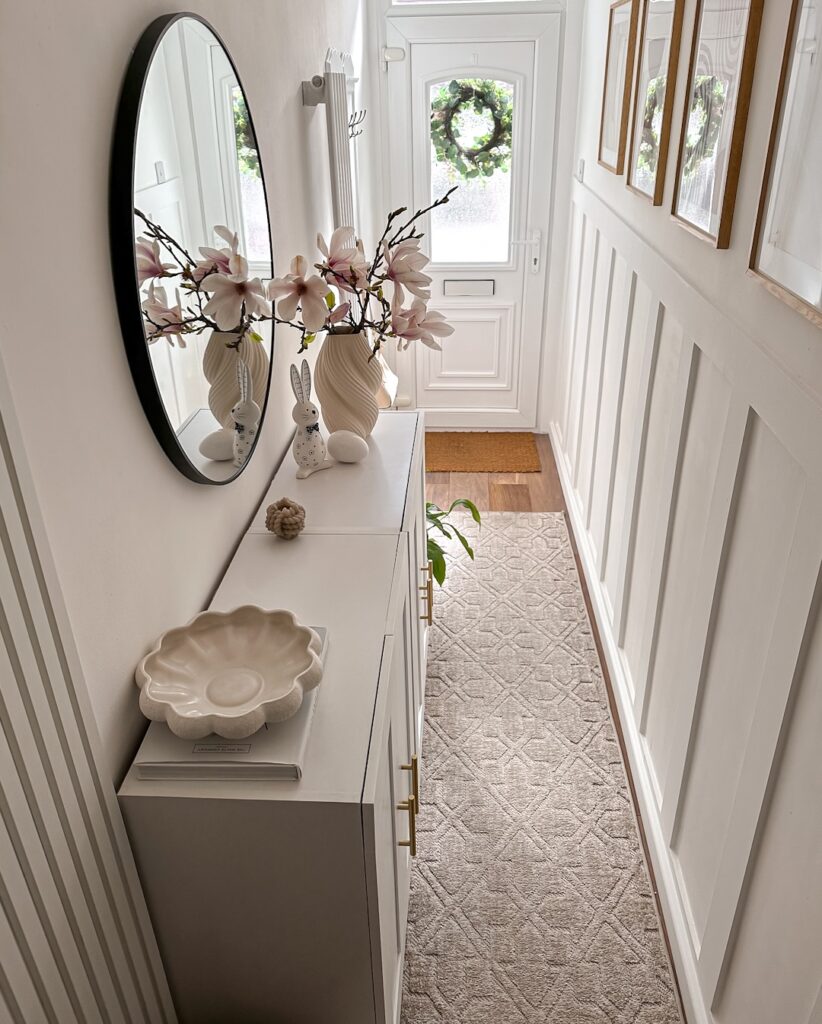
This extremely narrow hallway shows that even a width of just a couple of feet can feel stylish.
The full-height wainscoting adds texture without taking up floor space, as it sits flush against the wall rather than protruding like furniture.
A shallow, wall-mounted cabinet holds all the decorations, such as the mirror, vases, and decorative bowl, while keeping the walking path completely clear. The diamond-patterned runner rug visually fills the width of the hall, making it feel well-proportioned instead of like leftover space.
Takeaway: In a hallway too narrow for furniture that sticks out, choose a wall-mounted or flush cabinet rather than one with legs. This way, you can have the decorations without losing any clearance.
Budget-Friendly Alternative: Can’t install paneling? A few coats of paint in a different color below chair rail height can create a similar visual break and sense of purpose for much less money.
The Built-In Mudroom Nook
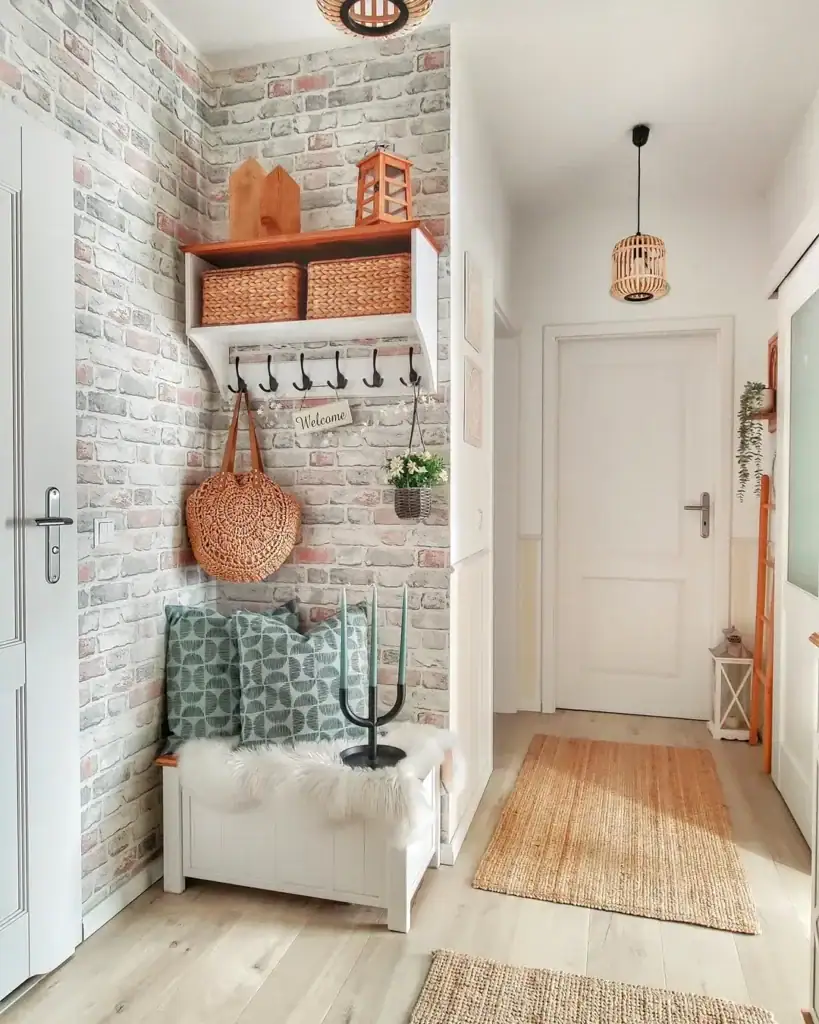
Tucked into a shallow alcove, this corner serves as a full mudroom but occupies much less space. It features a wall-mounted shelf and hook set above a bench seat with storage hidden underneath.
The exposed-brick wallpaper adds visual interest, making the nook feel like a purposeful area rather than an empty spot. Baskets on the upper shelf hold loose items that would otherwise clutter the hooks and surfaces.
Since everything is either wall-mounted or at bench height, it doesn’t block the hallway’s walking path.
Takeaway: If your small hallway has any unused alcove, even a shallow one, add a hook rail and a bench instead of leaving it empty. It will serve as your entire entryway system in a compact space.
Best For: Households with kids or pets that need a dedicated drop zone for bags, leashes, and shoes right by the door.
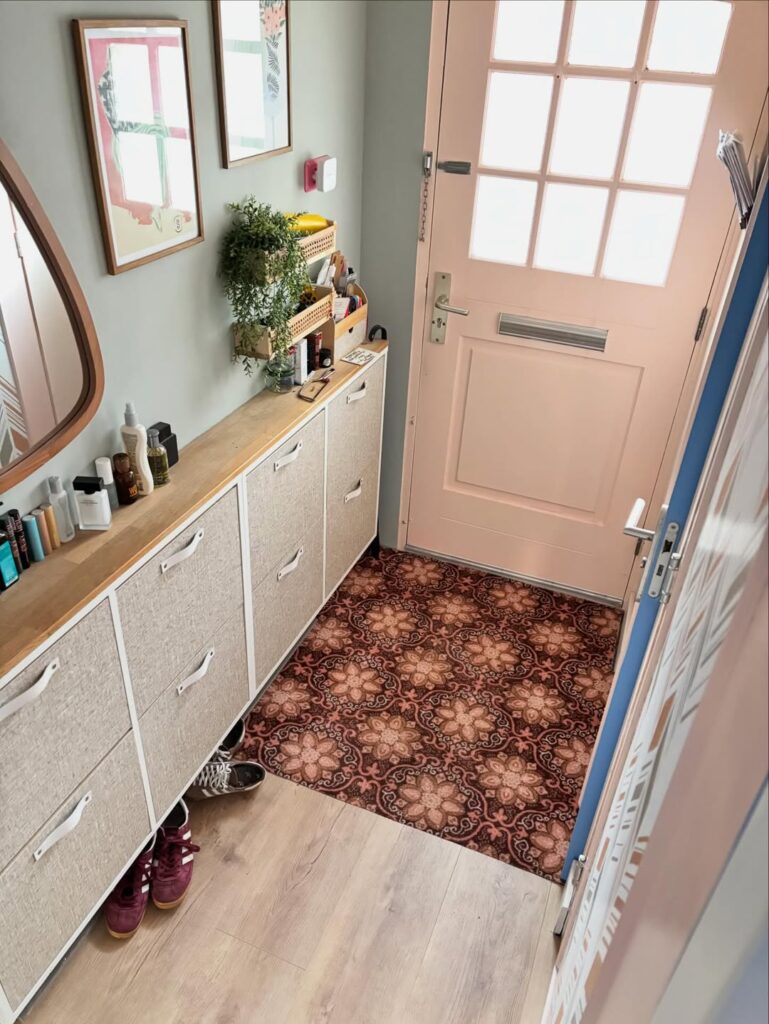
Shoe Cabinets That Disappear Into the Wall
This hallway addresses a common issue in small entries. Where do the shoes go? It features a line of slim, fabric-fronted shoe cabinets that sit flush against the wall and barely extend beyond the skirting board.
A continuous wood shelf on top allows the cabinets to also serve as display space for skincare and grooming products. This “storage wall” also functions as a vanity-style surface. The soft fabric drawer fronts add texture and warmth, making it feel more like a home and less like garage storage.
Takeaway: Opt for shoe storage with a shallow, flush profile (under 12 inches deep) and a functional top surface. This way, you gain storage and a console shelf without sacrificing walking space.
Designer Tip: Leave a pair of shoes visible underneath, as shown here. This gives the impression of being “lived-in and functional” rather than “staged.” That’s the goal for an entry, not a showroom.
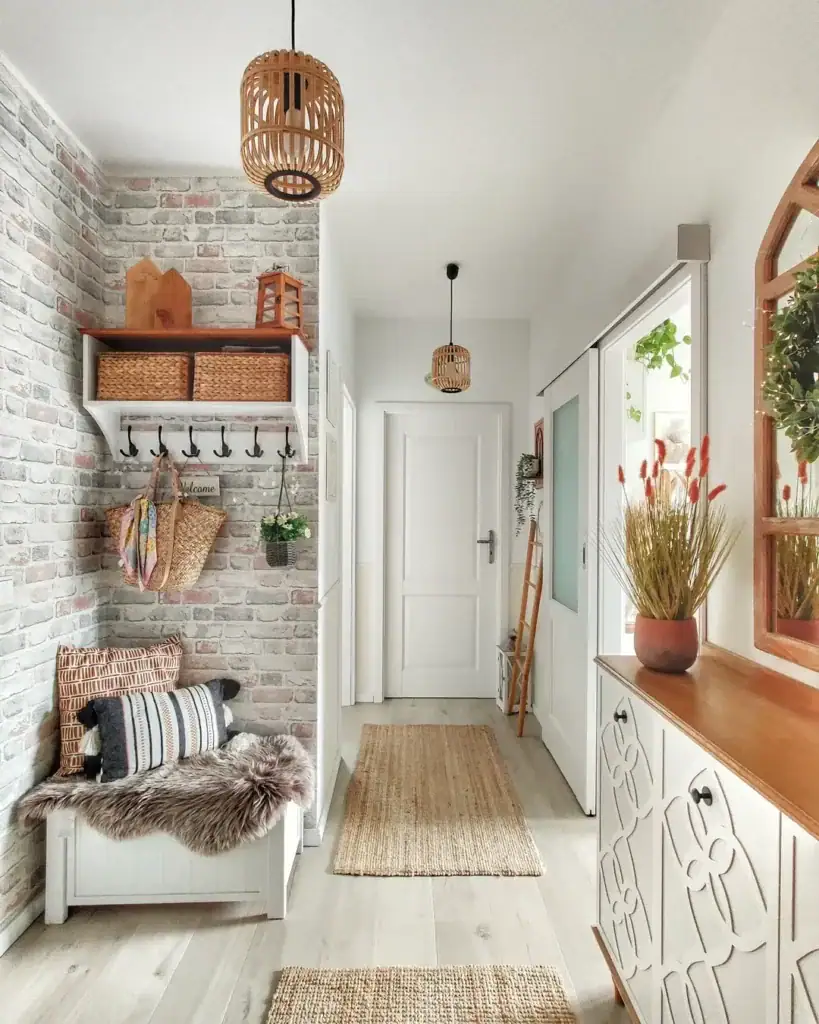
Repeating a Pendant Light to Stretch the Hallway
In an unusually long yet narrow corridor, this design features the same woven pendant light fixture at two points along the ceiling rather than a single central fixture. Spacing light sources like this divides the hallway into perceived “rooms” along its length.
This approach makes a long hallway feel more balanced rather than tunnel-like. The same brick-and-basket nook from the alcove above connects the far end visually to the near end, framing the space.
Takeaway: In a long hallway, install two smaller pendant lights spaced along the length rather than one in the center. This breaks up the tunnel effect and adds rhythm.
Pro Tip: Keep the repeated fixtures identical, not just similar. Visual repetition creates the intentional “zoning” effect. Mismatched fixtures appear unplanned.
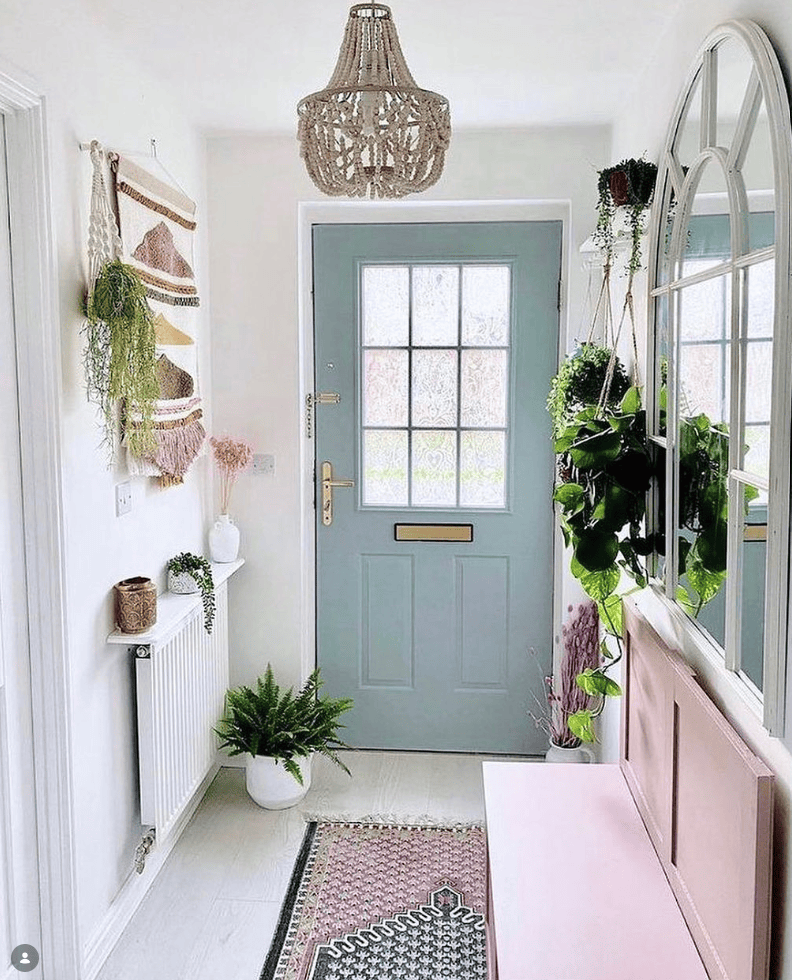
Hanging Plants for Vertical Greenery Without Floor Clutter
This small pastel hallway shows that you don’t need floor space for plants. A macramé wall hanging, a trailing pothos from a wall-mounted mirror frame, and a potted fern all bring in greenery without needing any planters in the way.
The beaded chandelier adds texture above, drawing the eye upward and away from the narrow space below. Even the one floor-standing plant sits close to the radiator shelf, keeping the walking path completely clear.
Takeaway: If you want plants in a tight hallway, focus on hanging or wall-mounted options instead of floor pots. They add life and color at eye level without taking up space.
Styling Suggestion: Hang a trailing plant from the corner of a large mirror frame. It adds dimension to the reflection, making the hallway appear fuller in the mirror as well.
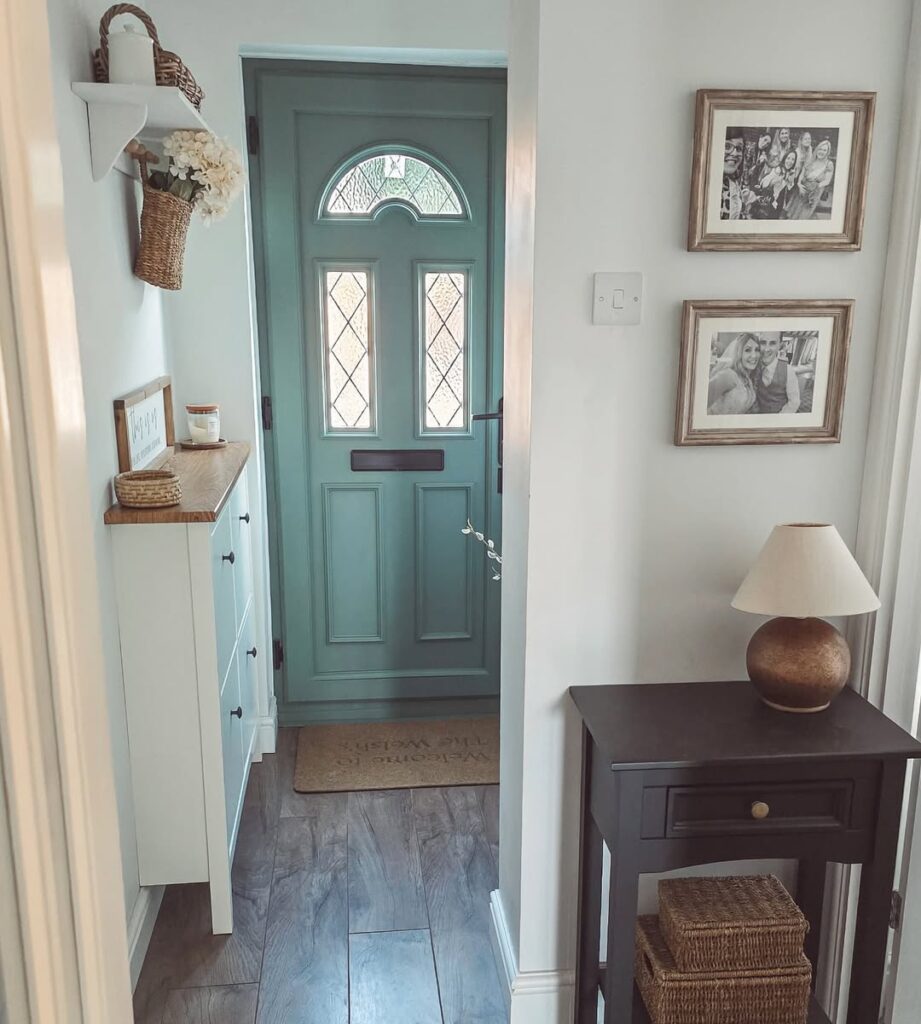
Color-Drenched Door as the Anchor Point
Rather than keeping every surface neutral, this small hallway features a deep teal front door as the standout element. Everything else, including the walls, console, and frames, is soft and muted.
Since the color appears only once and at the end of the sightline, it serves as a piece of art you walk toward. This gives the corridor a clear visual destination instead of fading into nothing.
The black console table on the side, in a nearly opposite tone, anchors the space without competing for attention with the door.
Takeaway: Choose one bold color for your front door or the wall facing it, and keep all other hallway surfaces neutral. One strong color looks intentional, while multiple colors can appear cluttered.
Why This Works: A single vibrant color at the end of a long, narrow view creates depth and a focal point, which is exactly what a plain corridor lacks.
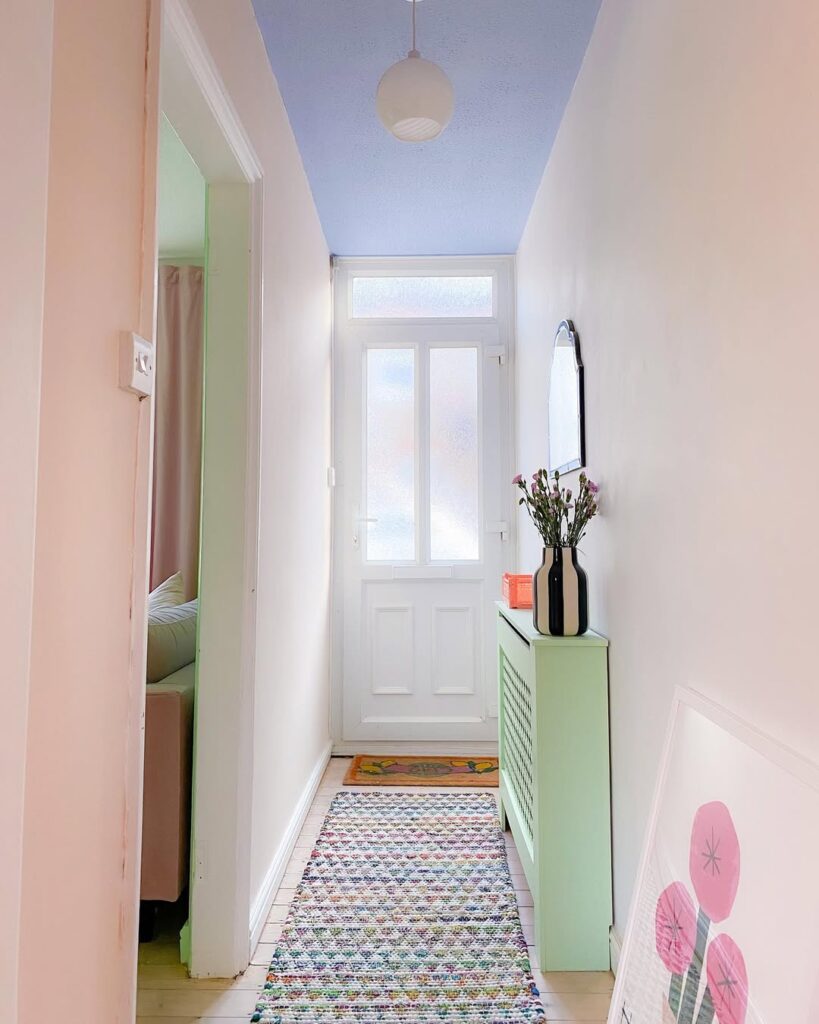
Painting the Ceiling to Add Personality Overhead
This pale pink hallway makes a bold statement without touching the walls. It achieves this by painting the ceiling a soft periwinkle blue instead of leaving it white. Ceilings are the one area where furniture and clutter don’t compete for attention. So, color on the ceiling adds a distinct personality without being risky. The pastel pairing with the blush walls keeps the hallway feeling soft and cohesive rather than overwhelming. A painted radiator cover in a third soft tone, sage green, continues this playful palette down at floor level.
Takeaway: If you’re hesitant to use bold color on small walls, try painting the ceiling instead. This approach adds character without making the walls feel smaller.
Budget-Friendly Alternative: You only need 1 or 2 liters of paint for the ceiling to make a big difference. This makes it one of the least expensive yet impactful updates you can do in a hallway.
Common Mistake to Avoid: Don’t assume that a multicolored runner rug will clash with colorful ceilings or walls. As shown here, a busy patterned runner can actually anchor a soft, pastel palette by adding texture and visual weight in the one area, the floor, that needs it the most.
Small Spaces, Big Decisions
What connects all these hallways is not a specific style or color scheme; it’s a mindset. Each one views the limited space as something to work with, not a reason to apologize. Whether it involved hiding a radiator behind a curtain, using vertical storage instead of wide, or choosing one bold color at the end of the sightline, every successful idea came from embracing the narrow shape rather than resisting it.
The key takeaway isn’t to just “buy a mirror” or “add a runner”; it’s to learn to ask, before making any changes, what this hallway’s biggest limitation is and what single action can solve it without taking up floor space. This question guided every example above, whether the designer realized it or not.
If you’re standing in your own small entryway feeling stuck, don’t try to fix everything at once.
Focus on the single issue that frustrates you most: poor lighting, lack of storage, a dull floor, or an awkward radiator, and look back through this list for solutions to that specific problem. Start there. One well-chosen change that fits your space will have a greater impact than several half-finished updates.
Small hallways often end up being the most-used but least appreciated areas in the house. However, as these twenty-five spaces show, they are also some of the simplest to transform completely. The proof lies in every photo above.