15 Small Toilet Room Ideas That Make Tiny Feel Intentional
With a small toilet room, every fixture feels like a compromise. Every color choice feels riskier. Looking for inspiration online, you quickly realize the internet’s idea of a “small bathroom” is usually bigger than your entire room.
As a result, you either play it painfully safe with all-white, builder-grade, and forgettable choices or overcompensate in ways that make the space seem even more cramped.
A small toilet room isn’t just a smaller version of a real bathroom; you need to apologize for it. It’s actually the one room in your house with the least pressure and the most reward per square foot. There’s no shower to install, no vanity layout to plan, and no pressure to stick with beige for resale value.
You can take risks. You can choose bold wallpaper, a vivid paint color, or a striking light fixture in a way you wouldn’t in a primary bath. If it doesn’t work out, you’re just repainting a small room, not redoing a major renovation.
Let’s dive into the ideas, starting with the changes that make the biggest impact.
15 Small Toilet Room Ideas
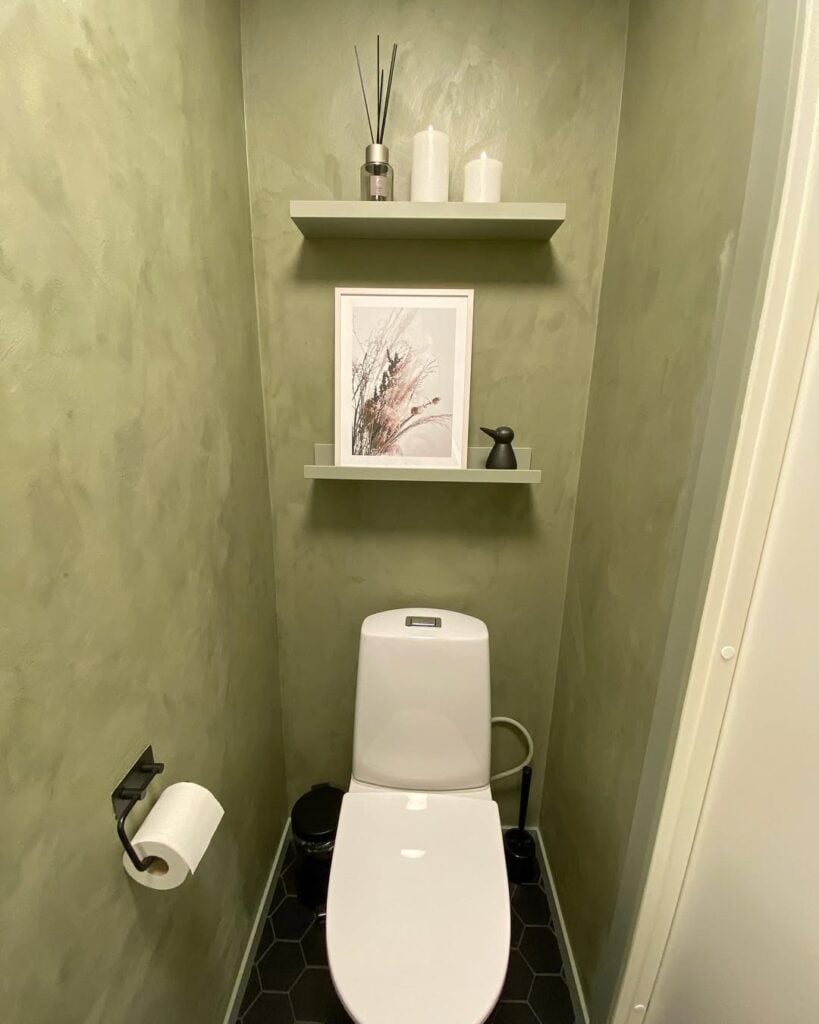
Limewash Walls + Floating Shelf Gallery
A textured sage limewash covers every wall of this narrow toilet nook. Two floating shelves are stacked vertically above the tank. They hold a framed print, a small sculptural object, and a pair of candles.
The technique in this small toilet room is twofold. Limewash adds depth and warmth to a small space without using extra furniture. Its texture creates visual interest.
Stacking the shelves close together, instead of spreading them out, keeps the eye moving in a vertical line. This makes a narrow room feel taller rather than more crowded.
Takeaway: In a tight vertical space, stack two shallow shelves close together instead of one wide shelf. It draws the eye up and makes low ceilings or narrow footprints feel less cramped.
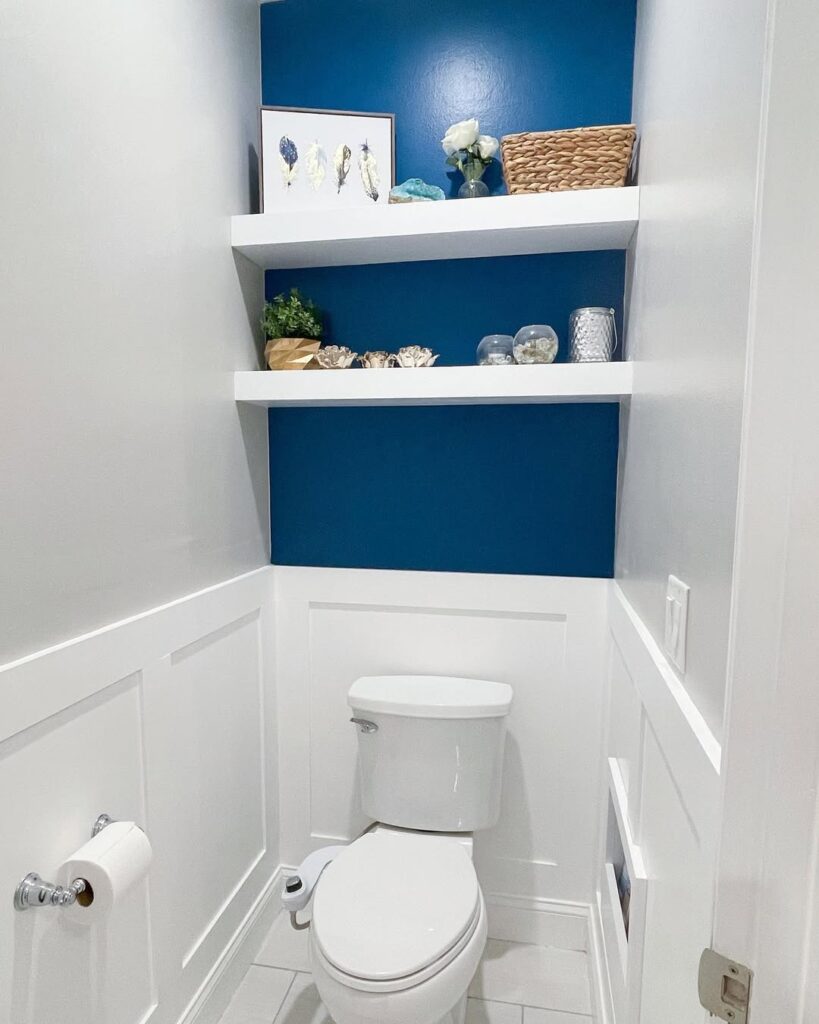
Color-Blocked Accent Wall Behind Open Shelving
A saturated navy accent wall is positioned behind the toilet, framed at the top and bottom by clean white wainscoting and floating shelves. The side walls remain plain white.
This color-blocking method focuses boldness in one area instead of overwhelming the entire room. This approach allows the small space to feel open and bright, even with a striking color present.
The white wainscoting at the bottom serves two purposes: it protects the lower wall and adds a classic architectural line that prevents the navy from feeling too heavy.
Takeaway: If you’re unsure about using a bold color, paint only the back wall of an alcove rather than all four walls. This way, you can enjoy the drama without feeling cramped.
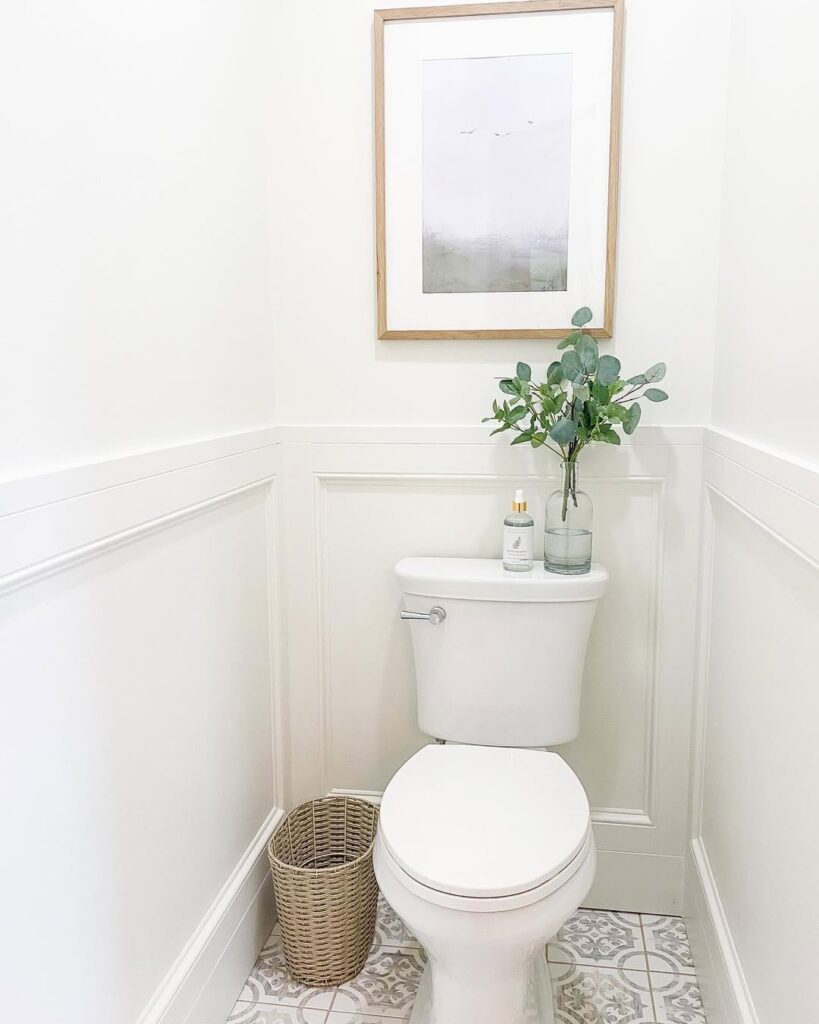
Wainscoting + Patterned Tile Floor as the Only “Decor”
This toilet room has all white walls above white-painted wainscoting. It allows a single framed print and a patterned encaustic-style tile floor to stand out. The idea here is to use restraint as a design choice.
When everything above eye level is calm and monochrome, the floor pattern appears intentional instead of chaotic. The eye has a single clear focus rather than competing details. Wainscoting also adds depth to flat walls without using color or wallpaper.
Takeaway: If your space is small, choose ONE element to be bold: pattern, color, or texture, and keep everything else subtle so that the choice gets noticed.
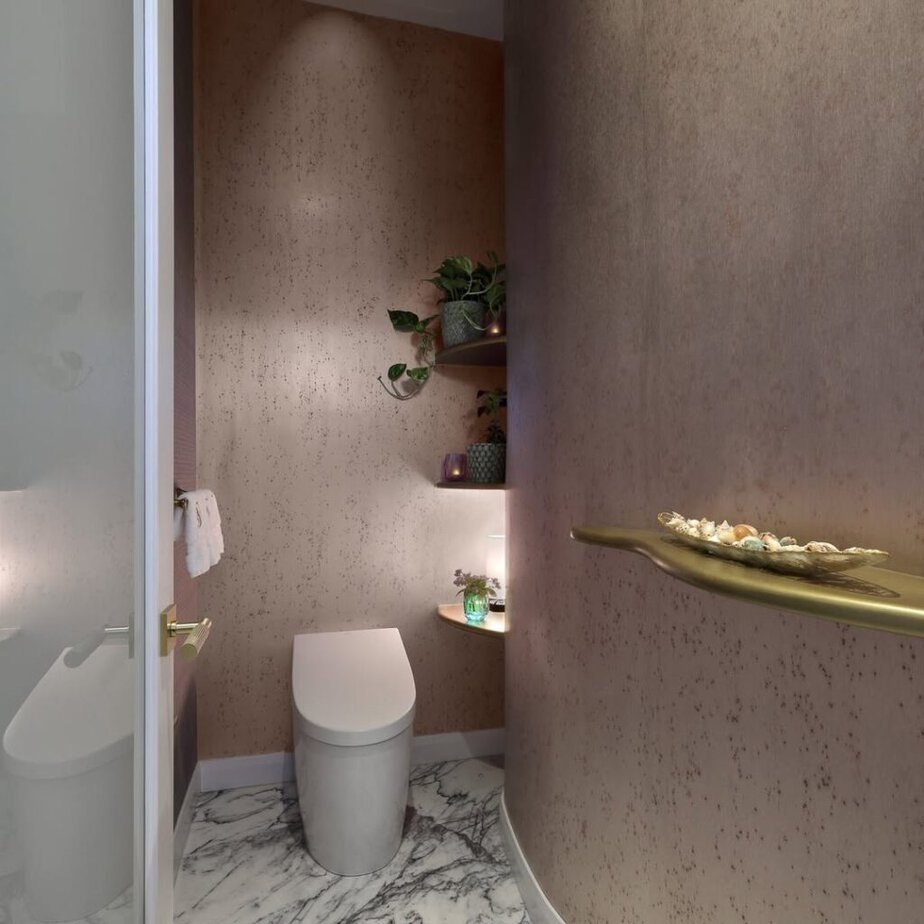
Curved Wall + Sculptural Floating Shelf
A softly curved wall corner and a sculptural bronze floating shelf transform this toilet room into a spa-like nook. This toilet room features mottled marble flooring, warm metallic wall covering, and trailing greenery on a tucked corner shelf.
The curve stands out as the main technique: it rounds a sharp corner, making the space feel less confined. Boxy, small rooms often feel restrictive, but the warm metallic shelf reflects light.
It serves as an attractive focal point without occupying floor space. Layering plants on a corner shelf adds life and softness to an area that would otherwise feel empty.
Takeaway: If you’re renovating and can adjust your layout, ask about rounding one corner. This small change can make a boxy room feel much more spacious.
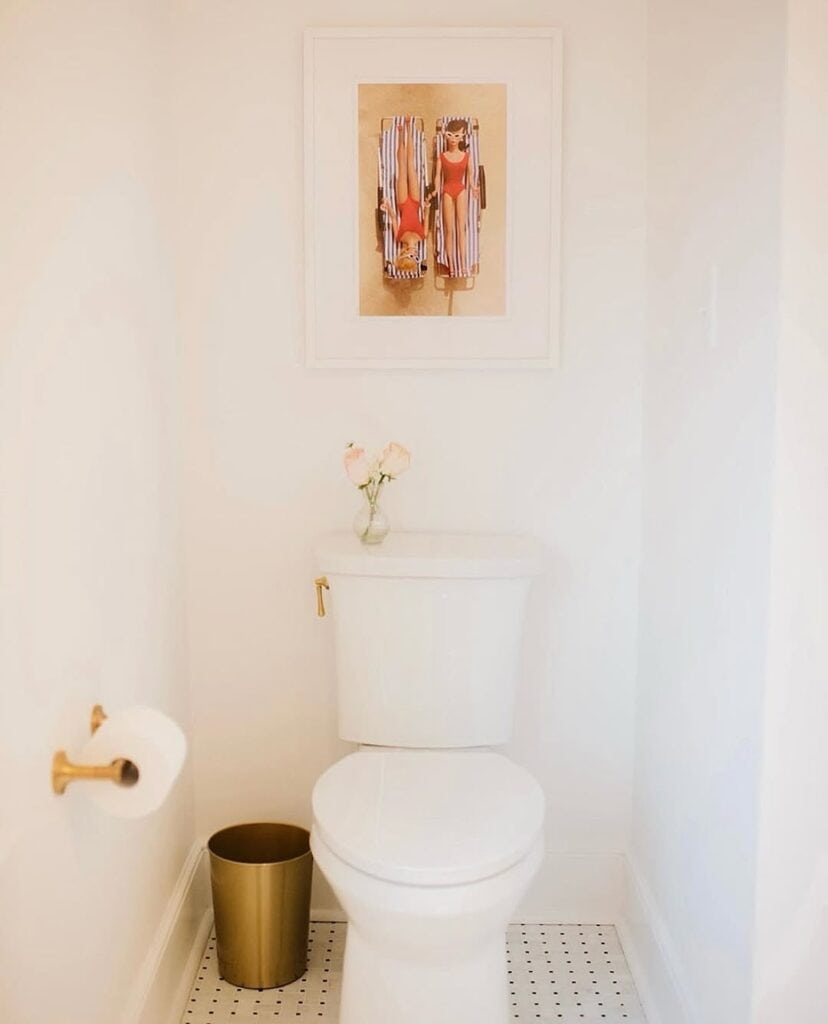
Playful Art as the Room’s Only Personality
This all-white toilet room keeps every surface neutral. The walls, fixtures, and mosaic floor tile are simple. One whimsical, oversized framed print adds character, paired with brushed gold hardware for warmth.
The design focuses on scale and contrast. A large piece of art with personality, such as color, humor, and a story, stands out because the surroundings are so calm.
Brass accents on the towel ring and trash can reflect the warm tones in the print, connecting the bold element to the rest of the space.
Takeaway: In a small all-white room, choose a bigger and bolder piece of wall art than you might think is comfortable. A tiny, timid print can get lost, while an oversized statement piece can anchor the whole room.
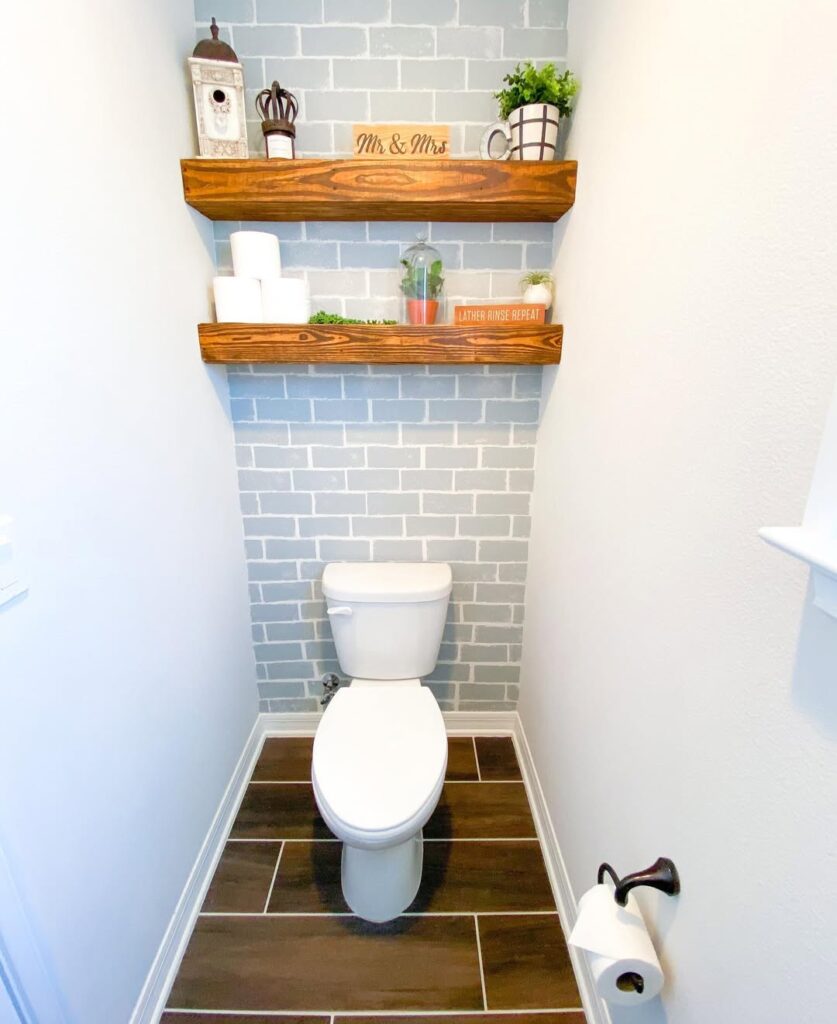
Faux Brick Backsplash + Stacked Floating Shelves
A painted faux-brick accent wall runs from the floor to the ceiling behind the toilet. It features two chunky wood floating shelves that hold both decor and functional toilet paper storage, with a contrasting wood-look tile floor beneath.
The brick treatment adds texture and a cozy warmth without needing real masonry. The two-tier shelf setup transforms the “wasted” wall space above the tank into practical storage, solving the small-bathroom issue of having nowhere for extra toilet paper.
Using a different material, wood-tone tile, on the floor avoids making the textures blend into one flat surface.
Takeaway: Use the wall behind your toilet for storage, not just decor. A deep floating shelf can hide spare toilet paper from view while still looking stylish.
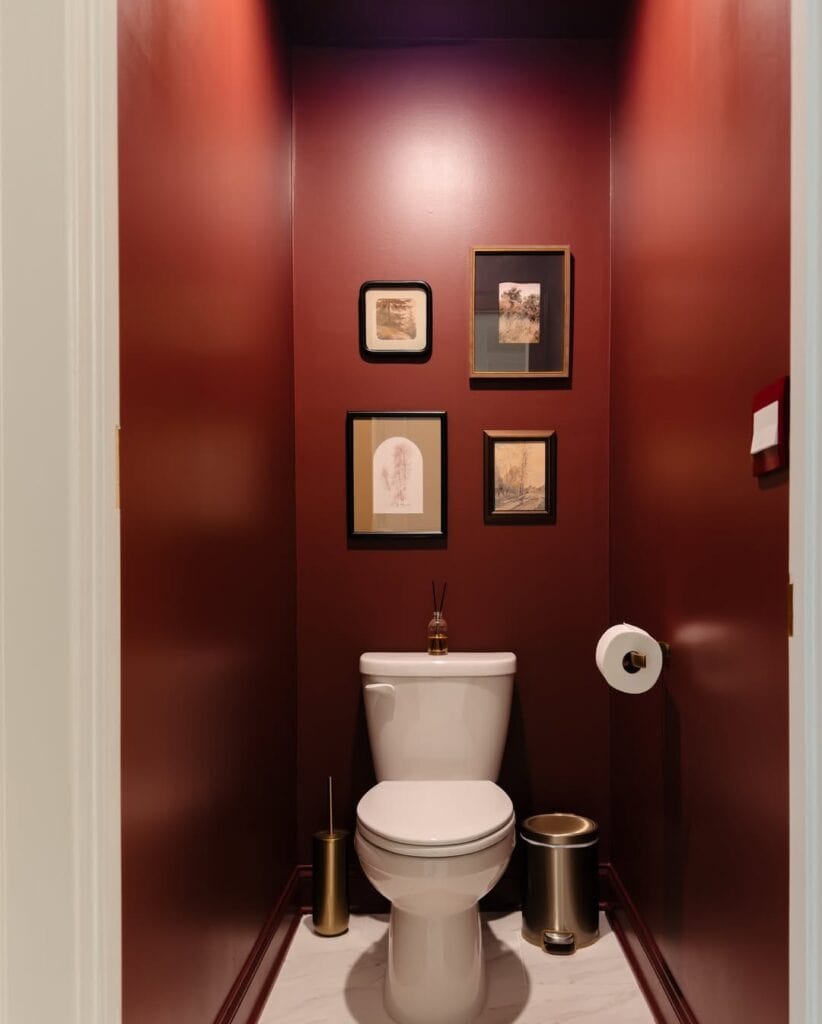
Monochromatic Gloss Paint for Depth
This room features a bold, deep oxblood-red gloss paint on the walls, trim, and ceiling. The only interruption comes from a small gallery of vintage-style framed art and brass fixtures.
The high-gloss finish plays an important role here. Glossy paint reflects light in a way that matte paint cannot, so even though the color is dark and rich, the room does not feel flat or lifeless; it has depth and a touch of drama.
Painting the trim and ceiling the same color as the walls removes the visual “stop signs” that typically make a small room feel divided.
Takeaway: If you want to use a dark color in a small room without it feeling like a cave, switch from matte to a satin or gloss paint finish. The sheen reflects light and prevents the color from appearing flat.
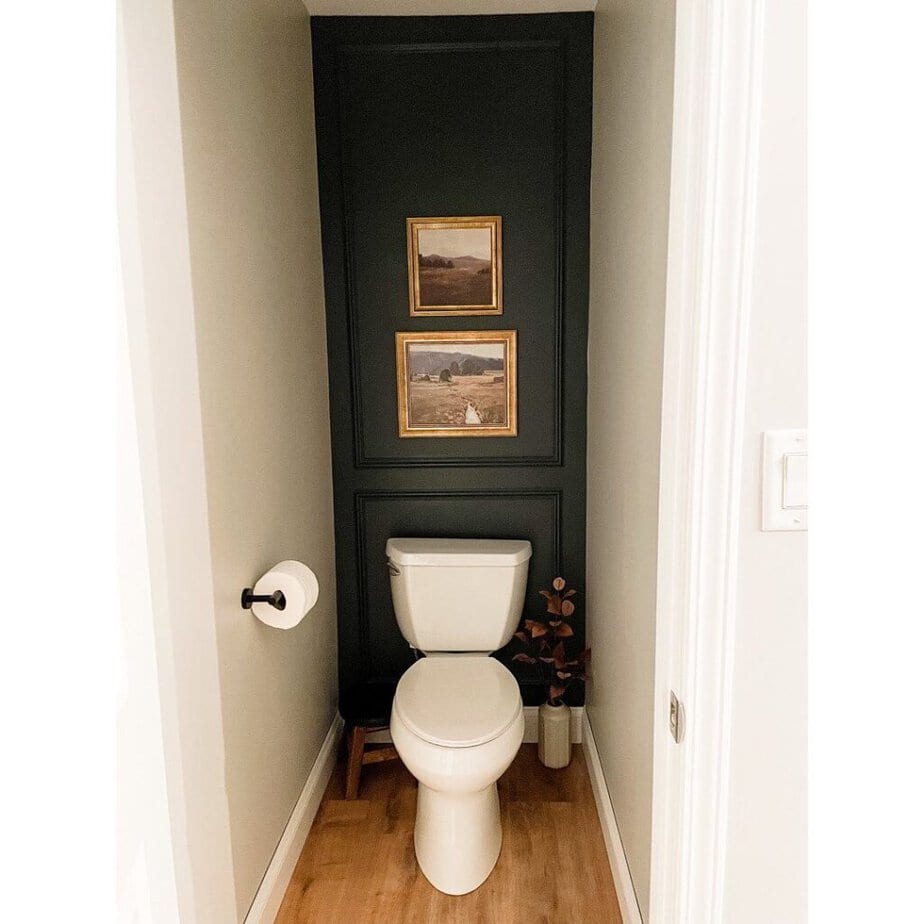
Single Bold Wall + Picture-Frame Molding
A nearly black-green accent wall, featuring simple picture-frame trim molding and a pair of stacked landscape prints, creates a tall, narrow focal point directly behind the toilet.
The surrounding walls and floor remain light and warm. The molding technique adds detail and a sense of purpose to what is otherwise a flat, drywall nook.
Stacking the art vertically emphasizes the height of the space instead of its narrowness. Keeping the side walls pale contrasts with the dark panel, visually framing the toilet area as a distinct design moment.
Takeaway: Add picture-frame molding to just the back wall of your toilet nook before you paint it dark. The molding gives the color a defined edge, allowing it to stand out as a designed feature rather than a leftover wall.
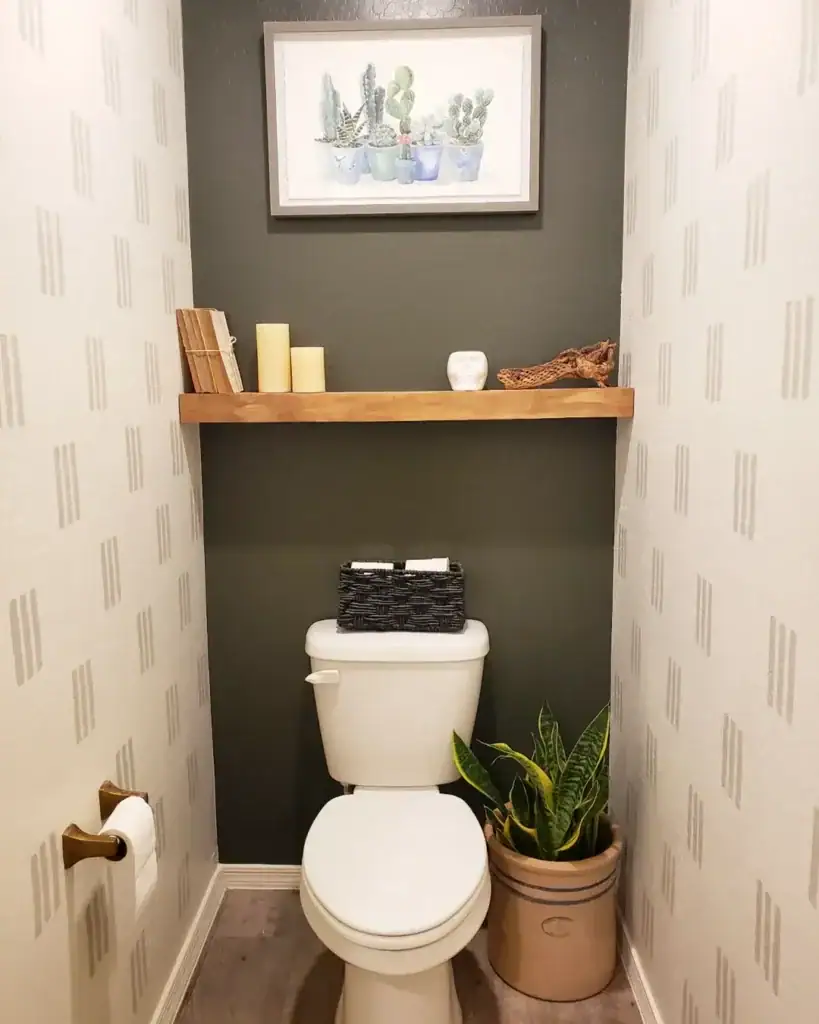
Patterned Wallpaper on the Side Walls Only
This toilet room features a textured dark olive accent wall behind the toilet, paired with subtle striped wallpaper on the two side walls. A floating wood shelf and a tall snake plant sit in the corner.
Using two different finishes for the back wall and side walls, painting on one and patterning on the other, creates layers of visual interest without any element overpowering the small space.
The floating shelf and a floor-level plant draw the eye both up and down the room, making good use of the vertical space that a typical toilet nook usually leaves empty.
Takeaway: Don’t restrict patterned wallpaper to the back wall. Extend it to the side walls and choose a solid paint color for the focal wall. This way, the pattern feels more enveloping instead of just a single “feature” panel.
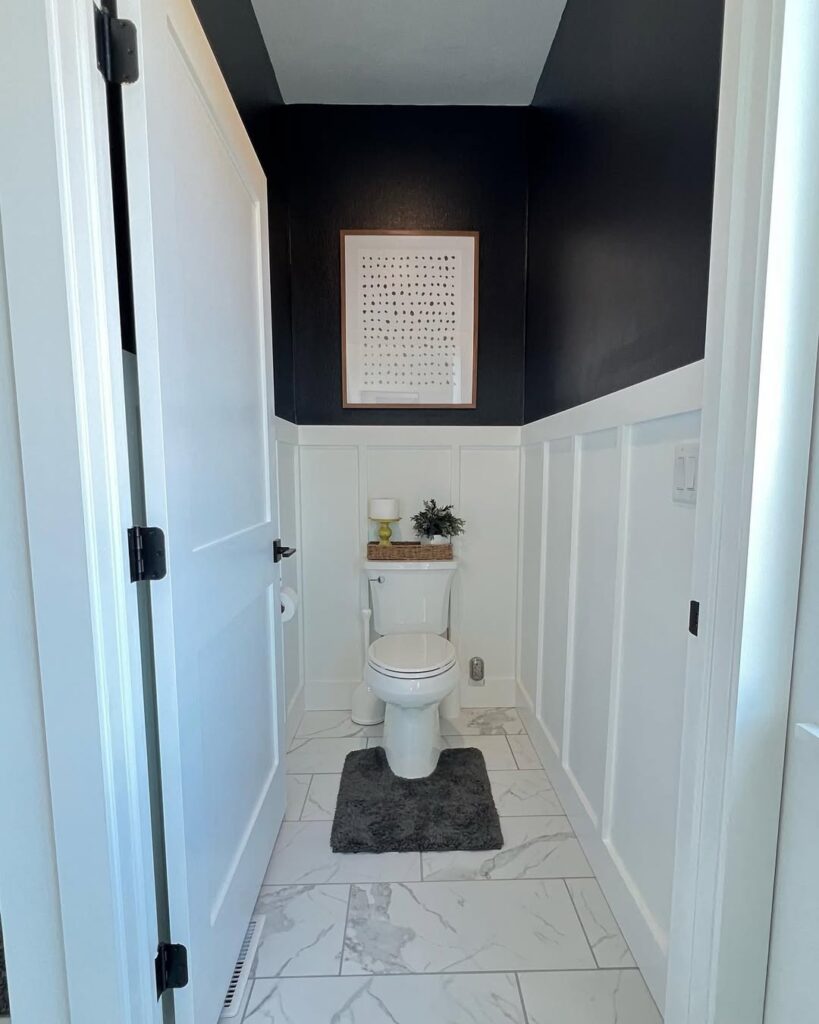
Angled Ceiling Wrapped in Dark Paint
This sloped-ceiling toilet room uses a dark color all the way up and across the angled ceiling. The dark color stops neatly at the white board-and-batten paneling below.
Marble-look tile and a cozy bath mat complete the floor. Carrying the dark paint onto the ceiling, instead of stopping at the wall-ceiling line, removes the visual seam. This makes an awkward, angled ceiling feel less like a flaw.
The dark “envelope” looks like an intentional cocoon. The crisp white wainscoting below serves as a visual base for the dark area. It keeps the room from feeling cramped.
Takeaway: If your toilet room has an awkwardly sloped or cut ceiling, paint it the same dark color as the walls instead of white. Matching the ceiling to the walls makes the odd angle disappear instead of drawing attention to it.

Narrow Galley Layout + Vertical Window
A long, narrow toilet room features a tall vertical window above the tank as its main source of light. This is combined with dark wainscoting on the lower half and a graphic runner rug that draws the eye along the length of the room.
The key decision for this small toilet room was the placement of the window. Positioning it high and centered above the fixture lets in natural light without sacrificing privacy or wall space lower down.
This is especially important in galley-shaped small rooms where every wall is already used. The patterned runner rug also helps by visually filling the long, empty floor, preventing the space from feeling like a hallway.
Takeaway: If you have a long, narrow toilet room, lay down a patterned rug along the floor. It breaks up the tunnel effect and gives your eye a focal point beyond the fixture at the far end.

Shiplap Ceiling on an Angled Roofline
Stained wood shiplap covers a steeply pitched ceiling in this under-the-stairs-style small toilet room. It pairs with crisp white shiplap walls below.
A wall-mounted light is placed directly on the angled surface. Using stained wood for the ceiling, instead of the same material as the walls, transforms the low, sloped ceiling into a standout feature rather than something to hide.
By mounting the light fixture on the angled ceiling, it also addresses the lighting issues that typically arise in low-pitched rooms.
Takeaway: If your small toilet room has a sloped ceiling from the stairs above, use a contrasting wood material instead of painting it white like the walls. Let the unique shape become the design feature rather than concealing it.
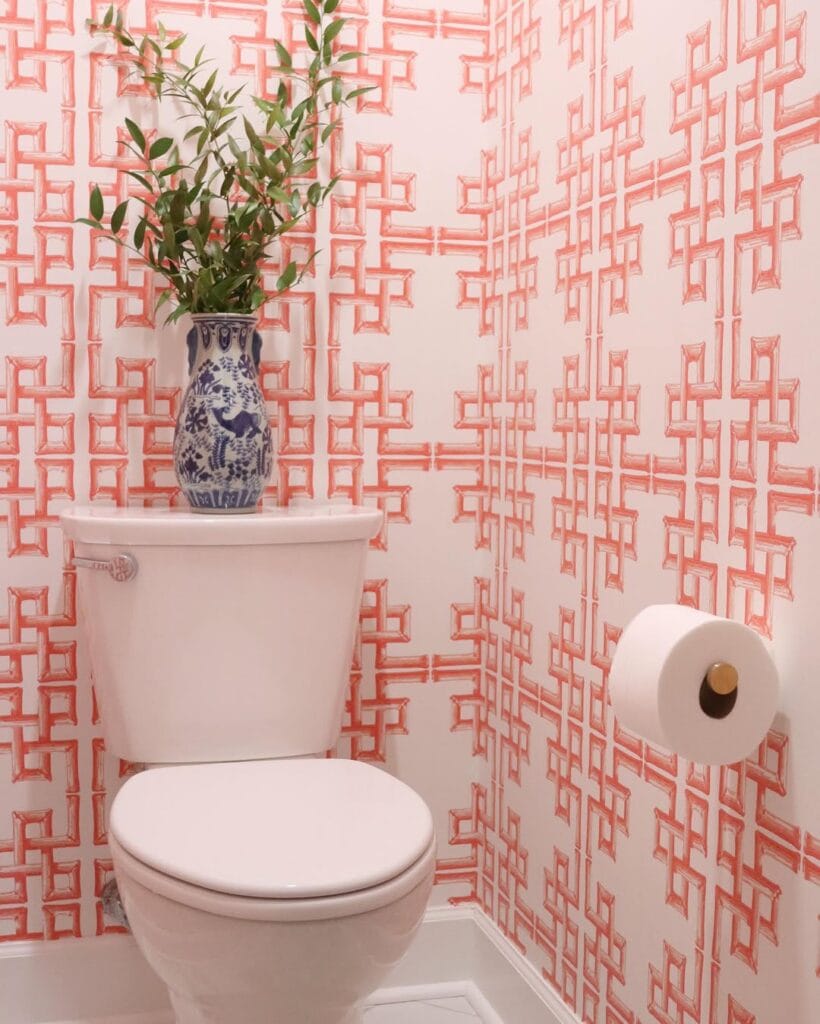
Wallpaper as the Single Statement Move
This small toilet room skips paint, shelving, and accent walls. Instead, it features a bold geometric wallpaper on all visible surfaces. A single decorative vase serves as the only styling piece.
The approach is maximalist simplicity: the wallpaper pattern provides all the visual interest, so the room requires almost nothing else to feel complete.
This is helpful in a space that is too small for multiple design elements to coexist comfortably. Keeping the toilet and hardware in plain white and chrome ensures that the wallpaper remains the main focus rather than competing with colored fixtures.
Takeaway: If you choose a high-pattern wallpaper, resist the urge to add shelves or extra decor. One strong pattern plus one simple object often looks more finished than a fully “decorated” small room.
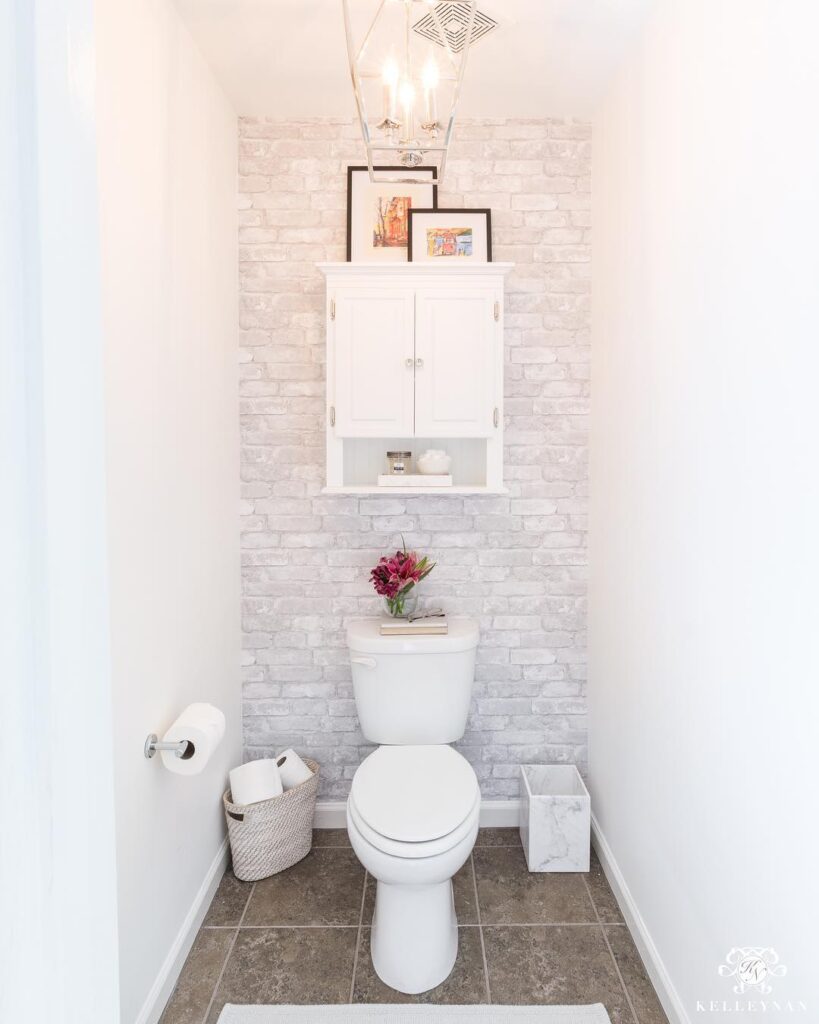
Brick Wallpaper + Symmetrical Gallery Styling
A realistic whitewashed brick wallpaper covers the back wall. A classic white medicine cabinet anchors the space, with a small, symmetrical gallery of framed art sitting on top.
A statement chandelier hangs low enough to catch the eye, even in a small area. Brick wallpaper adds old-world texture without the cost or thickness of real brick. Centering the cabinet and stacking the art above it creates a strong vertical line, making the narrow room feel organized rather than cluttered.
Hanging an oversized, glamorous light fixture in a small room is a clever design choice. It shows that the toilet room was thoughtfully planned, not just filled with items.
Takeaway: Don’t hesitate to use a statement light fixture in a small toilet room. An oversized or stylish pendant draws the eye upward and suggests intentional design, even in just 20 square feet.
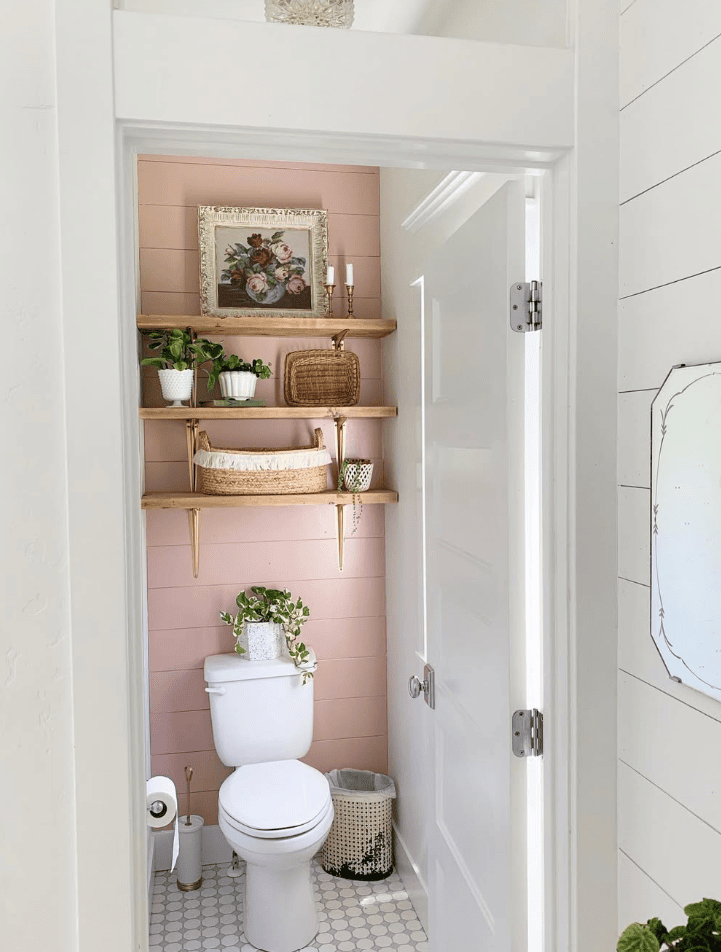
Shiplap + Asymmetrical Bracketed Shelves
Soft pink shiplap paneling covers the back wall. It supports two staggered open shelves on brass brackets. These shelves hold framed art, plants, and woven baskets. The toilet tank also serves as a spot for a trailing plant.
The different shelf depths and spacing guide the eye diagonally, making the vertical wall of items feel carefully arranged rather than messy. The brass bracket hardware visible beneath each shelf adds a nice touch, making the DIY setup look custom-made.
Takeaway: When arranging open shelves in a small space, vary shelf depths or slightly stagger spacing rather than keeping them identical. This creates a curated look instead of simply displaying “two shelves with stuff on them.”
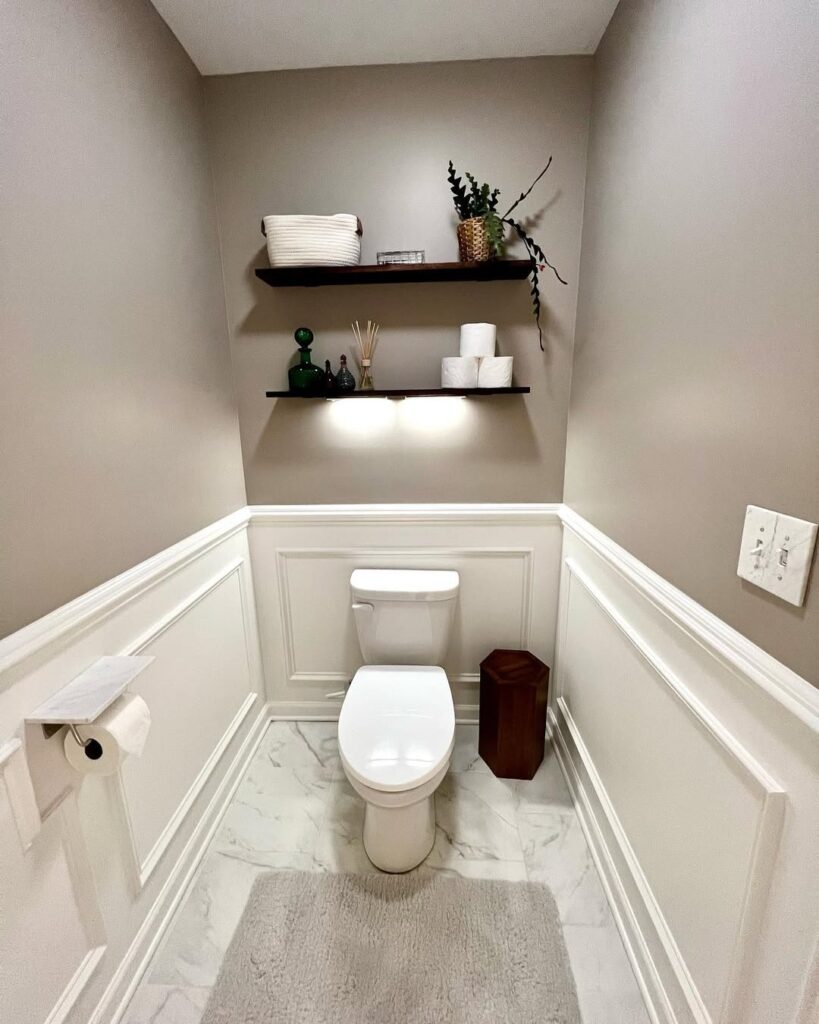
Dual Floating Shelves with Built-In Lighting
Two dark wood floating shelves stack above a board-and-batten toilet nook. The lower shelf has discreet under-shelf lighting that creates a warm glow on the wainscoting below.
This built-in lighting solves the classic issue of small, windowless toilet rooms that often rely on flat, harsh overhead light. It offers a secondary ambient light source, making the room feel well thought out rather than just functional.
The dark wood tone contrasts with the pale walls and white trim, giving the shelves a sense of weight. They appear as a quality detail rather than an afterthought.
Takeaway: If your small toilet room has only one overhead light, consider adding a battery-powered LED puck light under a floating shelf. This simple upgrade can instantly make the space feel warmer and more thoughtfully designed.
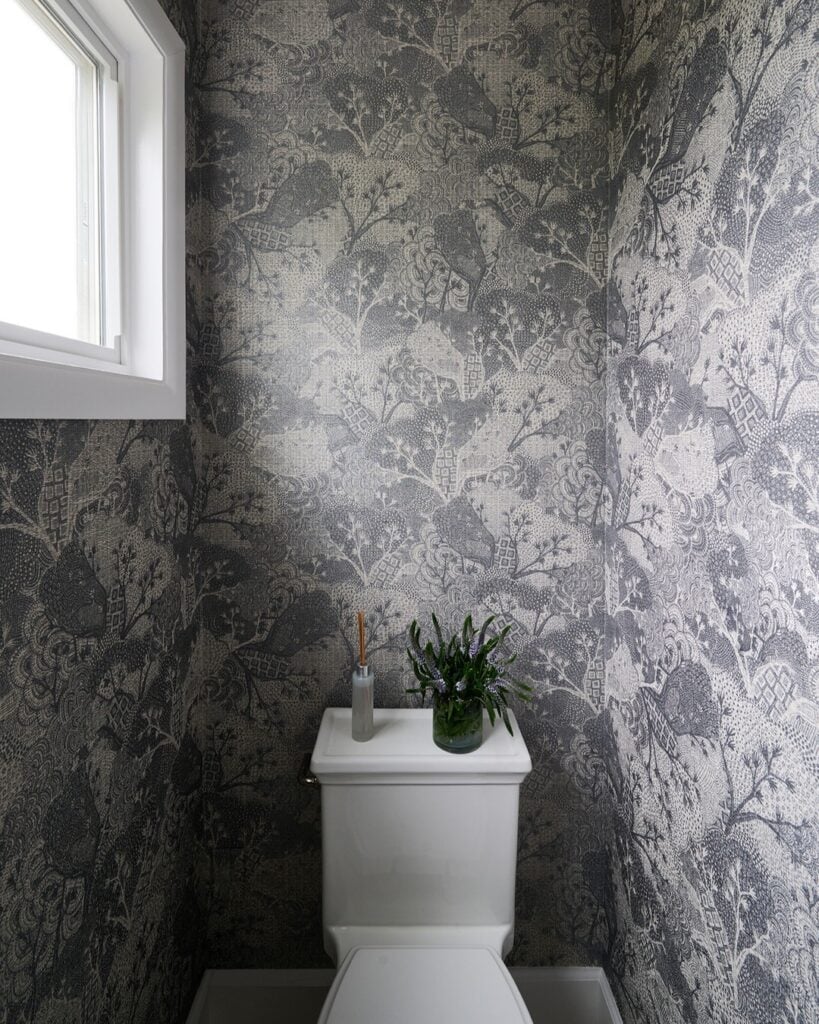
Dense Botanical Wallpaper, Zero Other Decor
This small toilet room features richly detailed botanical wallpaper on every wall. There are no shelves, no art, and very few accessories, just a small plant and a toilet brush on the tank.
This approach allows a truly excellent pattern to dominate the design. When wallpaper has this much depth and detail, adding shelves or framed art competes with the pattern and makes it less effective.
A nearby window remains mostly uncovered, providing a calm, plain surface for the eye to rest on and preventing the pattern from feeling overwhelming.
Takeaway: If you choose a dense, high-quality wallpaper, keep the rest of the room simple. Let the walls serve as the art, and resist the urge to add shelves.
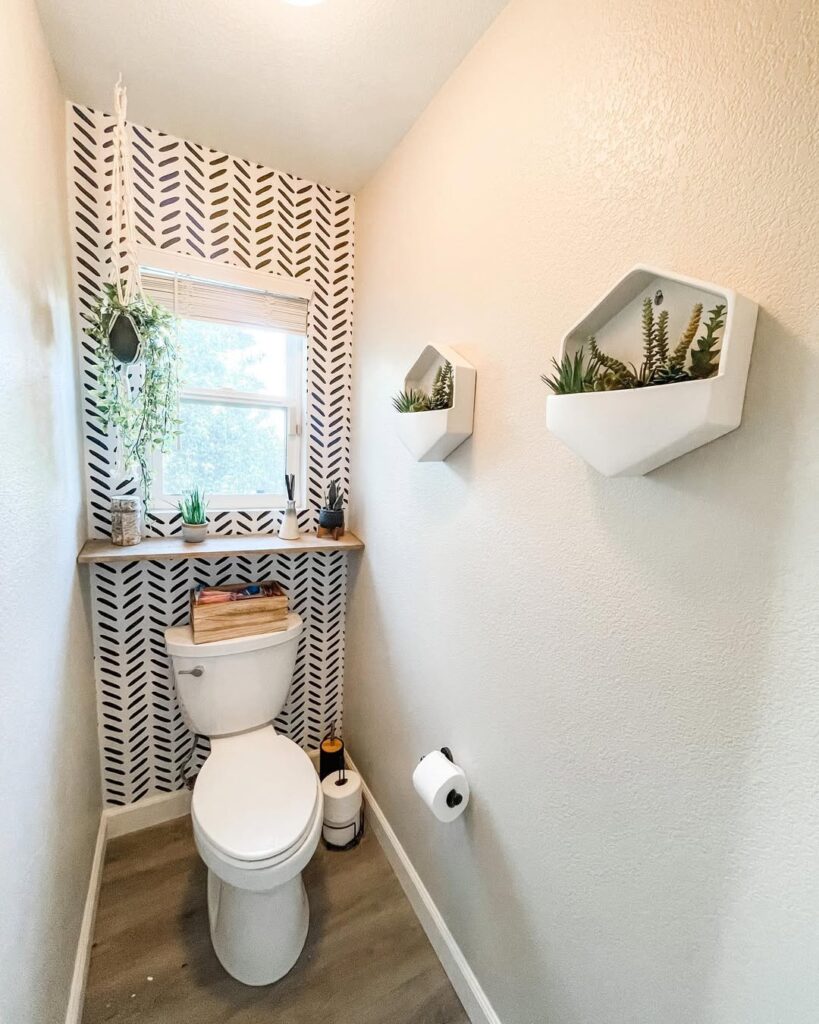
Geometric Wallpaper + Sculptural Wall Planters
A graphic herringbone wallpaper covers the back wall of this toilet room and the sloped ceiling around a window. The side walls remain plain and feature two geometric ceramic planters mounted at different heights, adding dimension without using up floor space.
Wrapping the patterned paper around the angled ceiling, not just the vertical wall, treats the entire nook as a single continuous shape. This approach avoids drawing attention to where the low ceiling cuts in.
Mounting planters on the wall instead of using floor-standing pots keeps the small floor area clear and walkable.
Takeaway: If floor space is too tight for plants, mount small wall planters at staggered heights instead. You can enjoy greenery and visual texture without sacrificing any walking space.